This is a potentially valuable event as Sylvia has two moons, but neither of which were predicted to cross near Santa Cruz. It skipped my attention due to its distant centerline, and I'm in the new habit during Finals Week of disregarding any occultations that happen after 2am as I really need to watch my health and my sleep. Kirk Bender, however was game for it.
Kirk Bender reminded me of this event after I'd gotten home from the Observatory attempt at Makharadze. However, I no longer had the 0.5x reducer in my gear, having had to give it to the Orion ShortTube finder scope on the 12" in order to double the FOV and allow better quicker acquisition of targets for Astro 8A and 9ABC. W/o the 0.5x reducer, the odds of getting the event were low for me. The pointing at Alt=70 already was flawed and caused failure at WeisseRose, and I had less confidence I'd have success at Sylvia and would need to stay up solid till the event. I decided Kirk would get good data and since the path was so wide, there would be little added value perhaps from mine. I did not attempt this event.
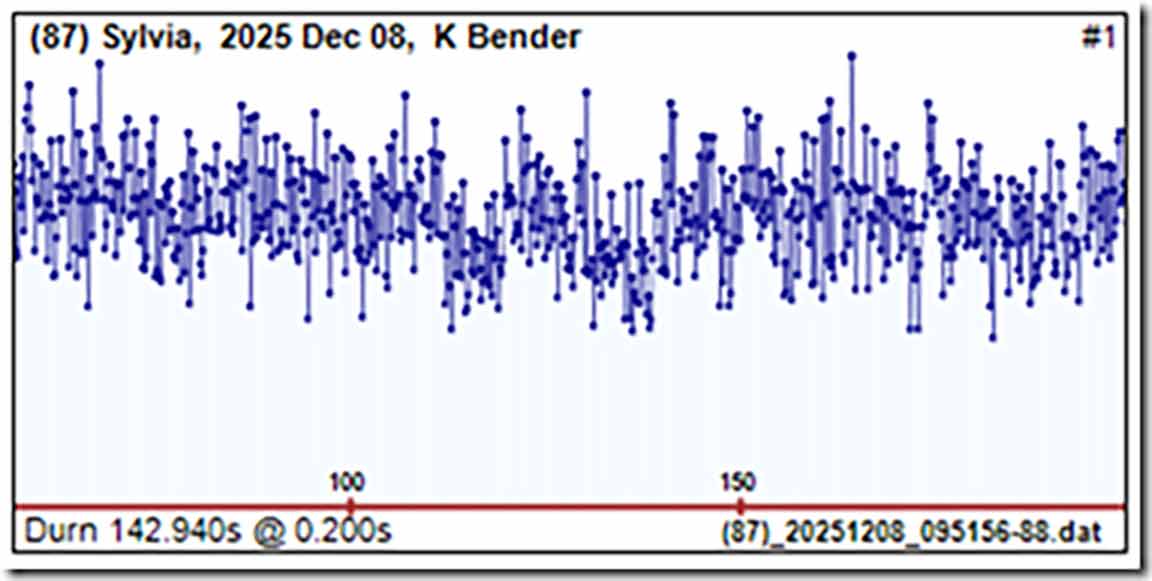
I recorded on West Cliff drive at 4x, with the diagonal and 0.5x reducer. I thought the stars looked dimmer than they should be, and when I packed it up there was dew on the corrector plate despite using the dew shield. I guess it was from doing 3 events on the same cold night. I should have anticipated that and warmed it between uses. However, I got a recording of the target and it's hard to tell but it looks like it dimmed at predicted time. Greg Lyzenga reports a double event, says probable double star, I'll look and see if my data confirms. I set up the Astrid at home for this one also, but being a long recording it drifted out of frame before predicted time. I think that when it auto recorded it somehow thought is was a tracking mount instead of the fixed one I have, I need to investigate the settings. But it worked for the shorter WeisseRose event.
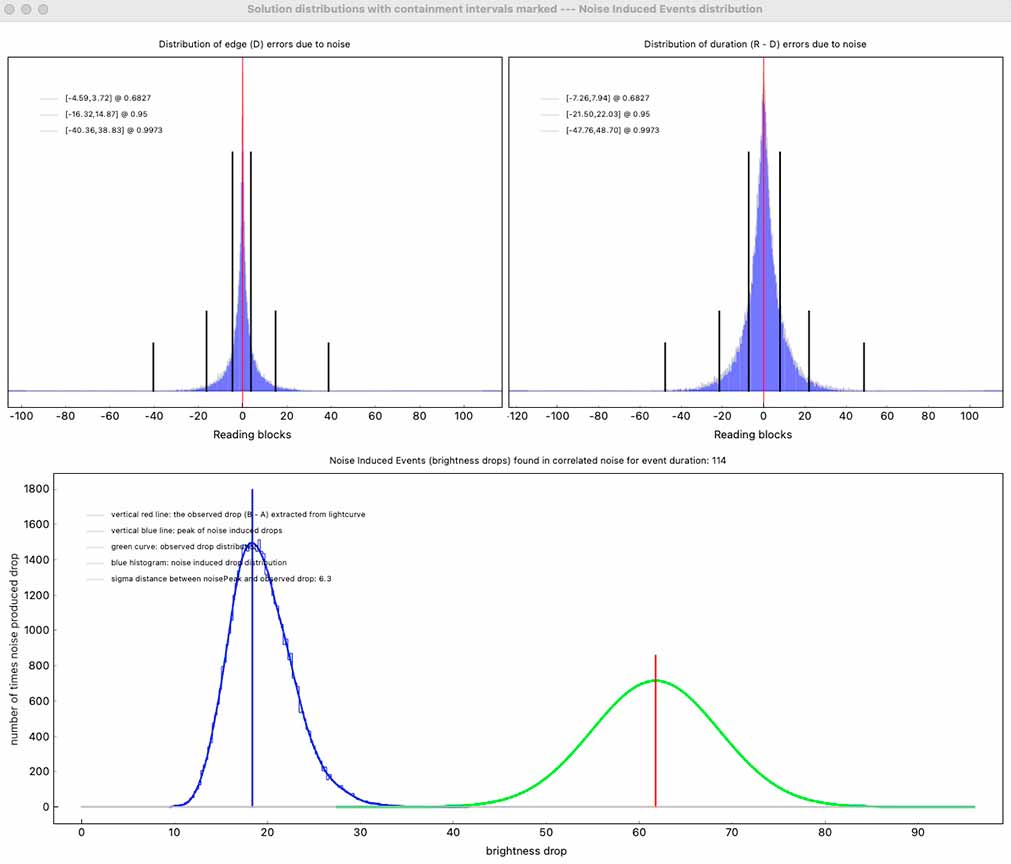
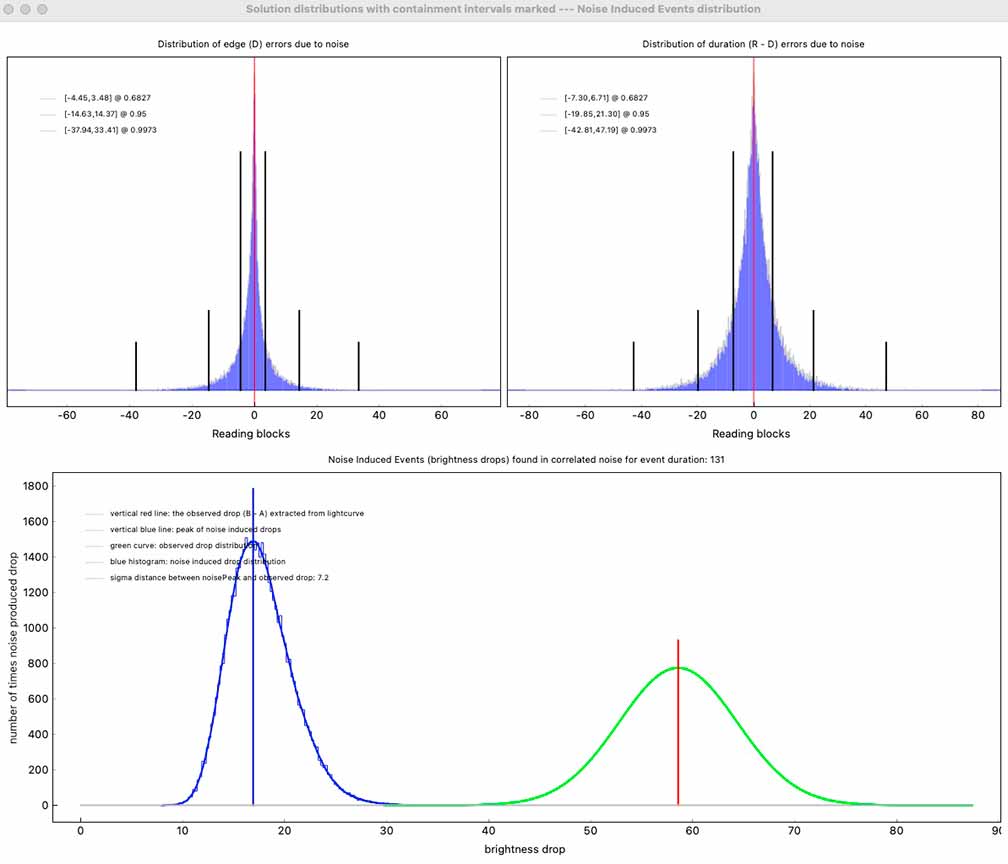
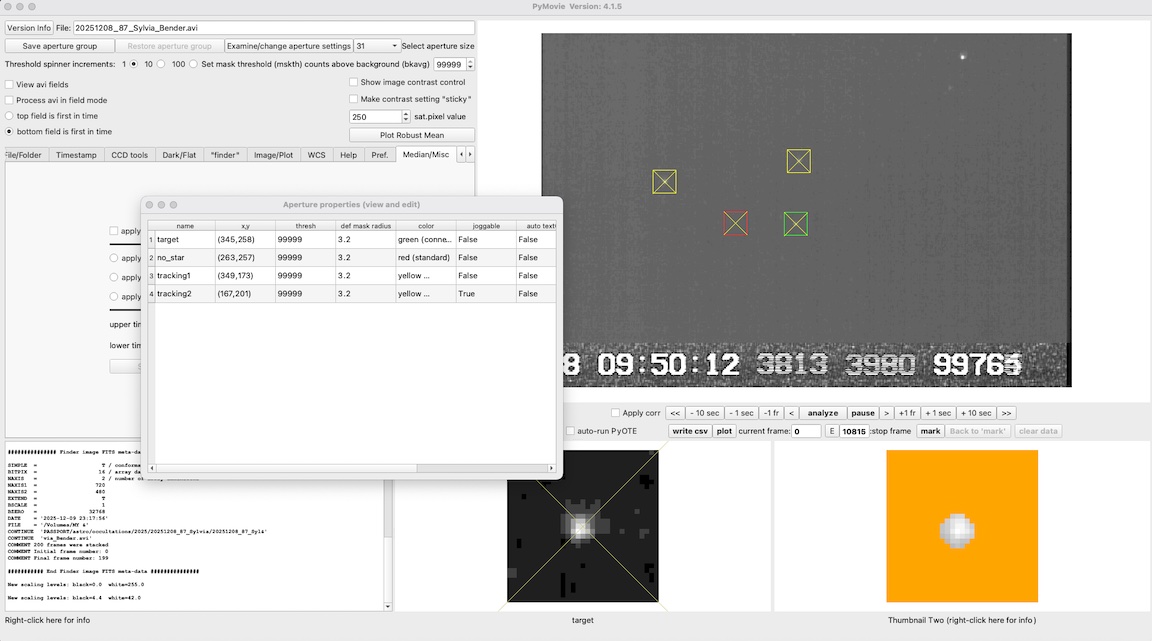
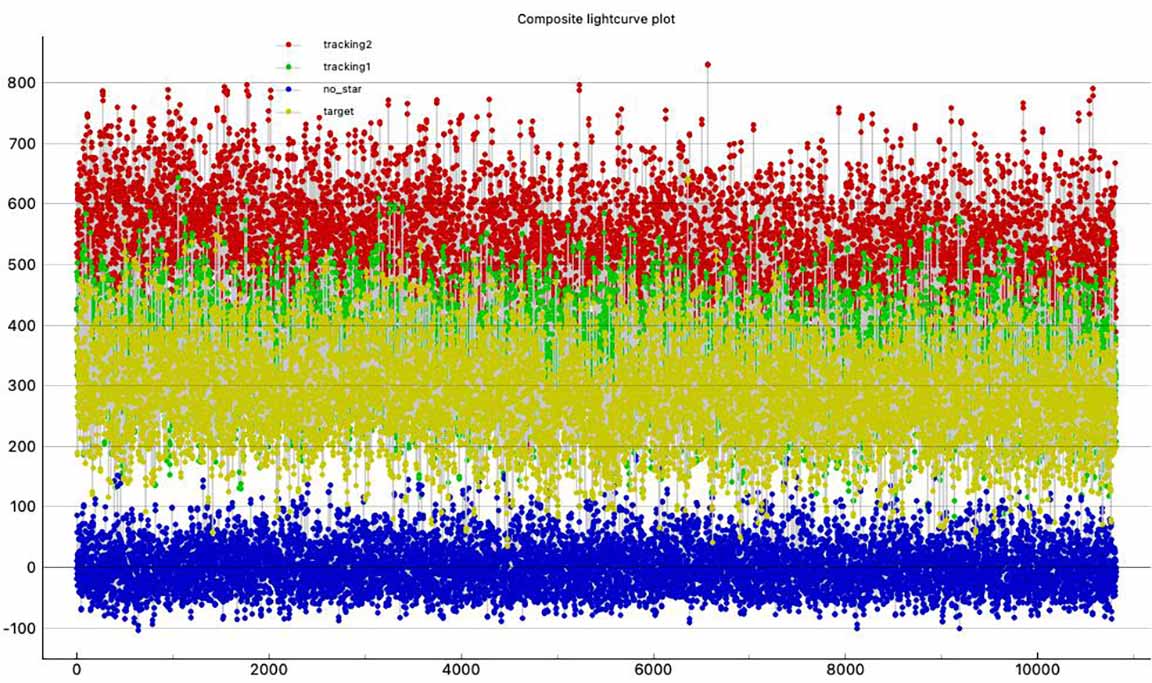
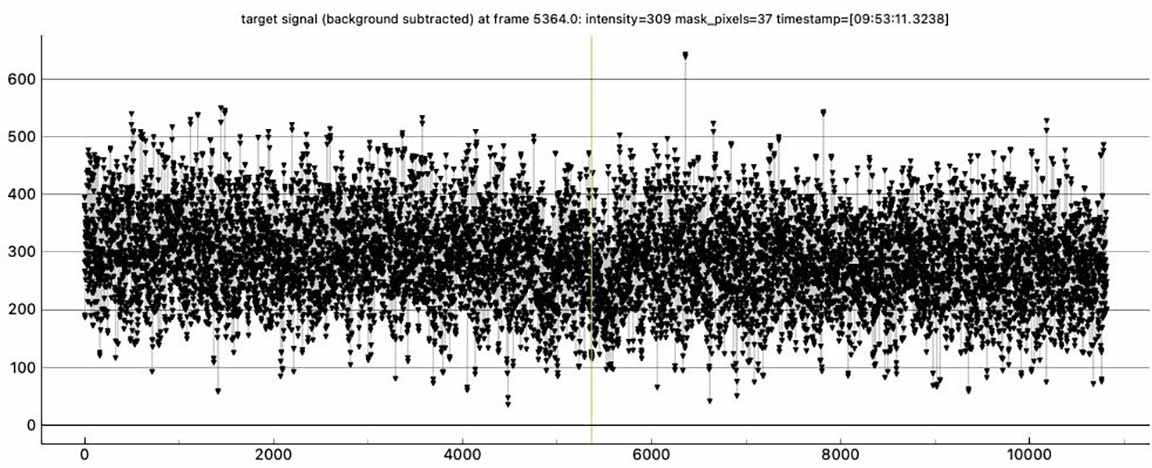
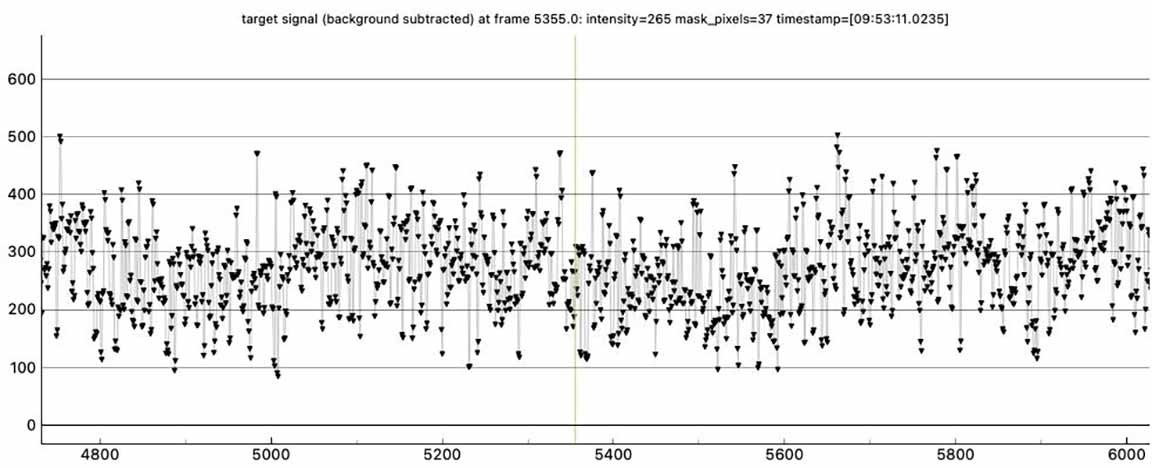
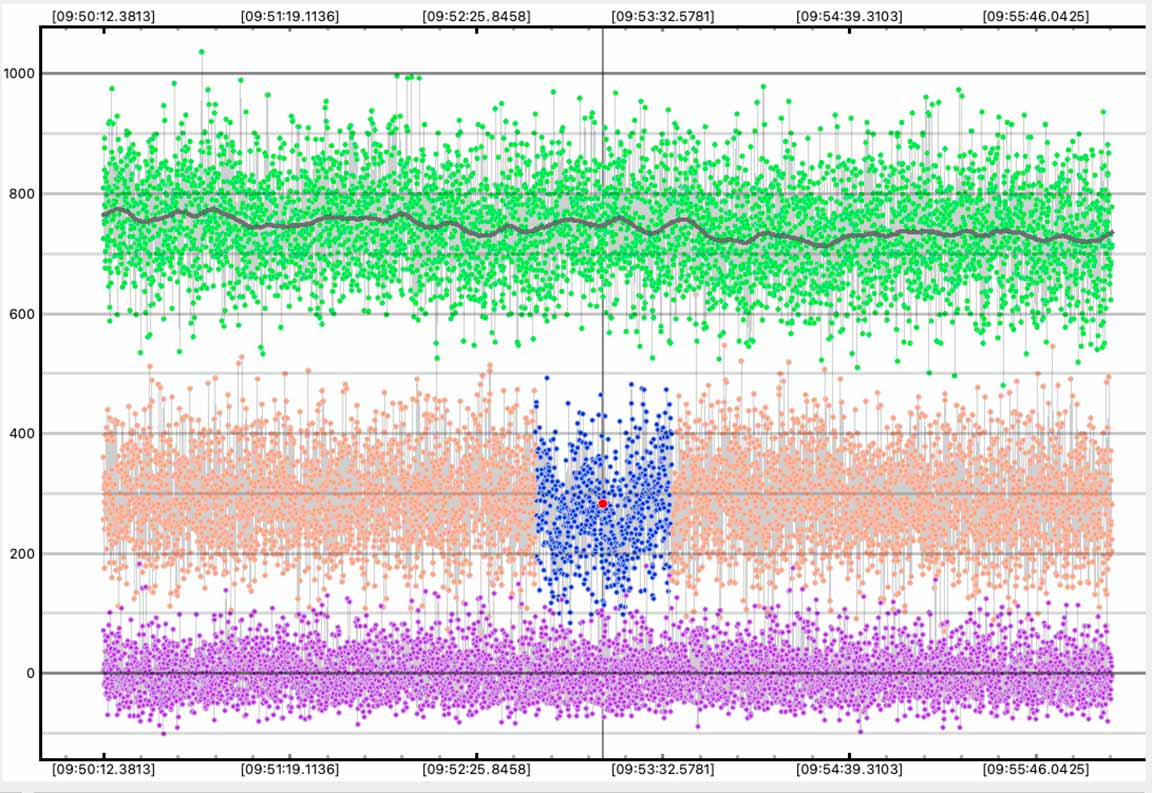
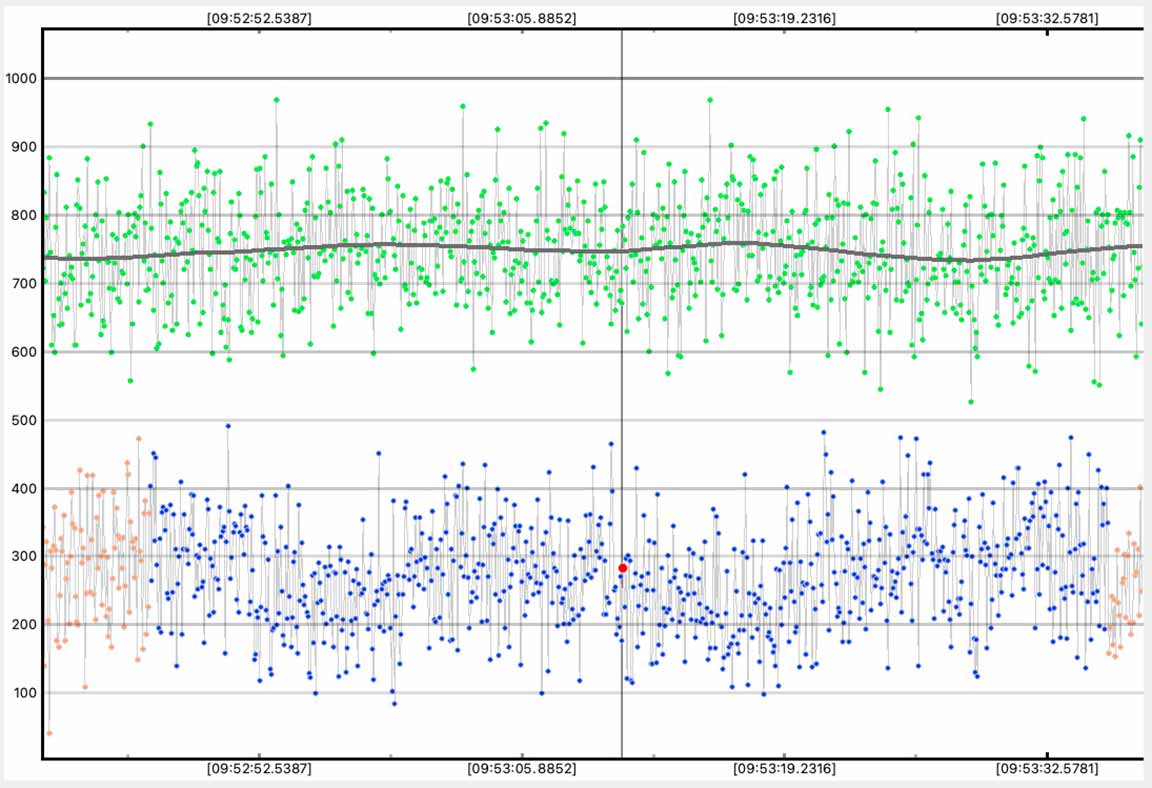
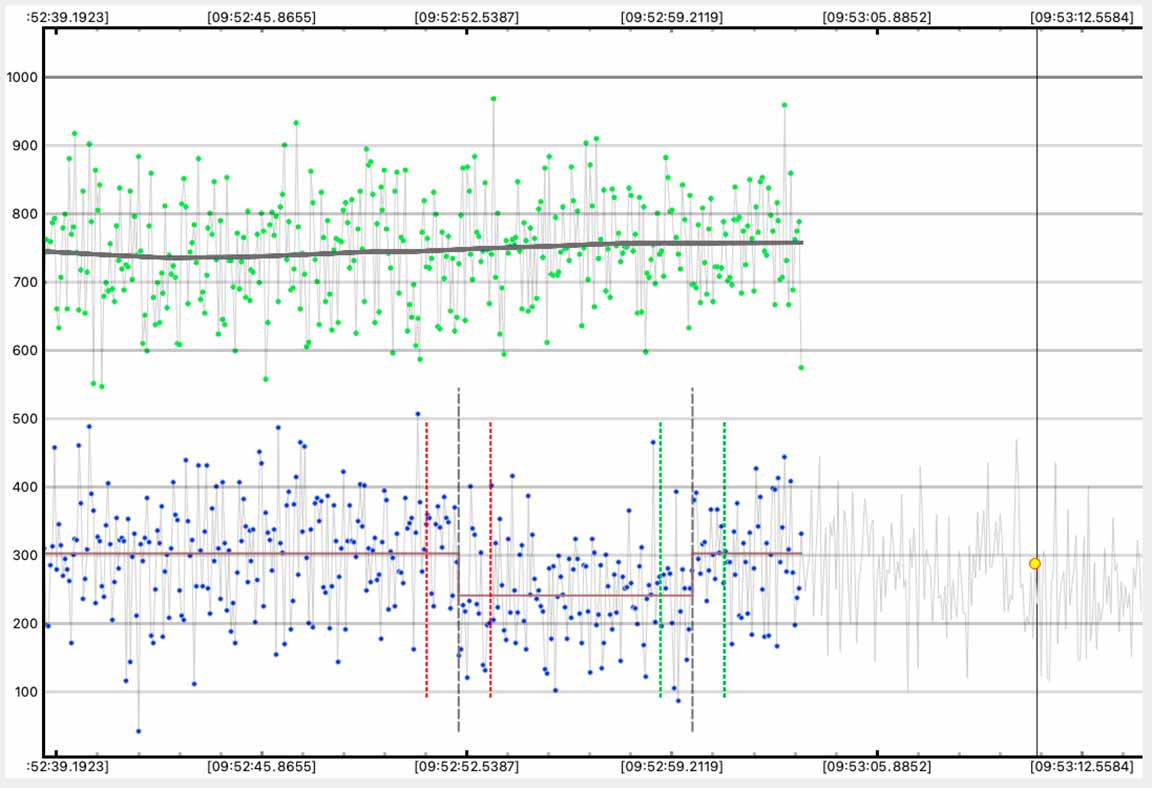
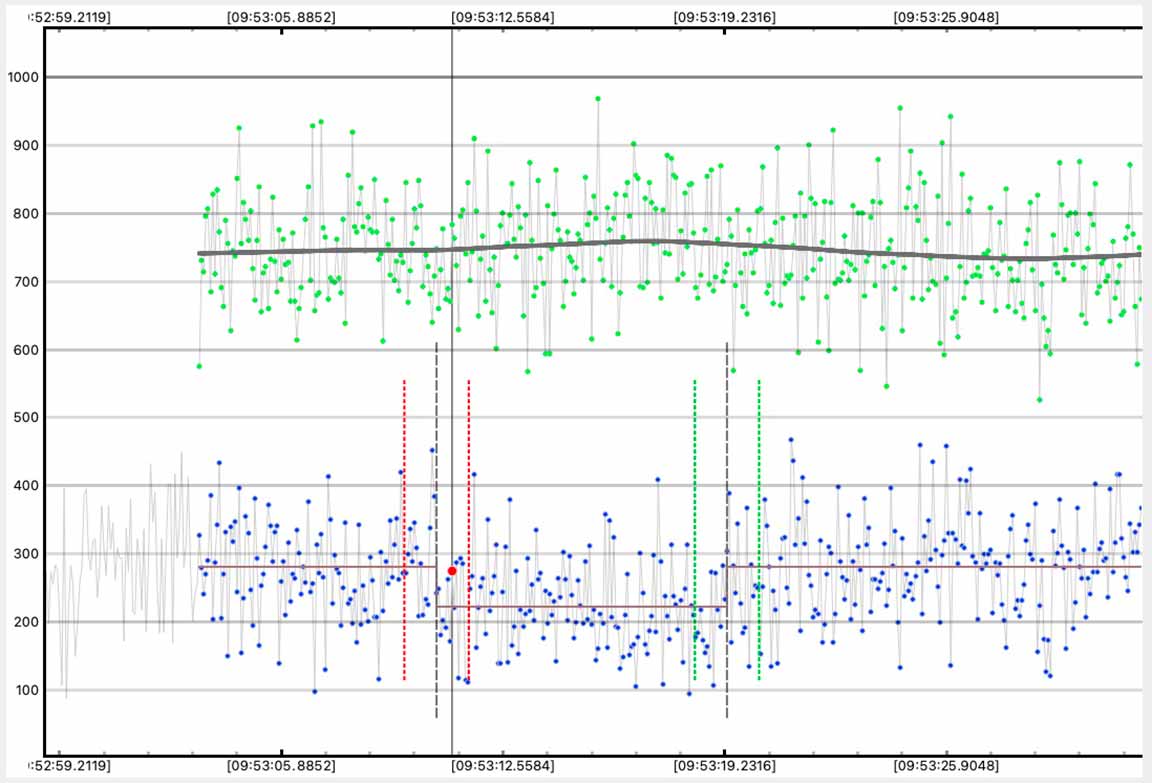
I observed apparently two events for this occultation, as did Gregory Lyzenga, which may indicate a double star. The asteroid was brighter than the occulted star so the magnitude drops were shallow. My data is much noisier than Gregory's, but I trimmed my light curves separately for the two apparent dips in the light curve and PyOTE found events for each, 7.6s, and 8.7s, with a NIE sigma distances of 6.3 and 7.2, centered near the predicted time. There was a slight downward slope in the target and tracking star curves, probably due to dew on the scope corrector plate, so i normalized the target against a tracking star. I am attaching separate reports and PyOTE log files and screen shots for each event, 1 and 2, as well as the .csv file from PyMovie.
My reports for Sylvia on Dec. 8th, here is the usual additional info FYI. I apparently got 2 events, as did Gregory Lyzenga, indicating a possible or probable double star. The events are centered on the predicted time and the mag drops are shallow as predicted. My timings are different than Gregory's but he was in L.A. on the other side of the path and I was near the north edge. My data is much noisier than his, but he used a 14" scope compared to my 8". I was on West Cliff drive near San Jose ave., recorded at 4x, using the diagonal and 0.5x reducer because of the high altitude.
Event 1:
NIE sigma distance 6.3
magDrop report: percentDrop: 20.4 magDrop: 0.248 +/- 0.062 (0.95 ci)
DNR: 0.82
D time: [09:52:52.2718]
D: 0.6800 containment intervals: {+/- 0.2775} seconds
D: 0.9500 containment intervals: {+/- 1.0407} seconds
D: 0.9973 containment intervals: {+/- 2.6424} seconds
R time: [09:52:59.8793]
R: 0.6800 containment intervals: {+/- 0.2775} seconds
R: 0.9500 containment intervals: {+/- 1.0407} seconds
R: 0.9973 containment intervals: {+/- 2.6424} seconds
Duration (R - D): 7.6075 seconds
Duration: 0.6800 containment intervals: {+/- 0.5072} seconds
Duration: 0.9500 containment intervals: {+/- 1.4524} seconds
Duration: 0.9973 containment intervals: {+/- 3.2185} seconds
Event 2:
NIE sigma distance 7.2
magDrop report: percentDrop: 20.9 magDrop: 0.254 +/- 0.056 (0.95 ci)
DNR: 0.79
D time: [09:53:10.5564]
D: 0.6800 containment intervals: {+/- 0.2645} seconds
D: 0.9500 containment intervals: {+/- 0.9676} seconds
D: 0.9973 containment intervals: {+/- 2.3805} seconds
R time: [09:53:19.2983]
R: 0.6800 containment intervals: {+/- 0.2645} seconds
R: 0.9500 containment intervals: {+/- 0.9676} seconds
R: 0.9973 containment intervals: {+/- 2.3805} seconds
Duration (R - D): 8.7419 seconds
Duration: 0.6800 containment intervals: {+/- 0.4675} seconds
Duration: 0.9500 containment intervals: {+/- 1.3730} seconds
Duration: 0.9973 containment intervals: {+/- 3.0030} seconds
|
|
|
|
|
 |
 |
 |
NIE test on the first event 6.3 sigma |
NIE test on the second event. 7.2 sigma |
Dave Herald looked at Kirk's csv file, added some smoothing by combining points. I think this is not a good idea, as it reduces the significance of the detections by lowering the number of points inside the event, even it is makes the curve look smoother. At least, this is a danger, as PyOTE is looking for the odds of N number of consecutive low points given a random mixup of the points as a test of noise induced 'events'. However, here, DH agrees Kirk has two valid events of this new double star. |