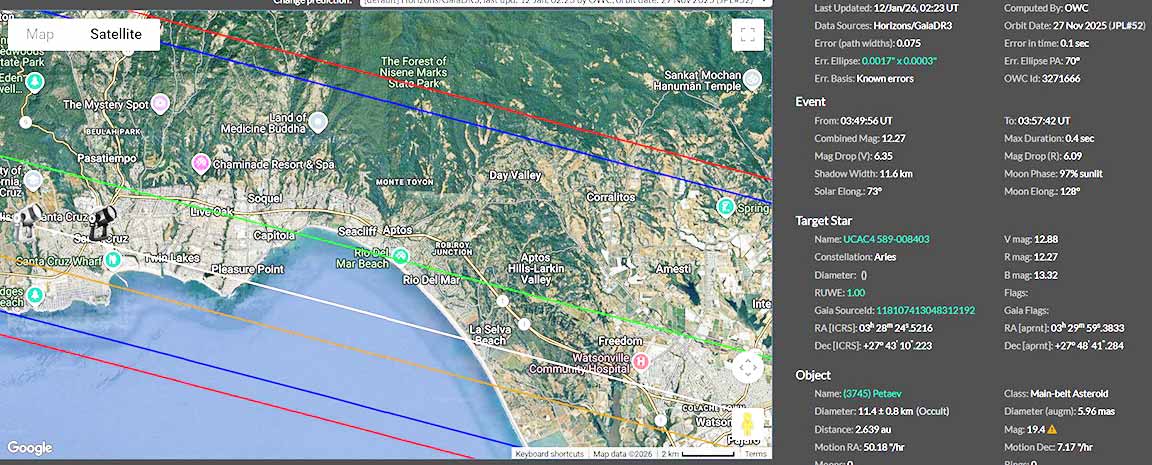
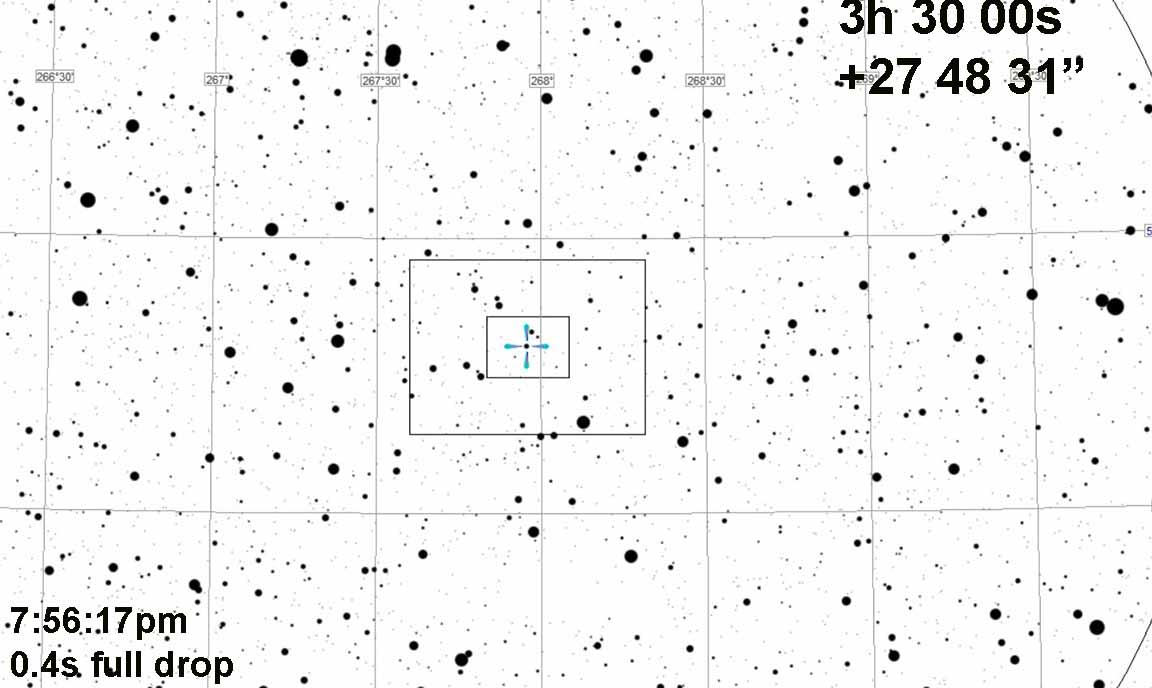
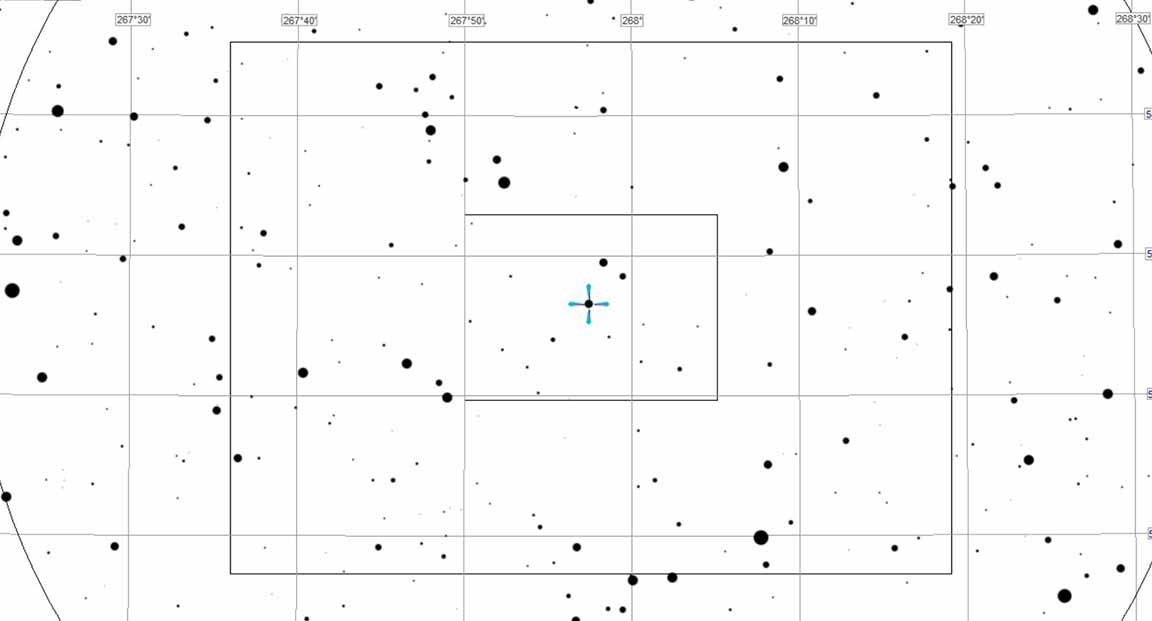
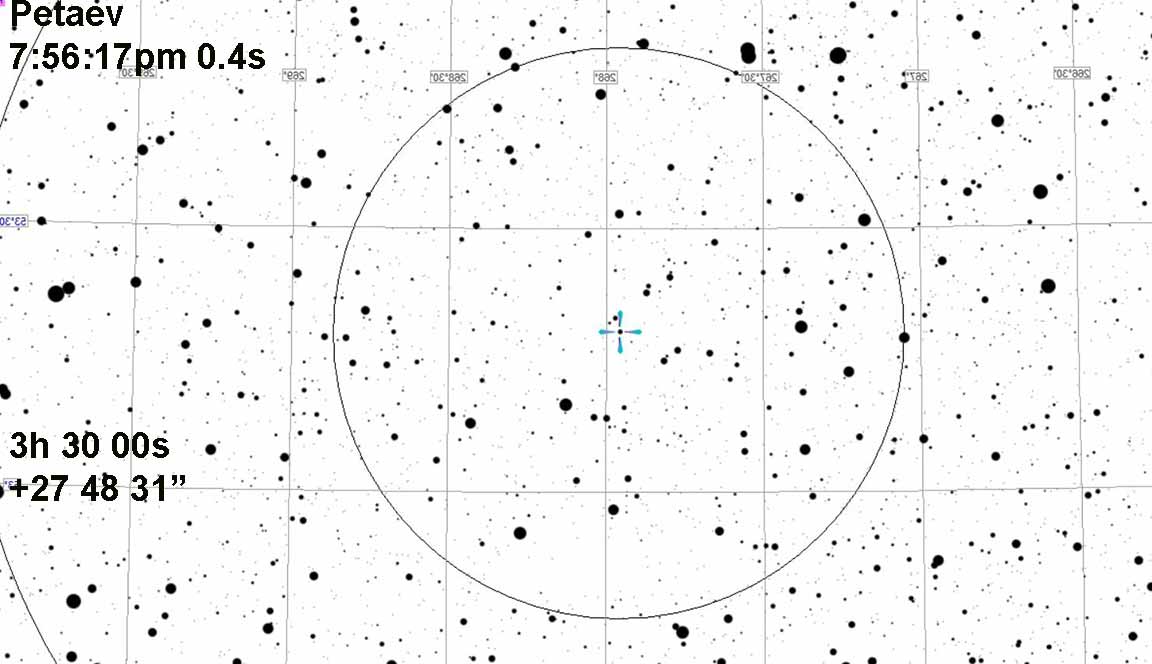
This is another challenging event, but in clean skies should be do-able.
Alt=49, Az=270 due west, in Aries, but about 8 degrees right of the Plieades. Use Alcyone, brightest star in the Plieades (where the handle meets the dipper) as your second align star.
|
|
|
|
Kirk at home, and I at Larkin Valley Rd, both got recordings. Jordan had a power glitch and no data. Karl got on-target at BlueBalls Park 1 minute after the event.
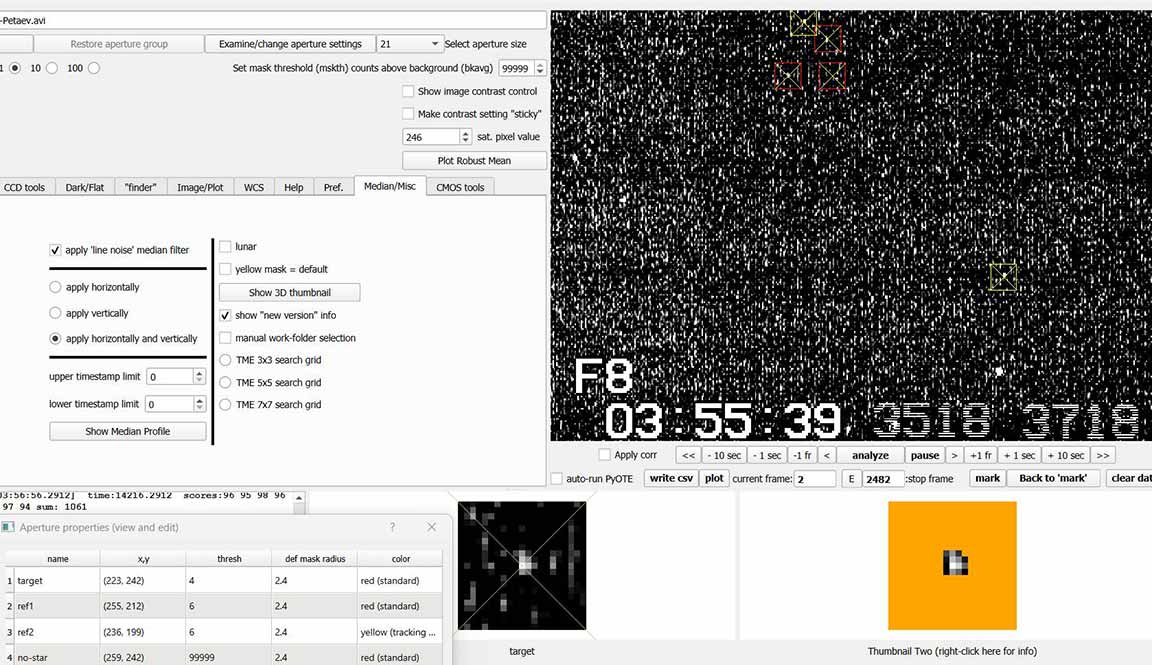
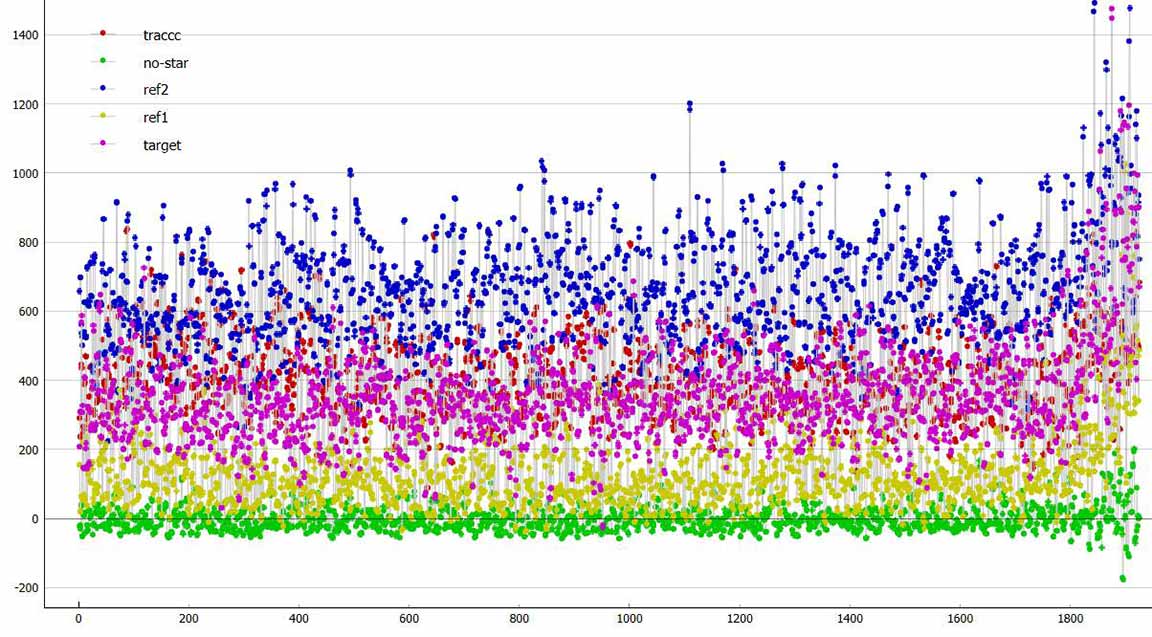
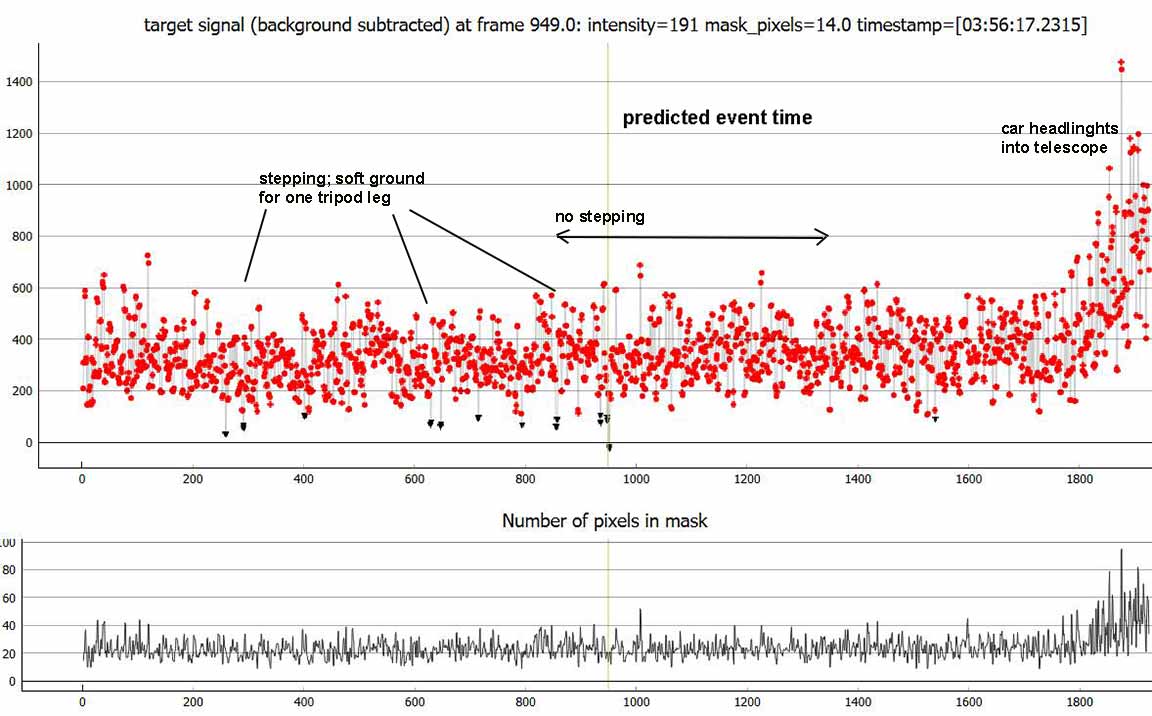
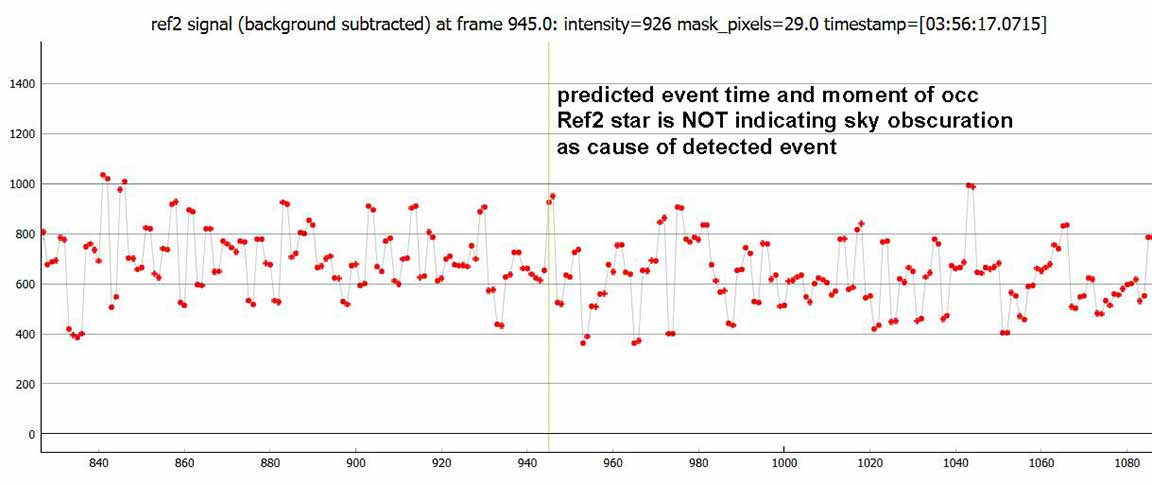
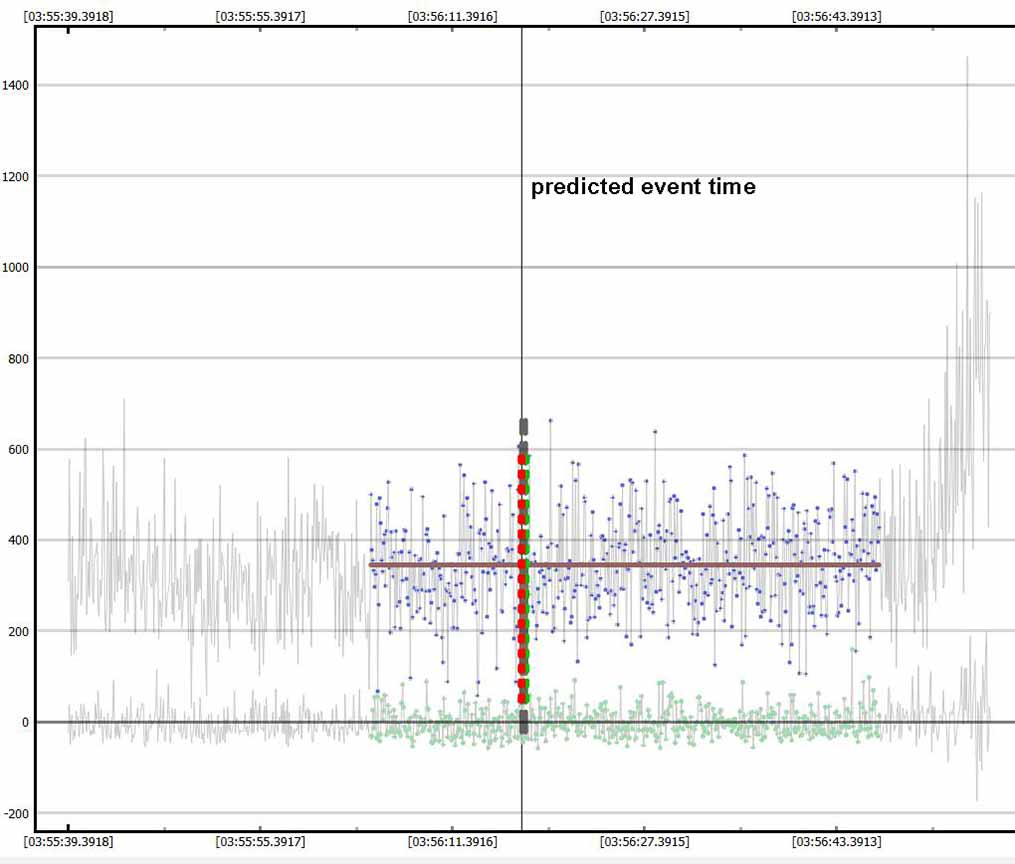
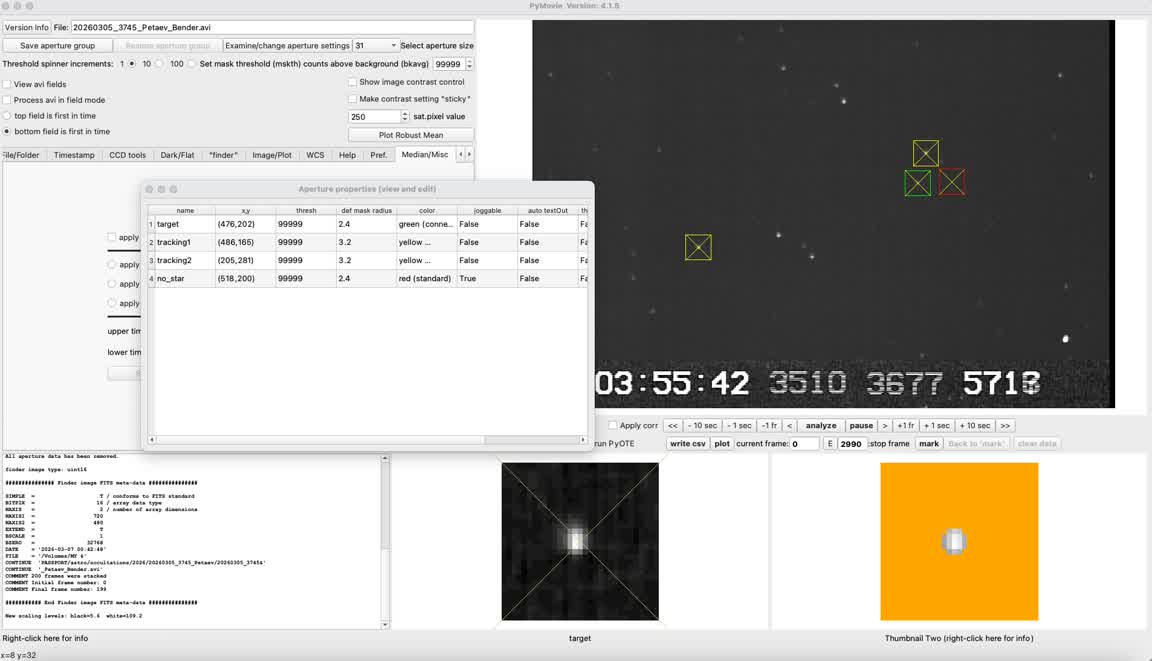
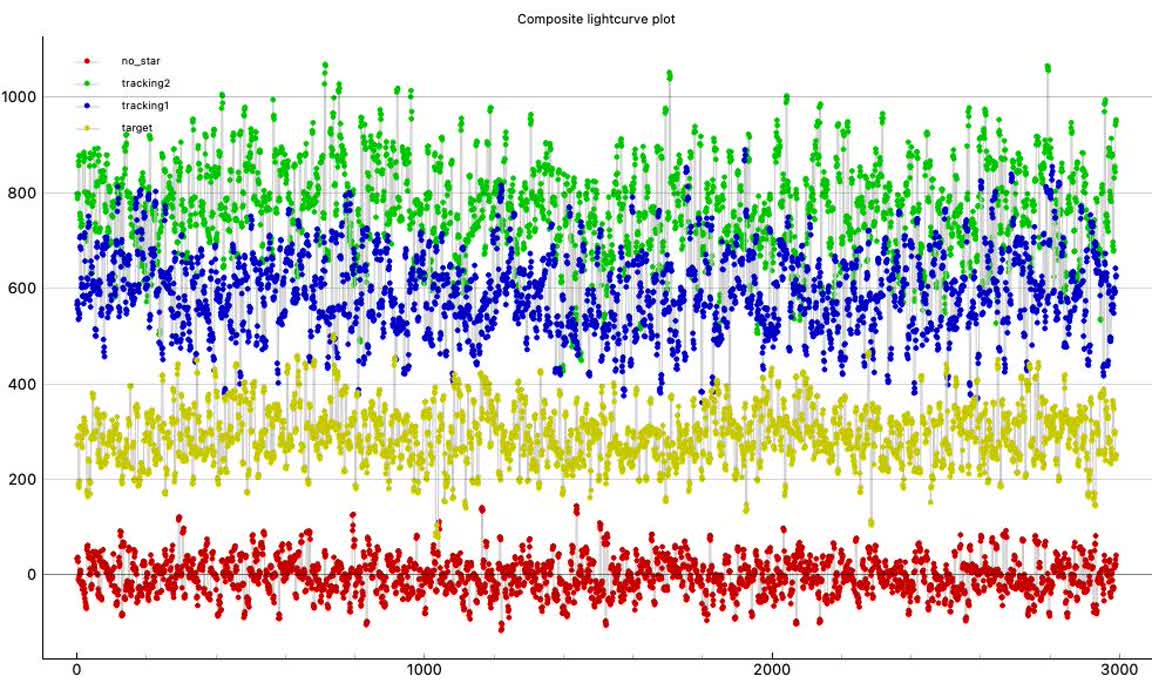
I set up at the field on Larkin Valley Rd which I've used before. I settled on 4x setting, adjusted best I could, given the duration was only going to be 0.4s maximum. A 97%- moon made the sky brighter, but the target was in Aries far from the rising moon. Visually as I watched, I saw two quick disappearances just a second apart. However, the data is noisy enough that claiming a neighboring smaller moonlet is difficult, given I had no confirming chords. I had a bit of trouble before the event with walking on the soft ground once recording began at a couple of points, and then well after the event a car came in with headlights going down my telescope tube. These areas had to be trimmed out. I used dynamic masks at default cutoff level and they seemed to capture the star pixels well. I also used median filtering in both horizontal and vertical directions, as I usually do.
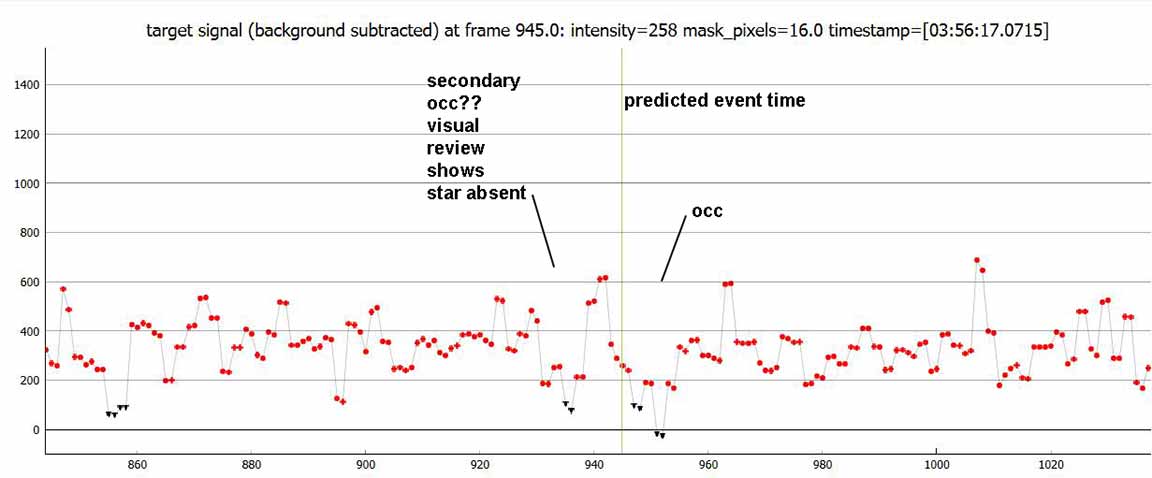
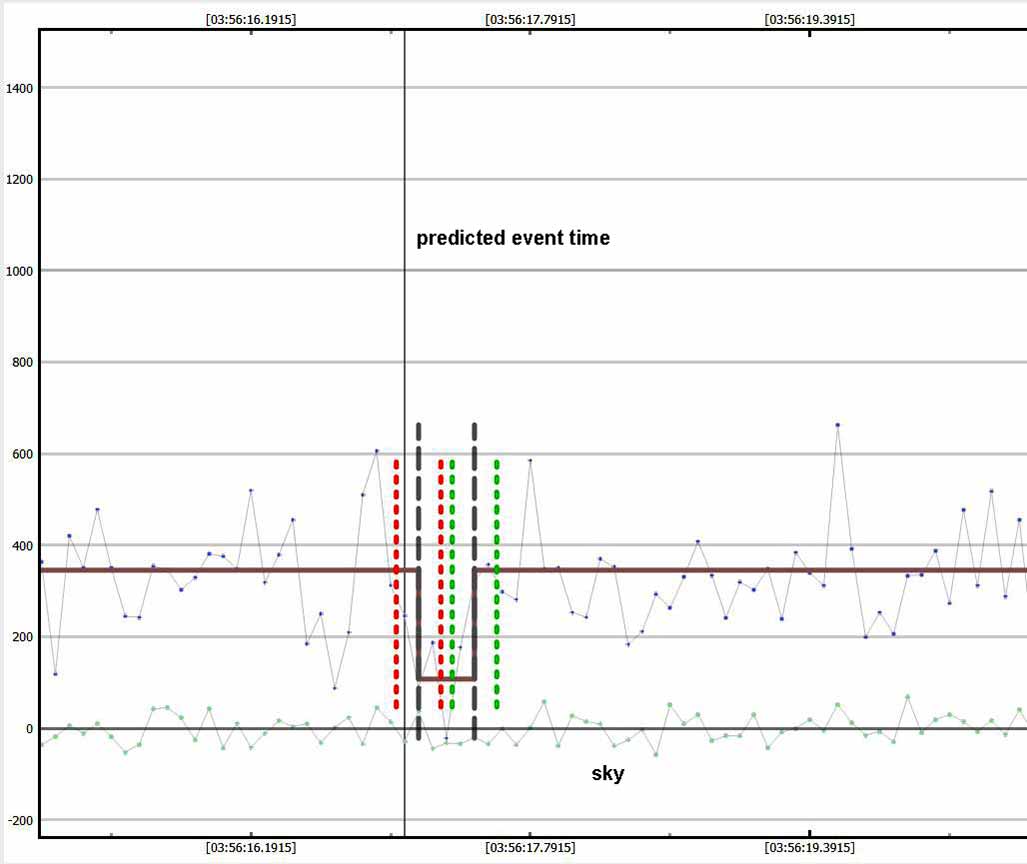
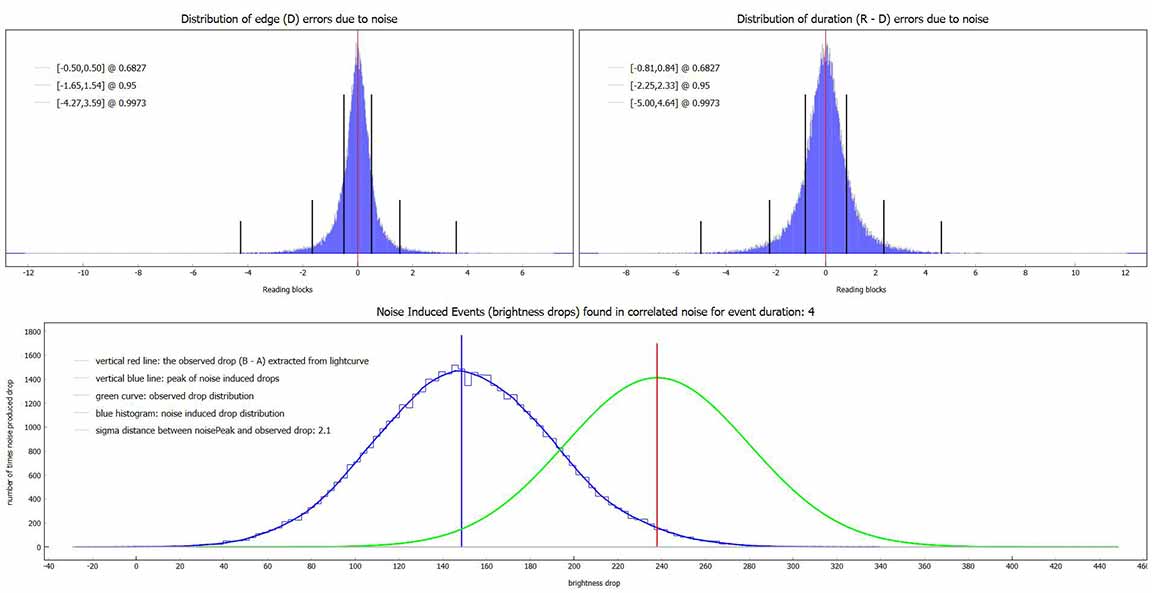
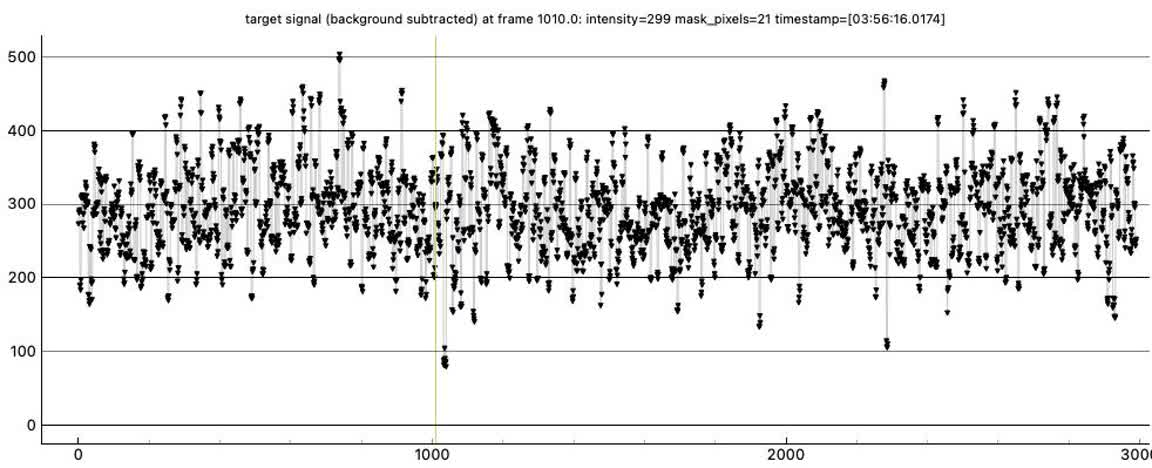
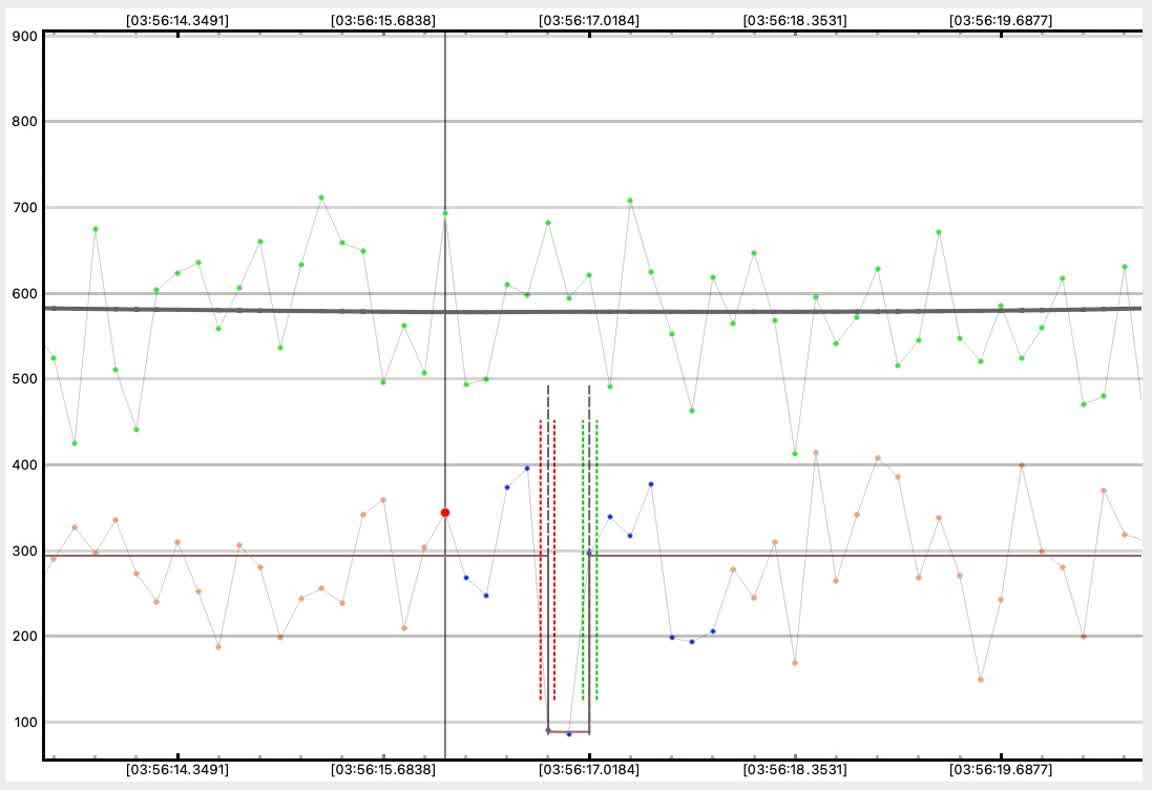
The result is a positive with NIE test = 2.1 sigma detection right on the predicted time, including the deepest point of the entire recording. Duration 0.32s.
My arguments that the primary occultation event is real:
1. This is a low number asteroid (long time base of astrometry) and high rank event
2. My site was essentially on the centerline, with nominal odds of a "hit" greater than 99%
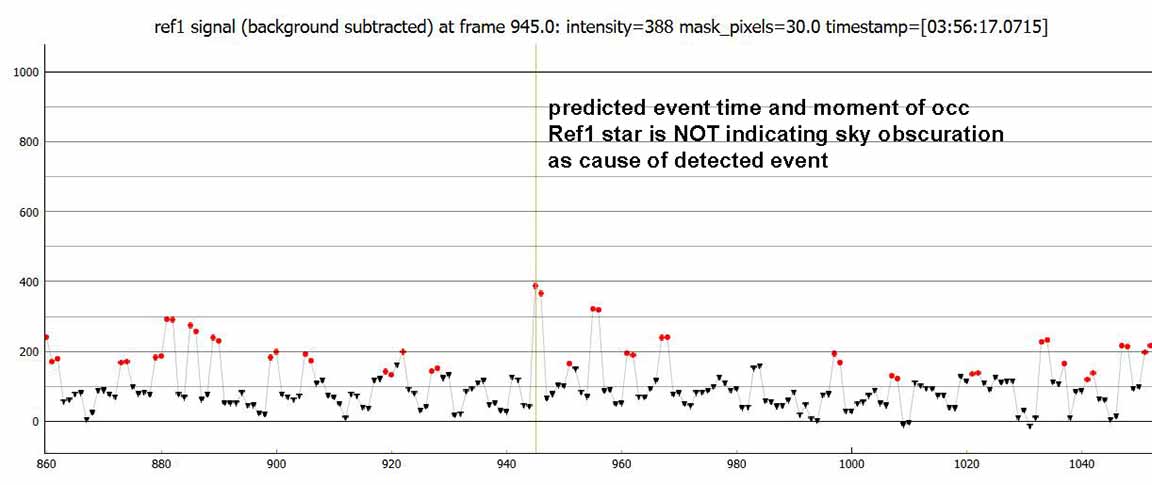
3. If I don't trim out the error source moments above, PyOTE gets fooled and latches onto an earlier "event" which had more consecutive points, but shallower and clearly far too early. The true depth was 6 magnitudes, essentially to zero. Because of skylight subtraction, I did not have a drop fully to zero at all points, but to 100% at one integration point (0.08s) and unusually low points just before as well.
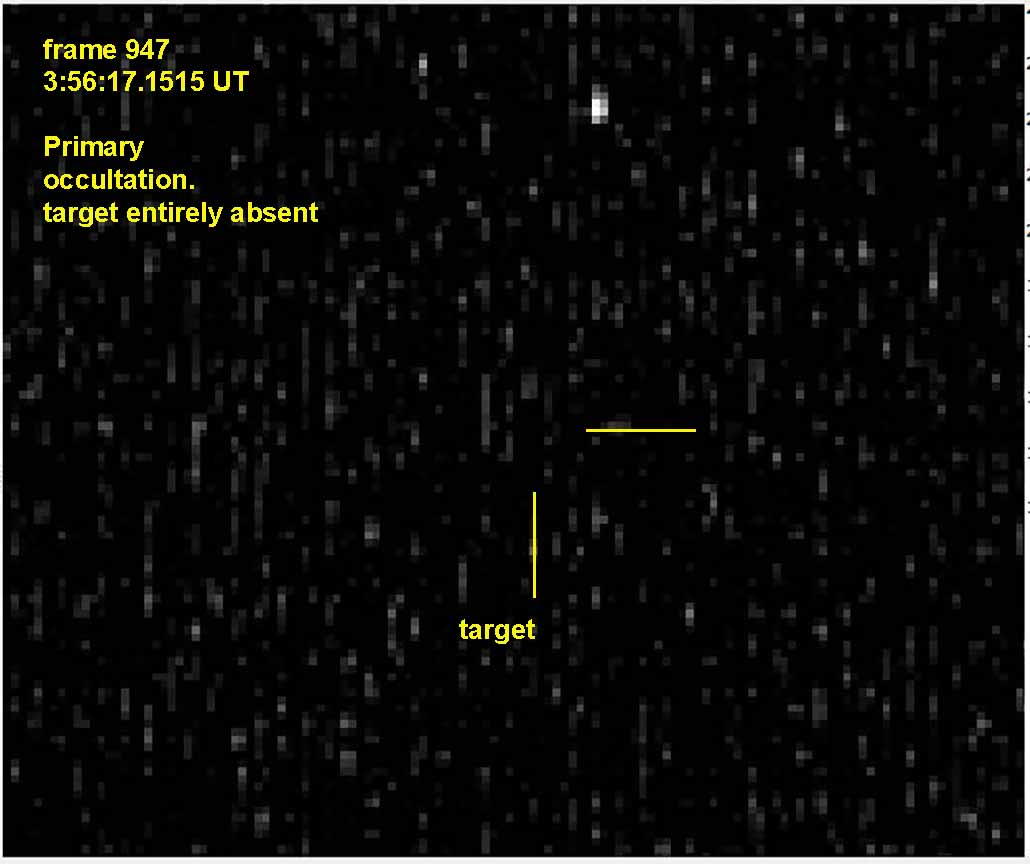
4. The target is entirely absent at the deepest point, on 2-D image of the .avi file. This argues it's not an NIE due to bad sky subtraction or tracking mistake.
5. By clicking on points along the path map, I can estimate that my location should have seen the occultation 0.46s after Kirk did. This indeed is the interval between the centers of our two occultations.
NIE Test = 2.1 sigma
magDrop report: percentDrop: 68.9 magDrop: 1.268 +/- 0.978 (0.95 ci)
DNR: 2.36
D time: [03:56:17.1515]
D: 0.6800 containment intervals: {+/- 0.0403} seconds
D: 0.9500 containment intervals: {+/- 0.1276} seconds
D: 0.9973 containment intervals: {+/- 0.3143} seconds
R time: [03:56:17.4715]
R: 0.6800 containment intervals: {+/- 0.0403} seconds
R: 0.9500 containment intervals: {+/- 0.1276} seconds
R: 0.9973 containment intervals: {+/- 0.3143} seconds
Duration (R - D): 0.3200 seconds
Duration: 0.6800 containment intervals: {+/- 0.0660} seconds
Duration: 0.9500 containment intervals: {+/- 0.1831} seconds
Duration: 0.9973 containment intervals: {+/- 0.3854} seconds
 |
 |
 |
 |
 |
 |
 |
 |
 |
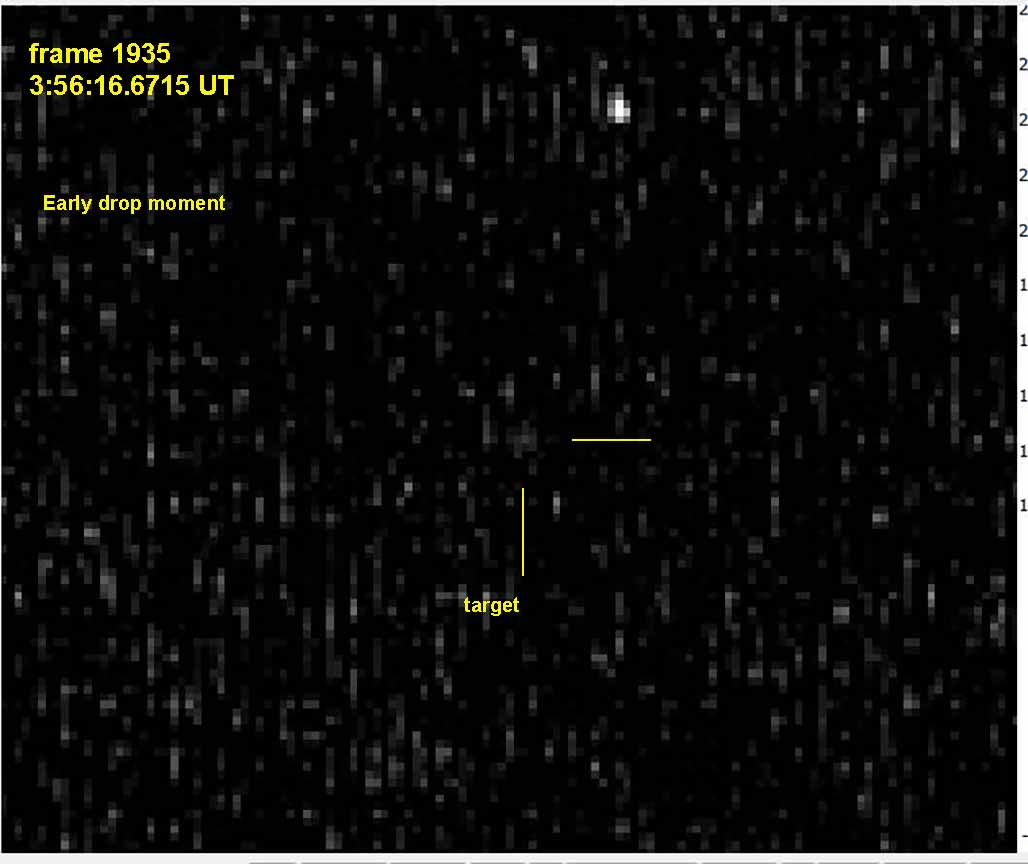
There is a suspicious drop just 1s before the main event. Could this be genuine? However, the case here is not sufficiently strong: The weaknesses are:
1. Only a small minority of asteroids have moons, and therefore a claim this is real should have strong evidence of support, like other chord(s). No chords nearby to substantiate it. Kirk Bender was on the nominal path edge about half a asteroid radius away, and his recording below shows no anomalous drop at that moment.
2. The deepest point in the drop still shows a faint image of the target, yet a full occultation would be a drop by 6 magnitudes and thus the target entirely absent.
3. The point-to-point noise level in the recording is high enough that it would be undetectable by PyOTE. I'm choosing to not report this earlier drop as an event.
At the deepest moment of this earlier event, there is still a faint blur for the target. |
By contrast, at the deepest drop of the main event which PyOTE detected and is in alignment with Kirk Benders longer occ and high NIE test, the target is entirely gone. |
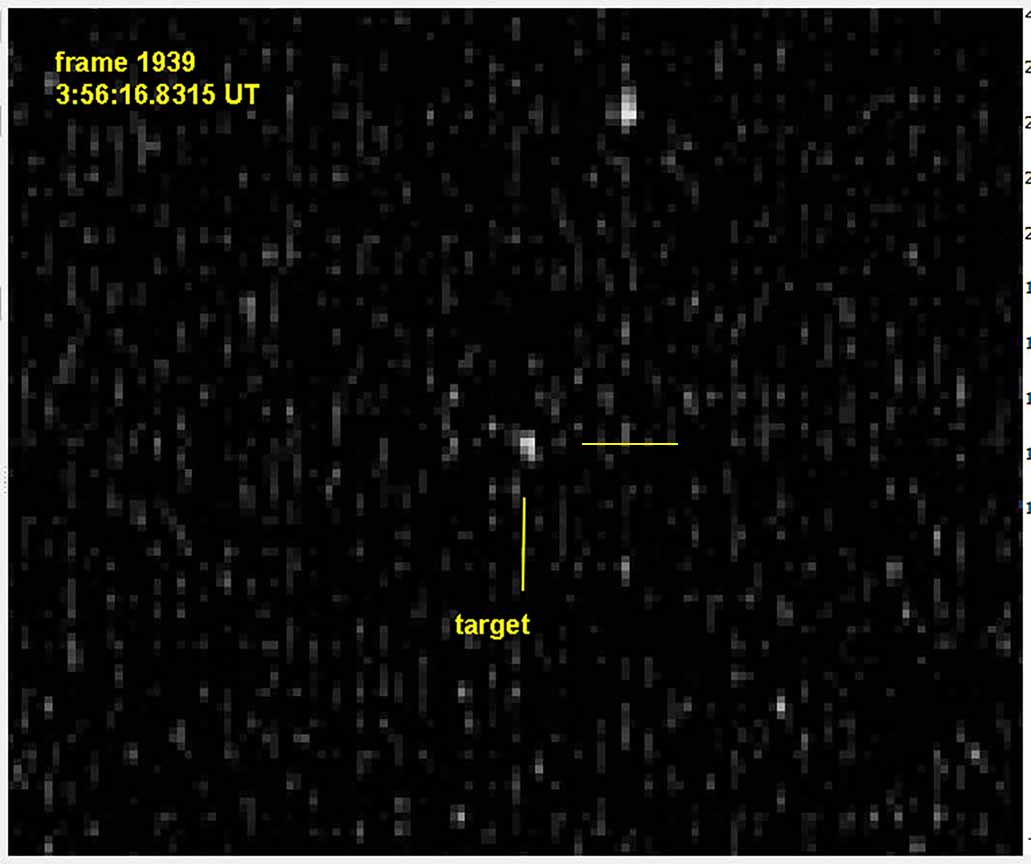
The target is easy to see between these two drops. |
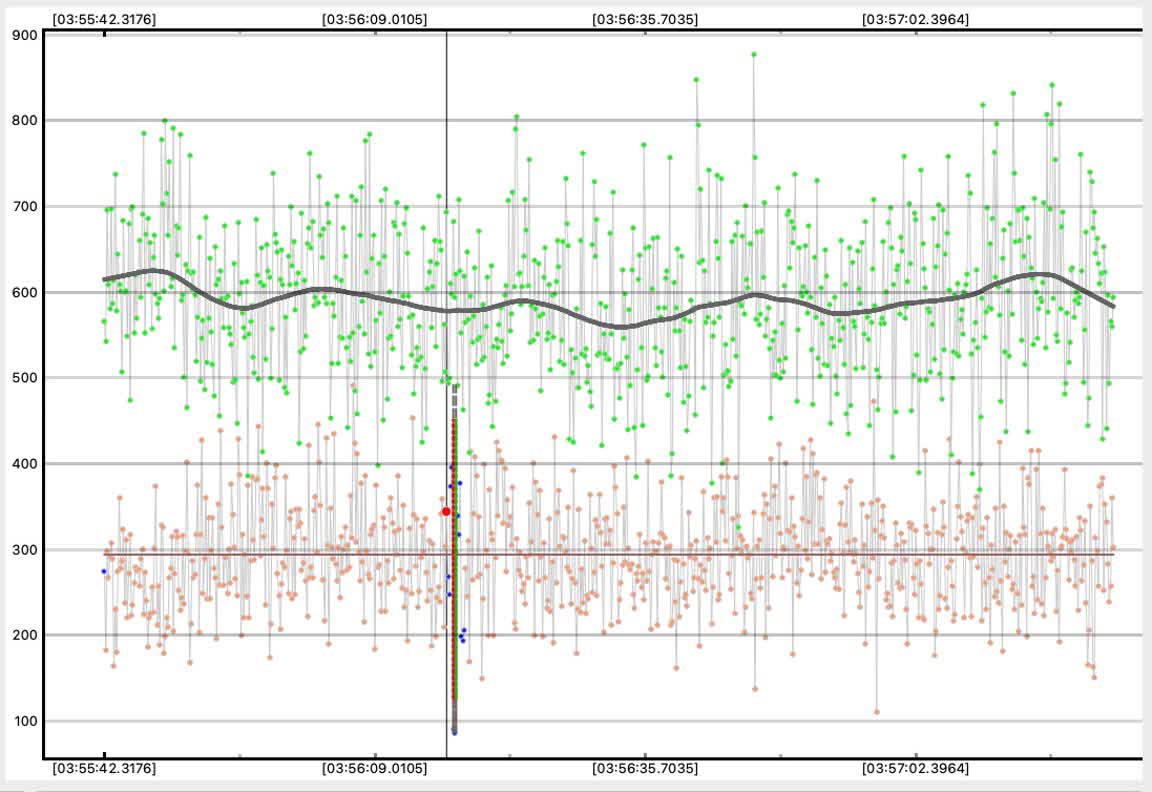
I got a 0.2669s event for Petaev from home, 8x., near predicted time. I don't see a secondary event less than a second apart that you mentioned in yours, although there's a single point drop in mine 40 seconds later, but it's not as deep as my main event.
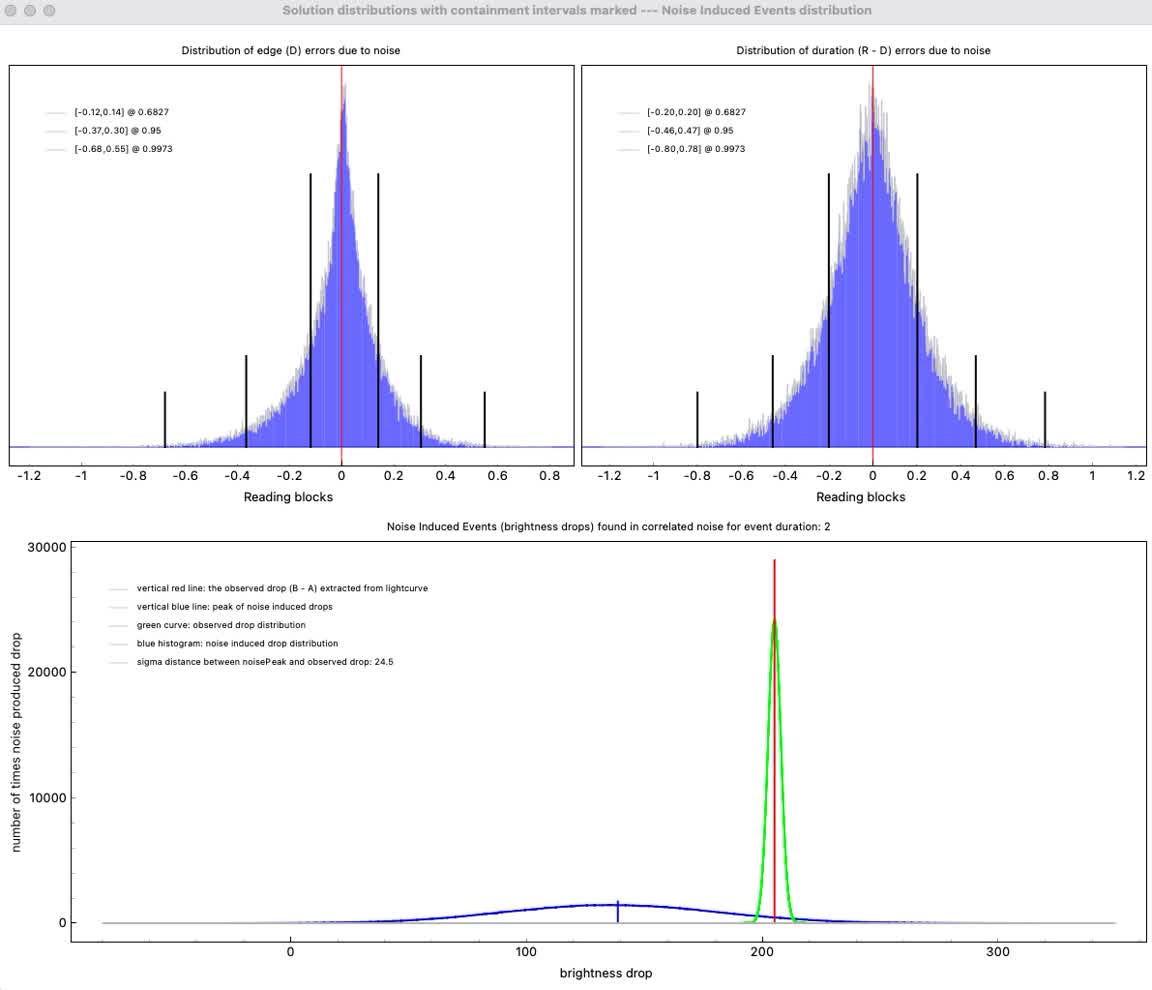
PyOTE NIE sigma is 24.5.
magDrop report: percentDrop: 69.8 magDrop: 1.299 +/- 0.059 (0.95 ci)
DNR: 3.46
D time: [03:56:16.7515]
D: 0.6800 containment intervals: {+/- 0.0188} seconds
D: 0.9500 containment intervals: {+/- 0.0489} seconds
D: 0.9973 containment intervals: {+/- 0.0906} seconds
R time: [03:56:17.0184]
R: 0.6800 containment intervals: {+/- 0.0188} seconds
R: 0.9500 containment intervals: {+/- 0.0489} seconds
R: 0.9973 containment intervals: {+/- 0.0906} seconds
Duration (R - D): 0.2669 seconds
Duration: 0.6800 containment intervals: {+/- 0.0269} seconds
Duration: 0.9500 containment intervals: {+/- 0.0617} seconds
Duration: 0.9973 containment intervals: {+/- 0.1057} seconds
 |
 |
 |
 |
 |
 |