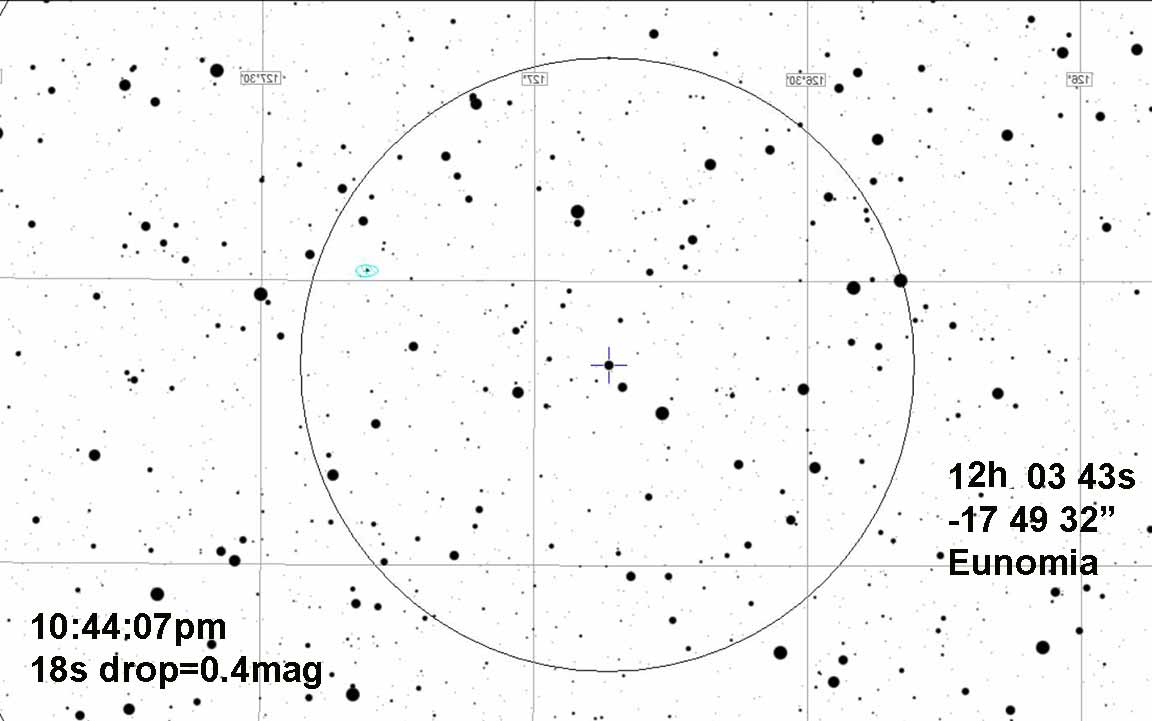
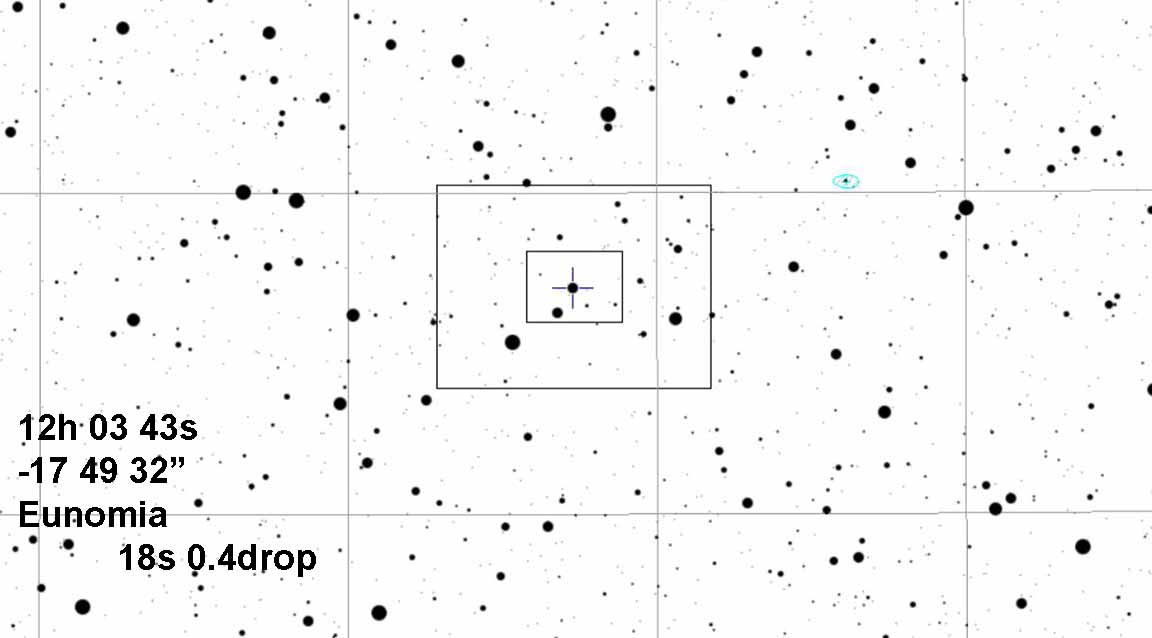
Eunomia is a large bright asteroid at magnitude 10.0, the target star is W=10.9 and the drop is about 0.4 magnitudes. That's quite doable, insure you don't have saturation of pixels will likely justify 1x setting. I notice on my computer screen that even when I ask for saturated pixels to show live and then I adjust the recording brightness, even when I go very faint it doesn't seem to change the red pixels on stars. I don't understand why that is. To minimize "saw toothing" it will probably be best to defocus a bit and use 1x and reduce in field mode
Alt=19, Az=130 in Corvus, 4 deg above/right of the top of the head of Corvus. 20 deg right and a bit lower than Porrima
|
|
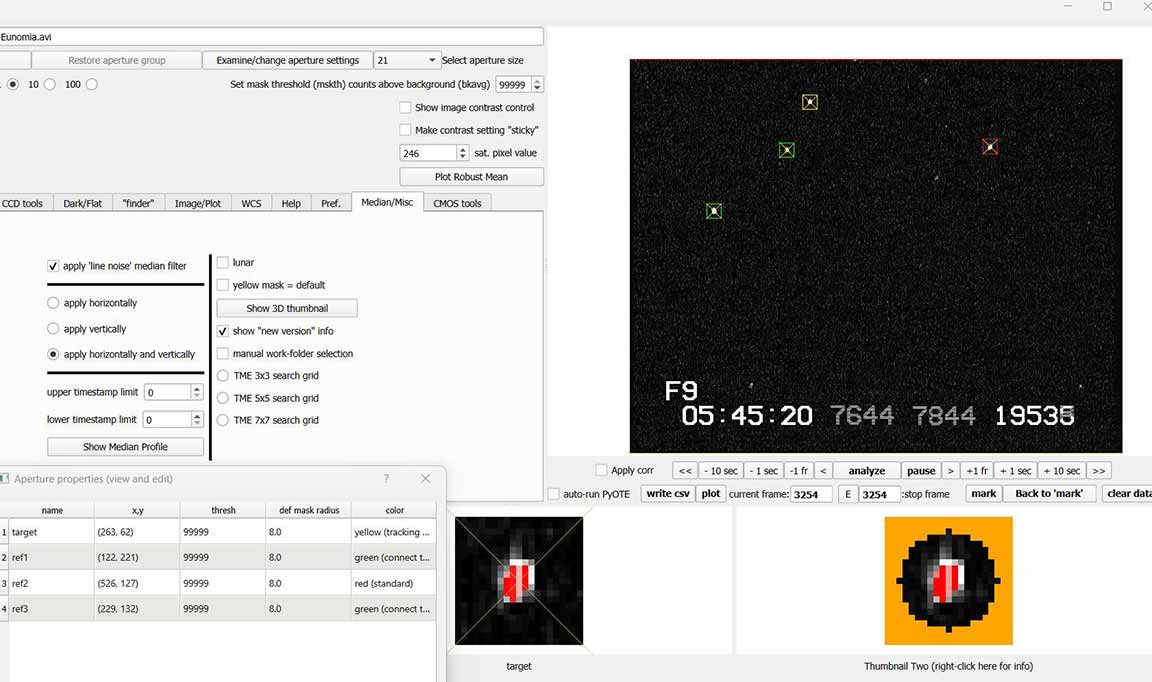
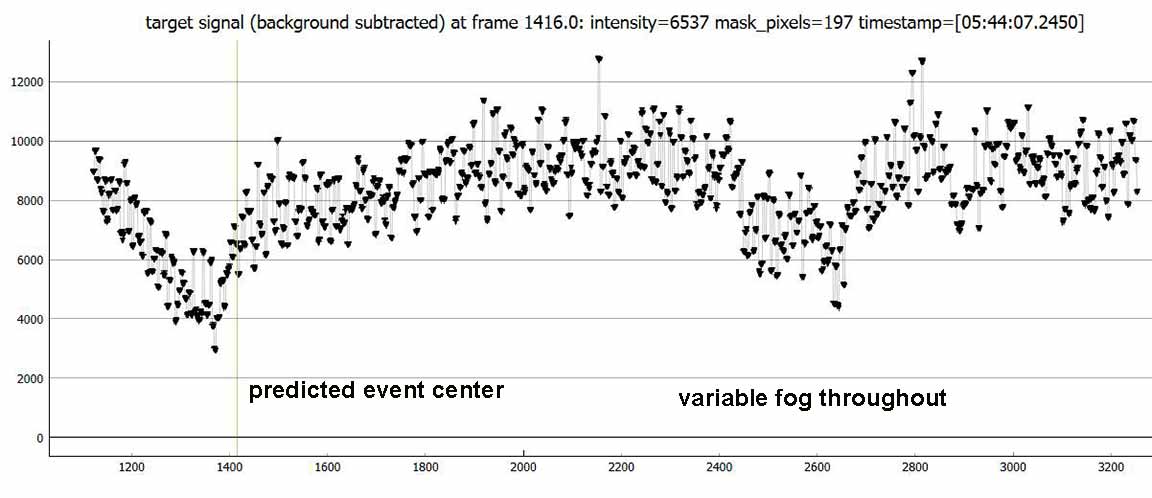
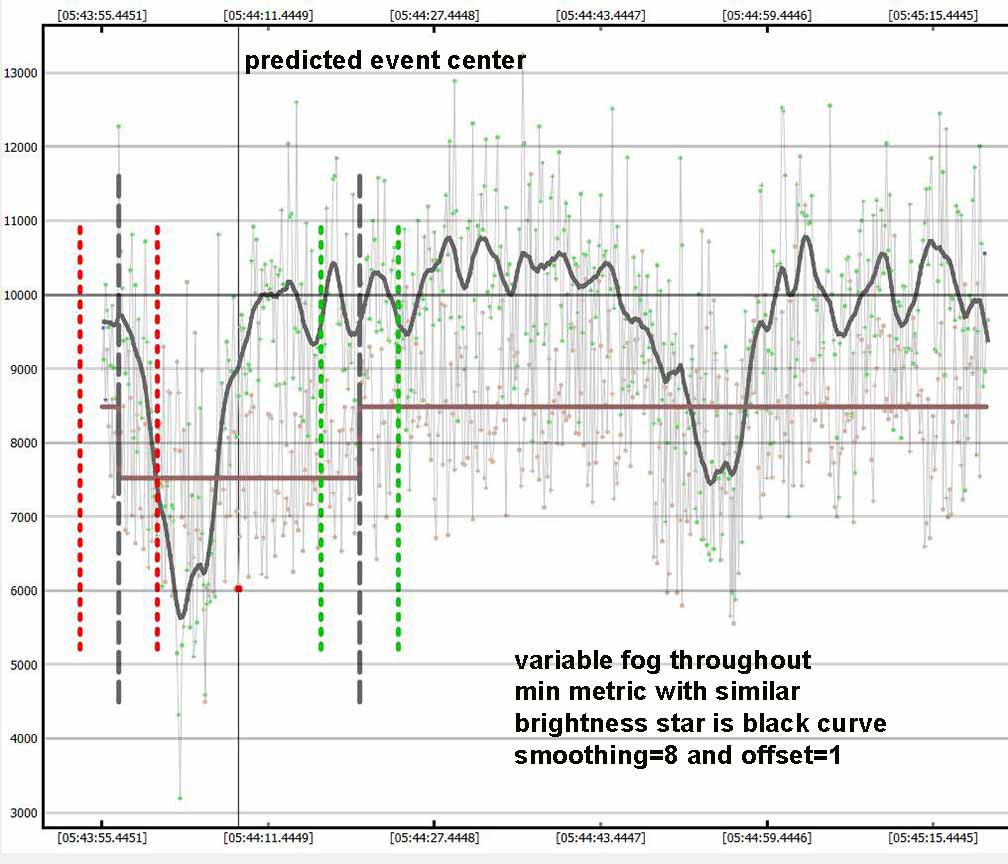
I rushed up to the "Red Realty" place on Hwy 17 and set up in the dirt lot beneath. Fog came and went and I barely was able to get on target after the fog cleared from that direction, and was recording with target on-screen. However, scope drift carried the target off chip and I had to bring it back in, with stable tracking only beginning just 4s before the "D" was expected. It did look like it faded some, but with the fog it's hard to tell what the cause was. In fact, on analysis, it was a combination of the occultation and fog. In order to try and locate and ID the field through fog, I had the integration set to 8x and planned to reduce it to 1x, but did not have time to do so, and so the recording was at 8x. This resulted in the core of the star/asteroid having many saturated pixels. This might have been fatal, but luckily there was a neighbor star with identical flux and this enabled calibration good enough to pull the occultation from the noise, given the 0.4 mag drop.
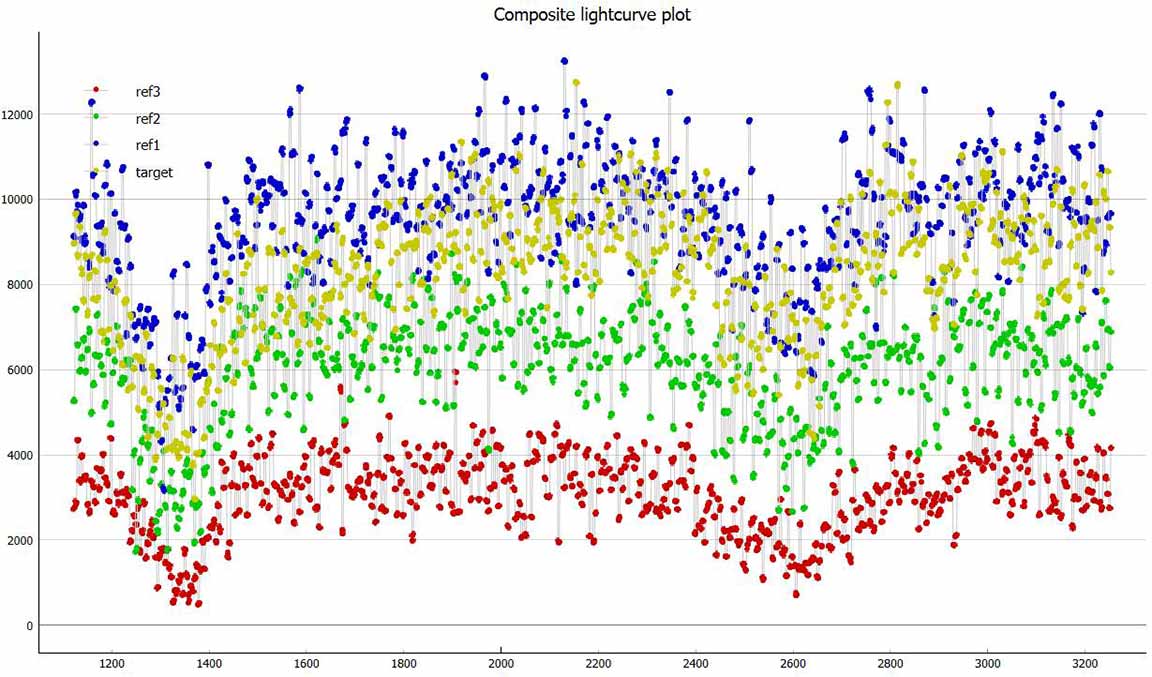
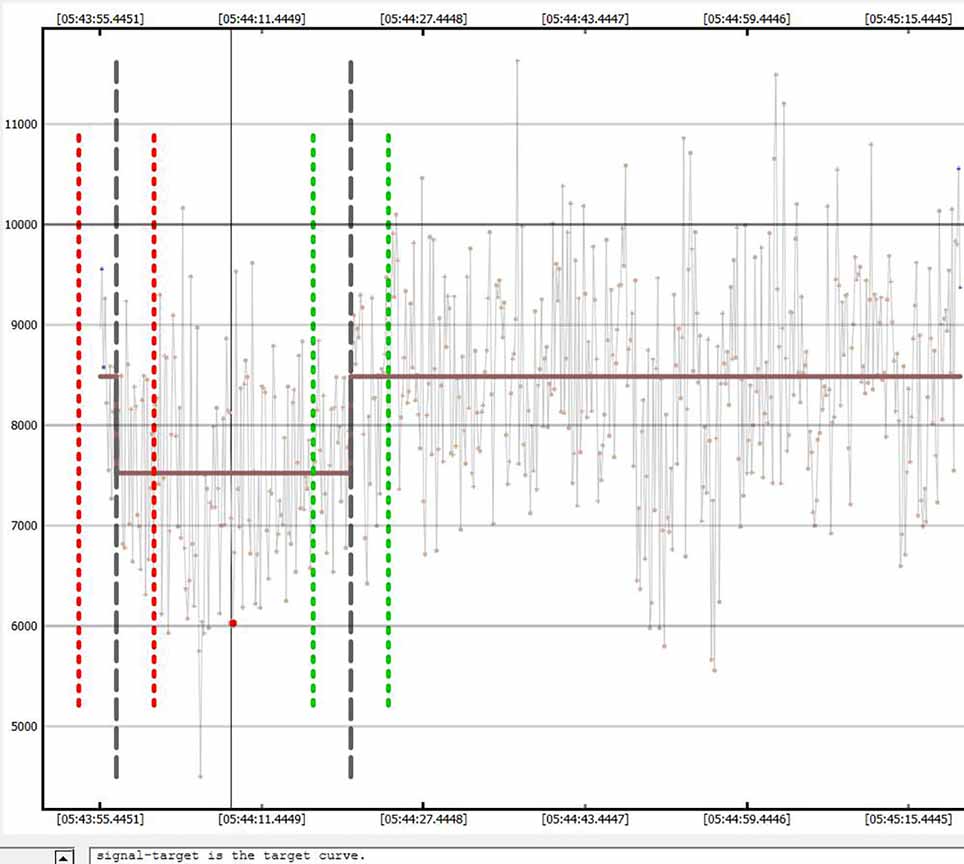
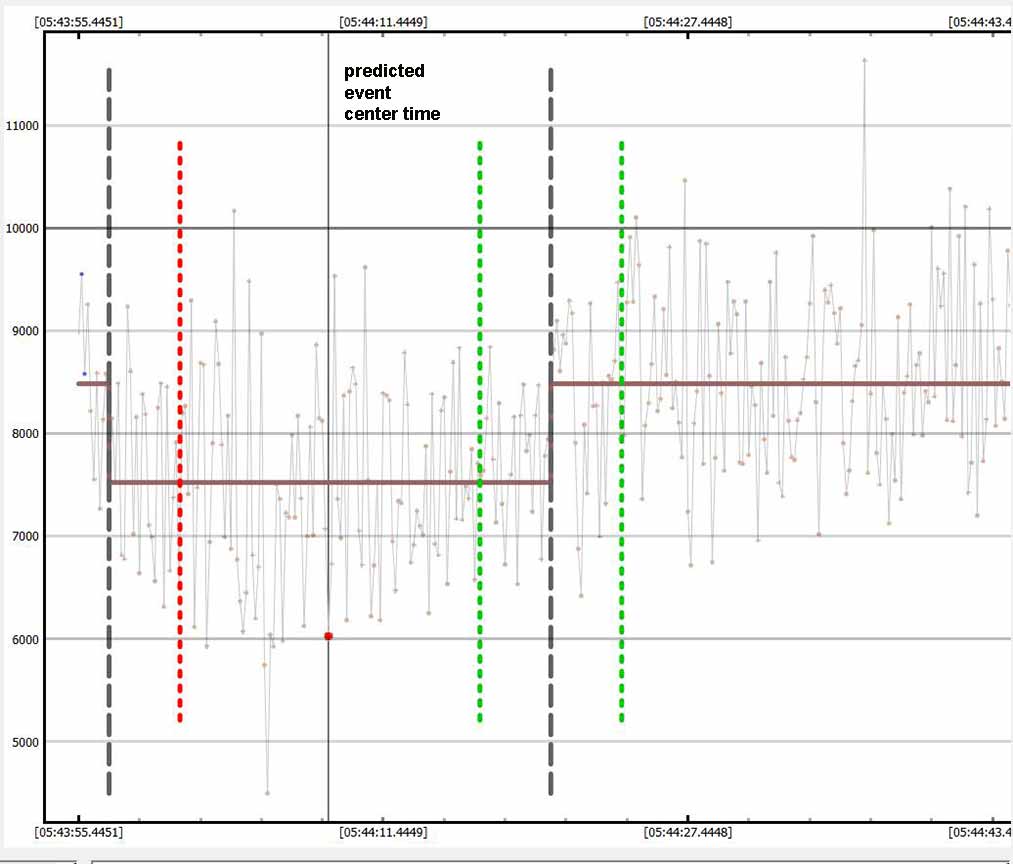
Reduced: drop was detected, but the saturation of the calibration star and target star's pixels reduced the drop to only 0.13 magnitudes. The timings agree well with Kirk Bender's, within errors, and at maximum duration as expected from the position of the centerline.
There have been error messages when asking PyOTE to write to the Excel file the timings, but if prompted, it successfully repairs the troublesome formulae (?) I screen-captured the error messages Here and Here.
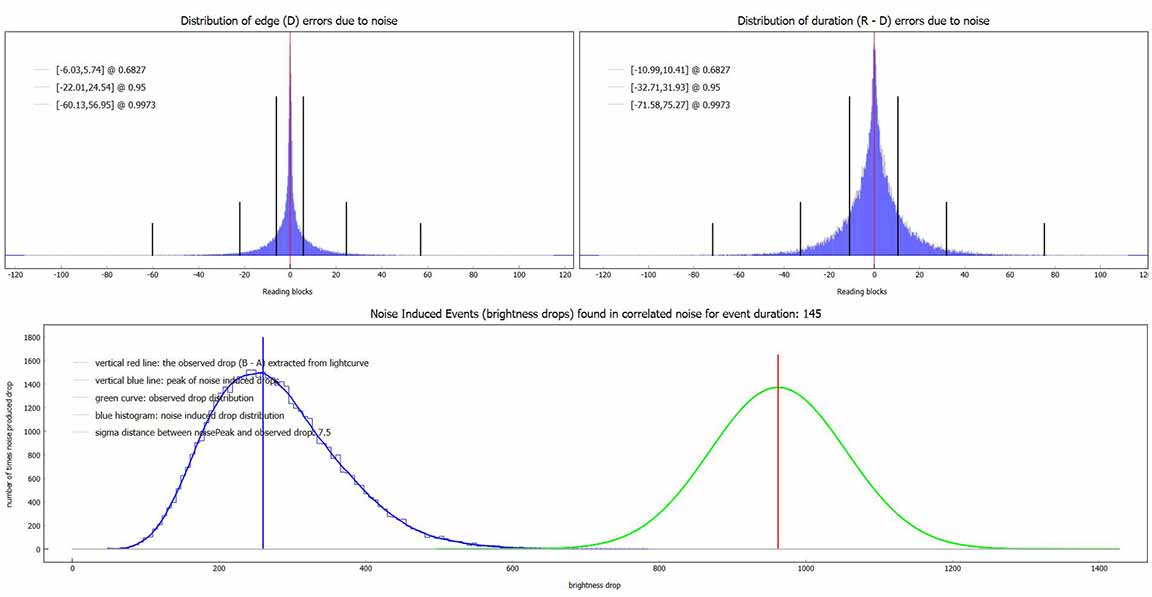
NIE test: 7 sigma
magDrop report: percentDrop: 11.3 magDrop: 0.131 +/- 0.026 (0.95 ci)
DNR: 0.97
D time: [05:43:57.0451]
D: 0.6800 containment intervals: {+/- 0.9417} seconds
D: 0.9500 containment intervals: {+/- 3.7243} seconds
D: 0.9973 containment intervals: {+/- 9.3659} seconds
R time: [05:44:20.2449]
R: 0.6800 containment intervals: {+/- 0.9417} seconds
R: 0.9500 containment intervals: {+/- 3.7243} seconds
R: 0.9973 containment intervals: {+/- 9.3659} seconds
Duration (R - D): 23.1998 seconds
Duration: 0.6800 containment intervals: {+/- 1.7120} seconds
Duration: 0.9500 containment intervals: {+/- 5.1711} seconds
Duration: 0.9973 containment intervals: {+/- 11.7480} seconds
 |
 |
 |
 |
 |
 |
 |
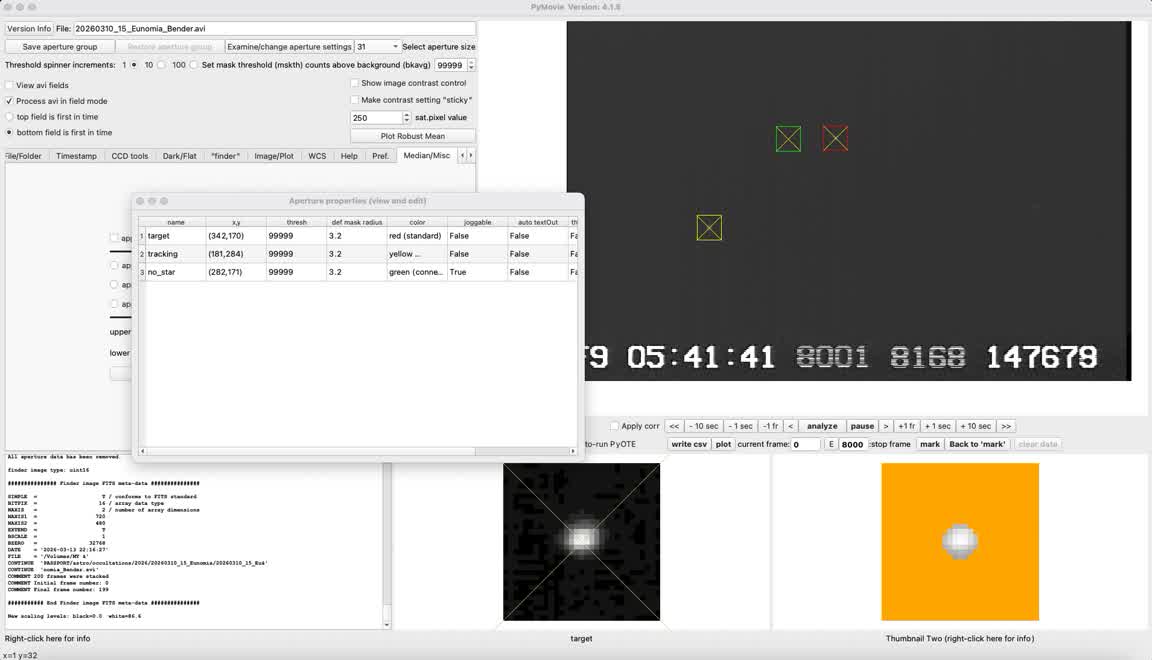
Observed from BD Rd/Hwy 1. Got a recording at 1x.
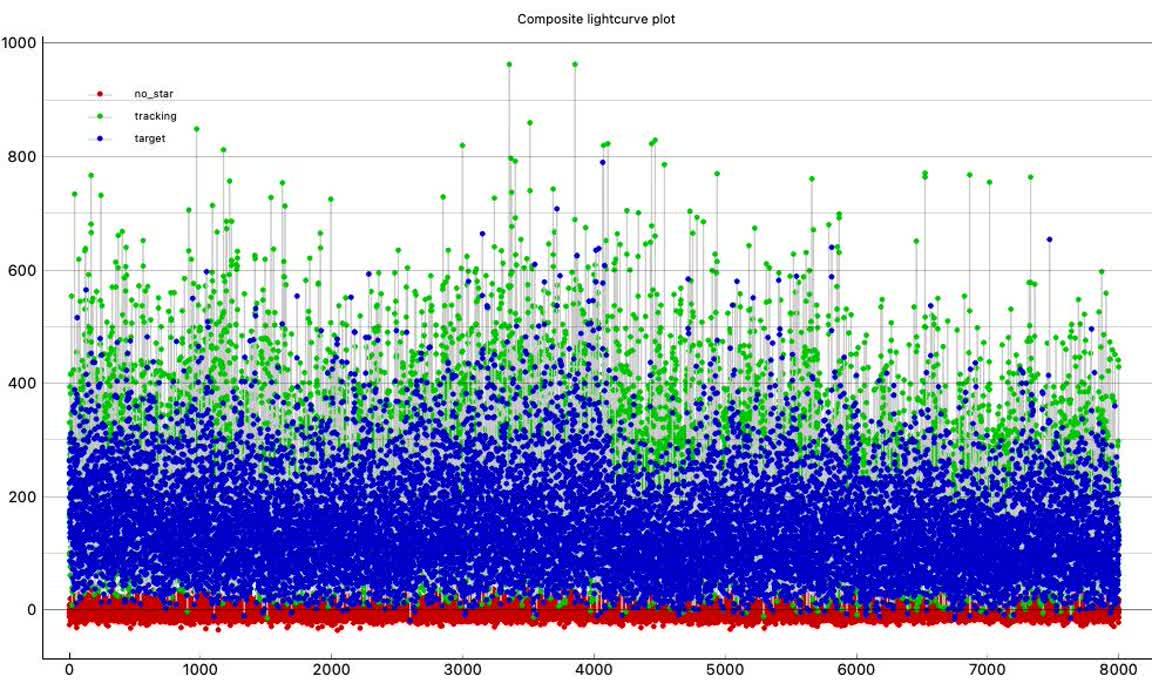
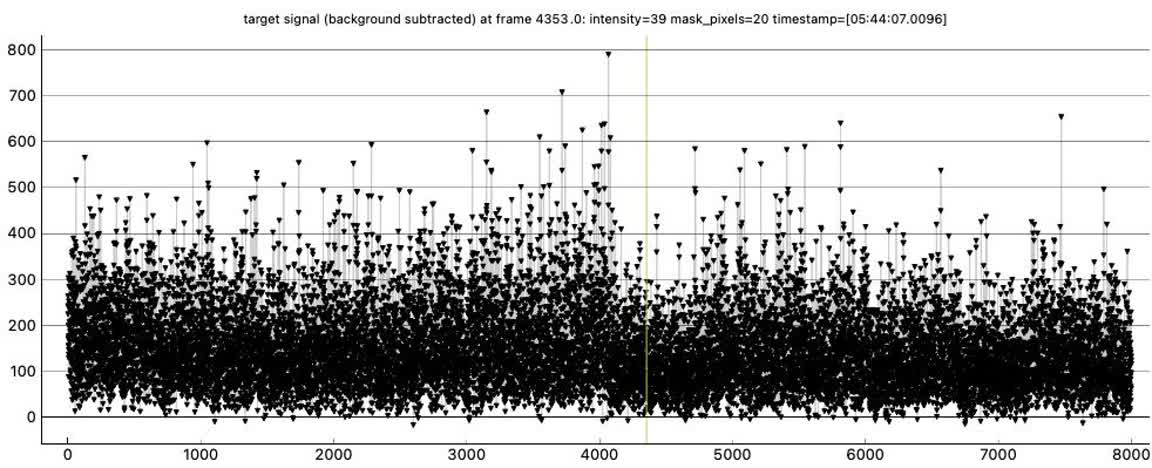
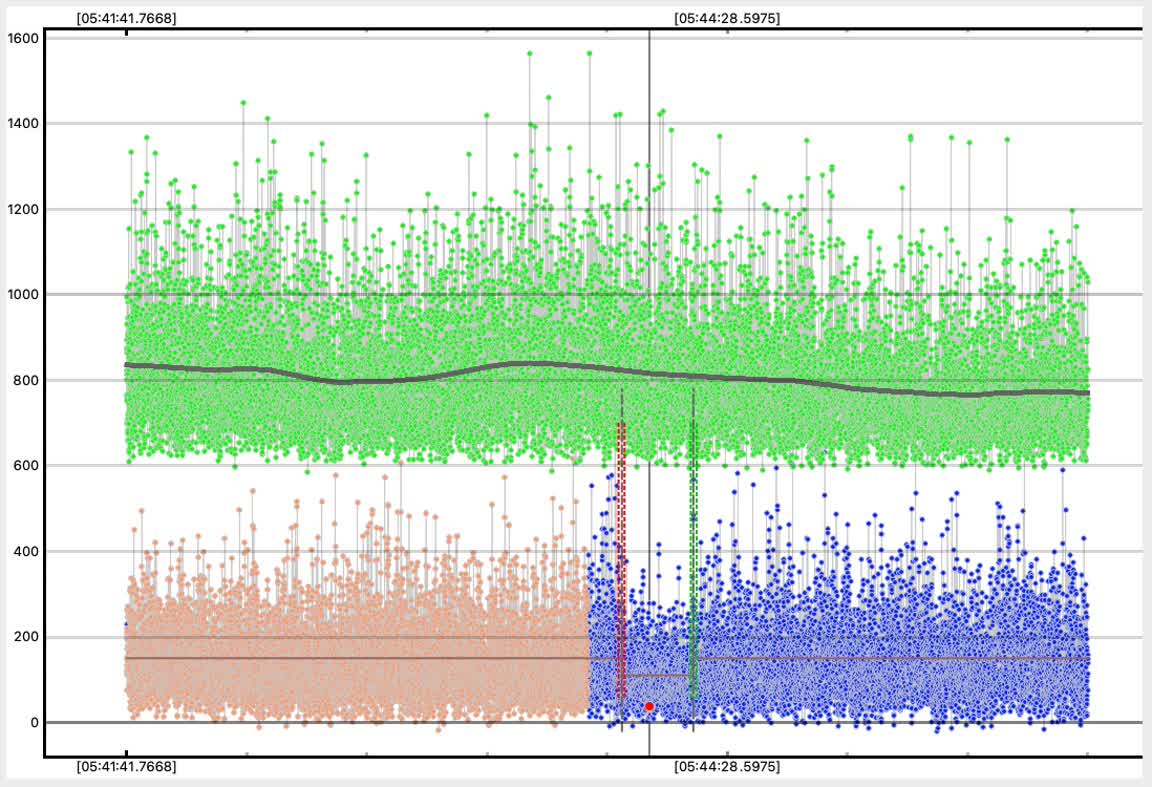
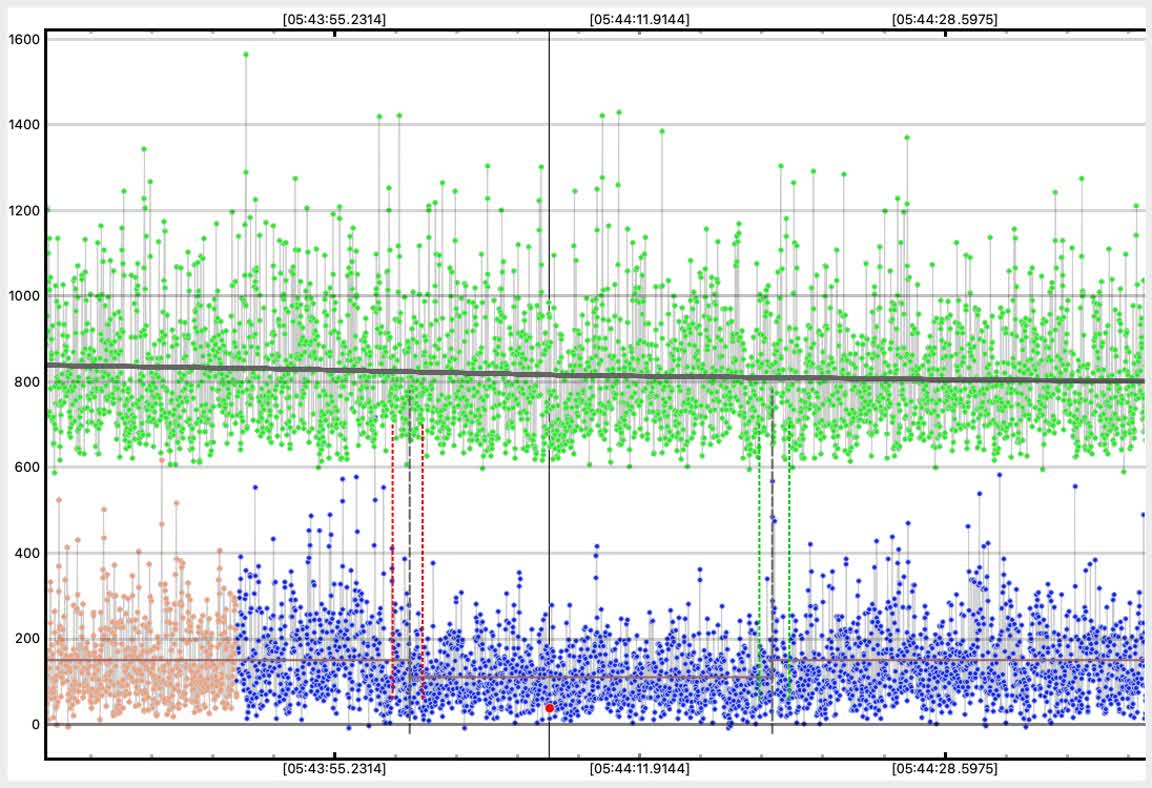
I got a 19.8195s event for Eunomia, 1x at Bonny Doon road and hwy 1. This is longer than the predicted 18.56s for this large low numbered asteroid with high rank, but the drop was low and the curve noisy with low DNR, and the .9973 containment interval for the duration was +/- 2.5740s. The target was low on the hazy horizon and clouds were coming in. I recorded for 6 min 24 sec but after about 5 min the stars dimmed due to the clouds and PyMovie lost tracking, so I analyzed only for the first 8000 frames (4 min 40 sec), which got the event in the middle. Due to the large number of points and long duration event, at 1x it took PyOTE 50 minutes to find the event.
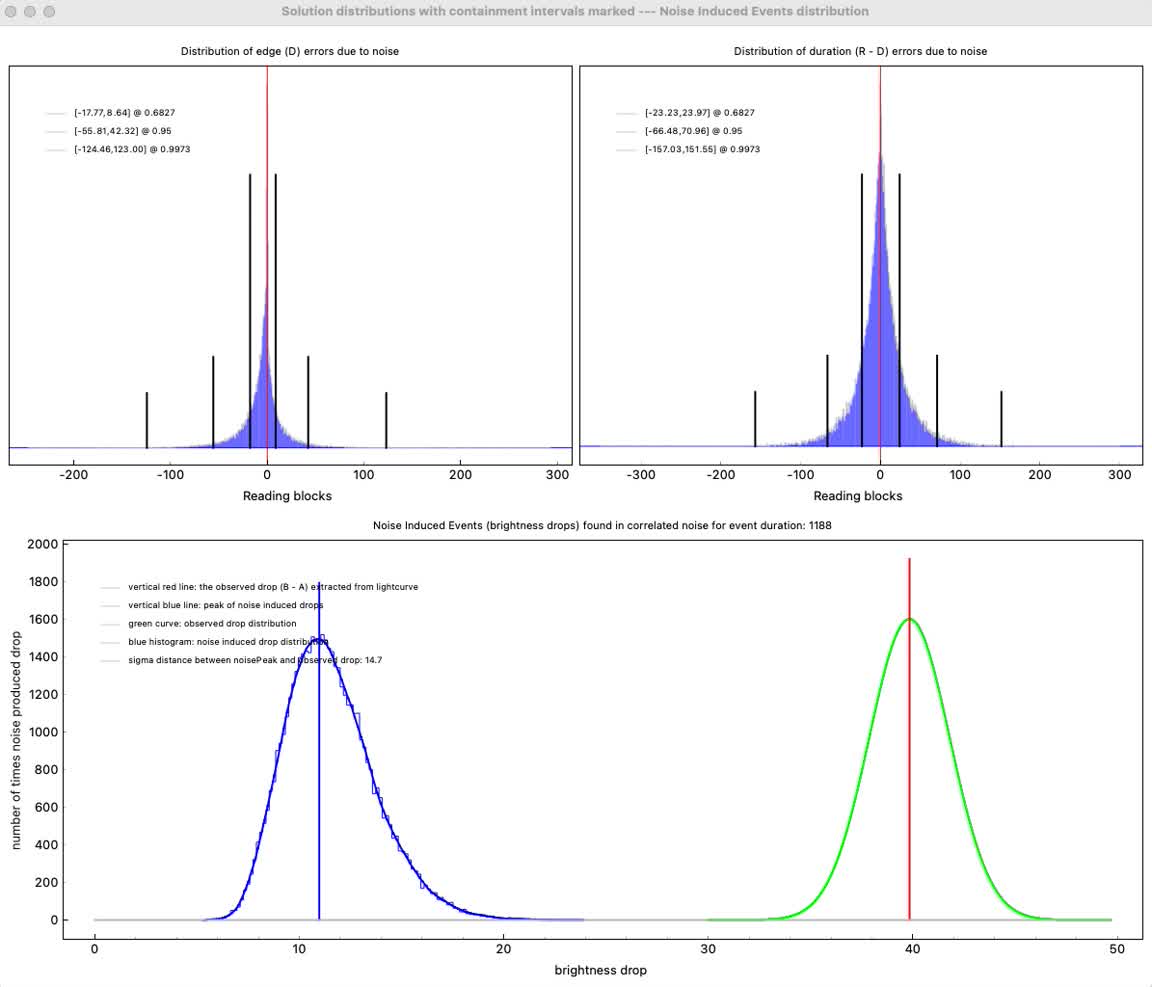
PyOTE NIE sigma distance is 14.7.
magDrop report: percentDrop: 26.5 magDrop: 0.335 +/- 0.038 (0.95 ci)
DNR: 0.46
D time: [05:43:59.3354]
D: 0.6800 containment intervals: {+/- 0.2964} seconds
D: 0.9500 containment intervals: {+/- 0.9311} seconds
D: 0.9973 containment intervals: {+/- 2.0763} seconds
R time: [05:44:19.1549]
R: 0.6800 containment intervals: {+/- 0.2964} seconds
R: 0.9500 containment intervals: {+/- 0.9311} seconds
R: 0.9973 containment intervals: {+/- 2.0763} seconds
Duration (R - D): 19.8195 seconds
Duration: 0.6800 containment intervals: {+/- 0.3937} seconds
Duration: 0.9500 containment intervals: {+/- 1.1464} seconds
Duration: 0.9973 containment intervals: {+/- 2.5740} seconds
 |
 |
 |
 |
 |
 |
Fog came in at the 1600 ft level 20 minutes before the event. The clouds were clearly fickle tonight - not following the usual pattern of blanketing the low elevations and clear above. No data.