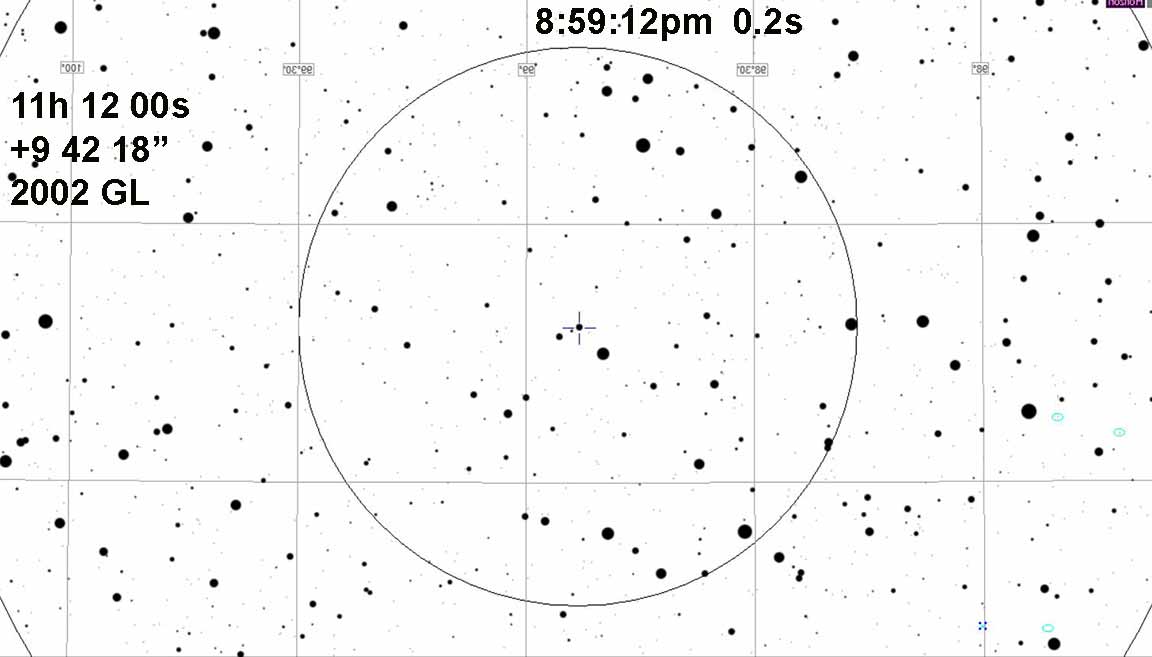
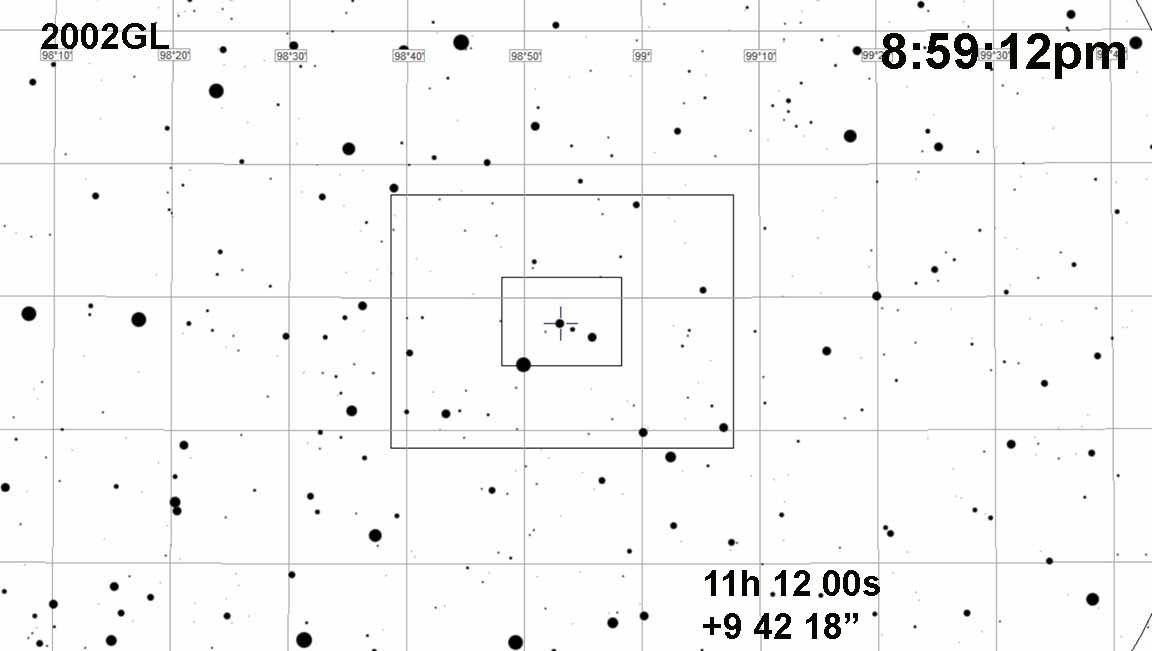
This is a very short event and will take good skies to allow you do so 1x or 2x to hope to get it. But at mag 11.9, 2x should give you good enough brightness for our 8SE and f/3.3 Watec 910hx systems.
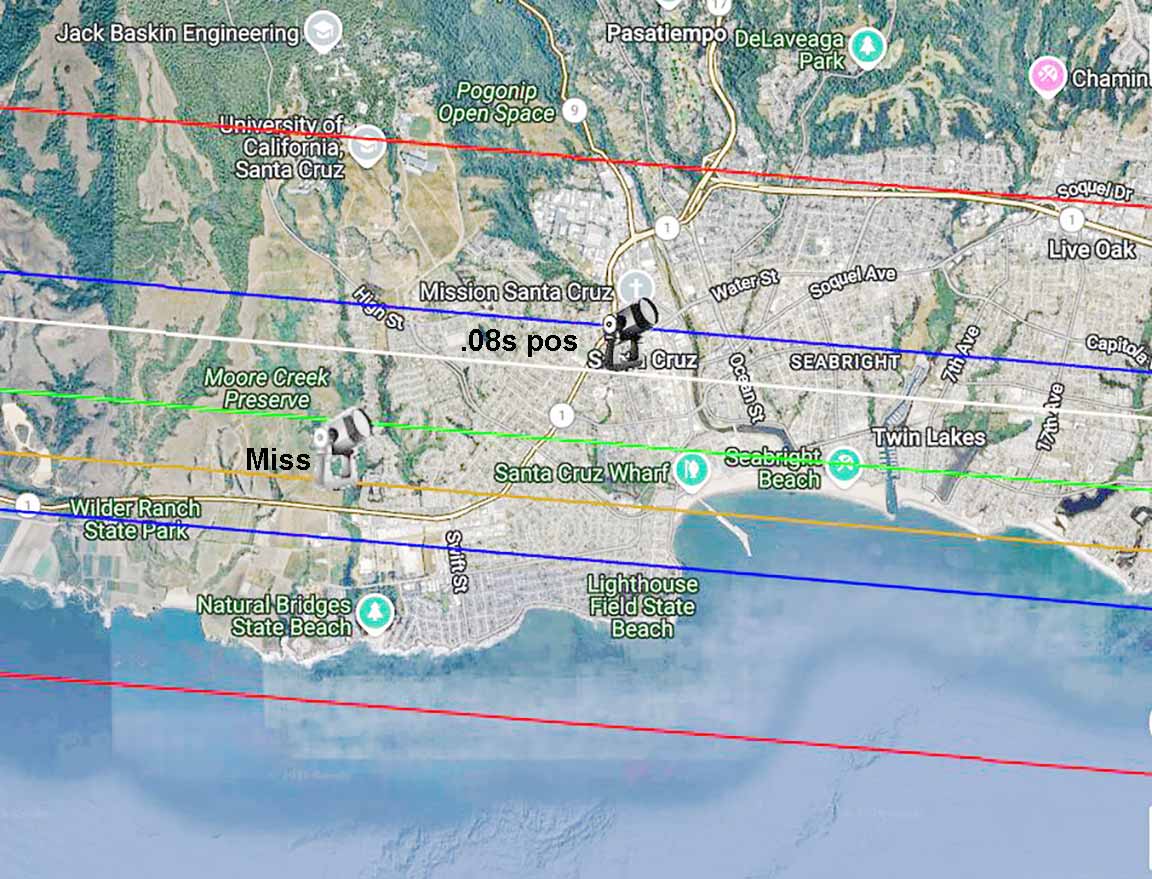
The path is through Santa Cruz and Aptos and does not come close to Karl's place. But the rank is not great and it might be off enough to get to Bernard or Jordan.
Alt=32, Az=102 in Leo, in the rear legs of the Lion
Q70 eyepiece raw capture
Chip view raw
|
|
|
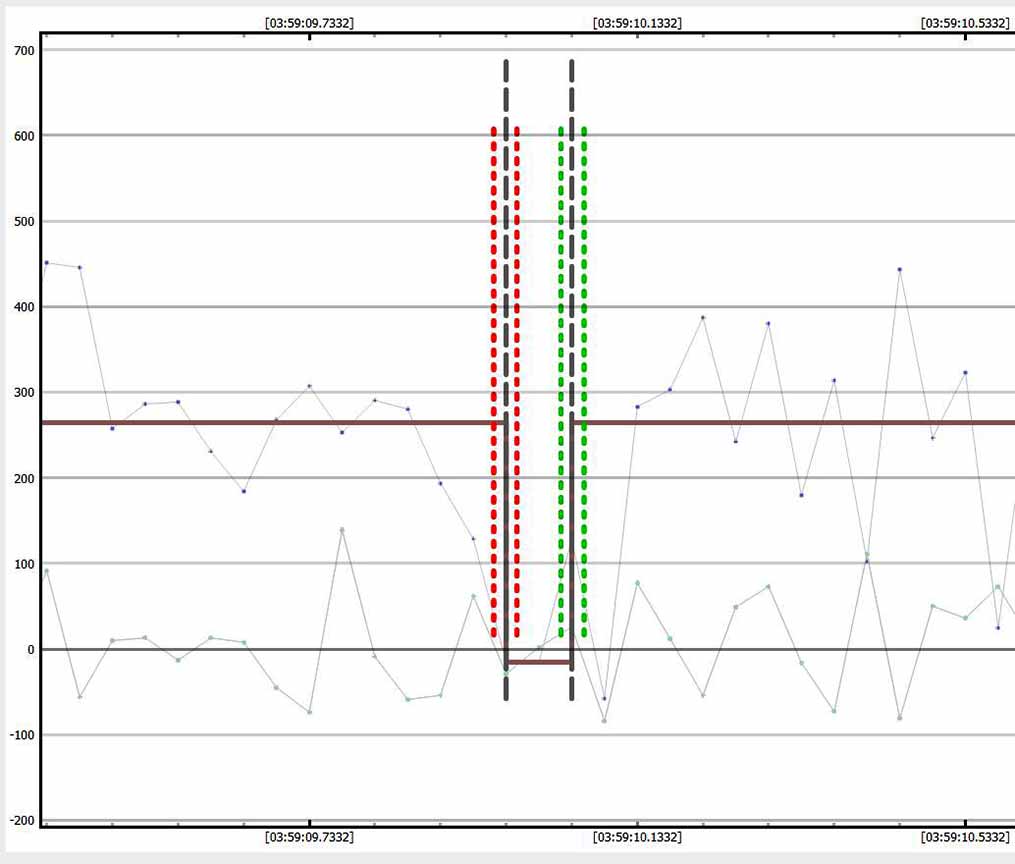
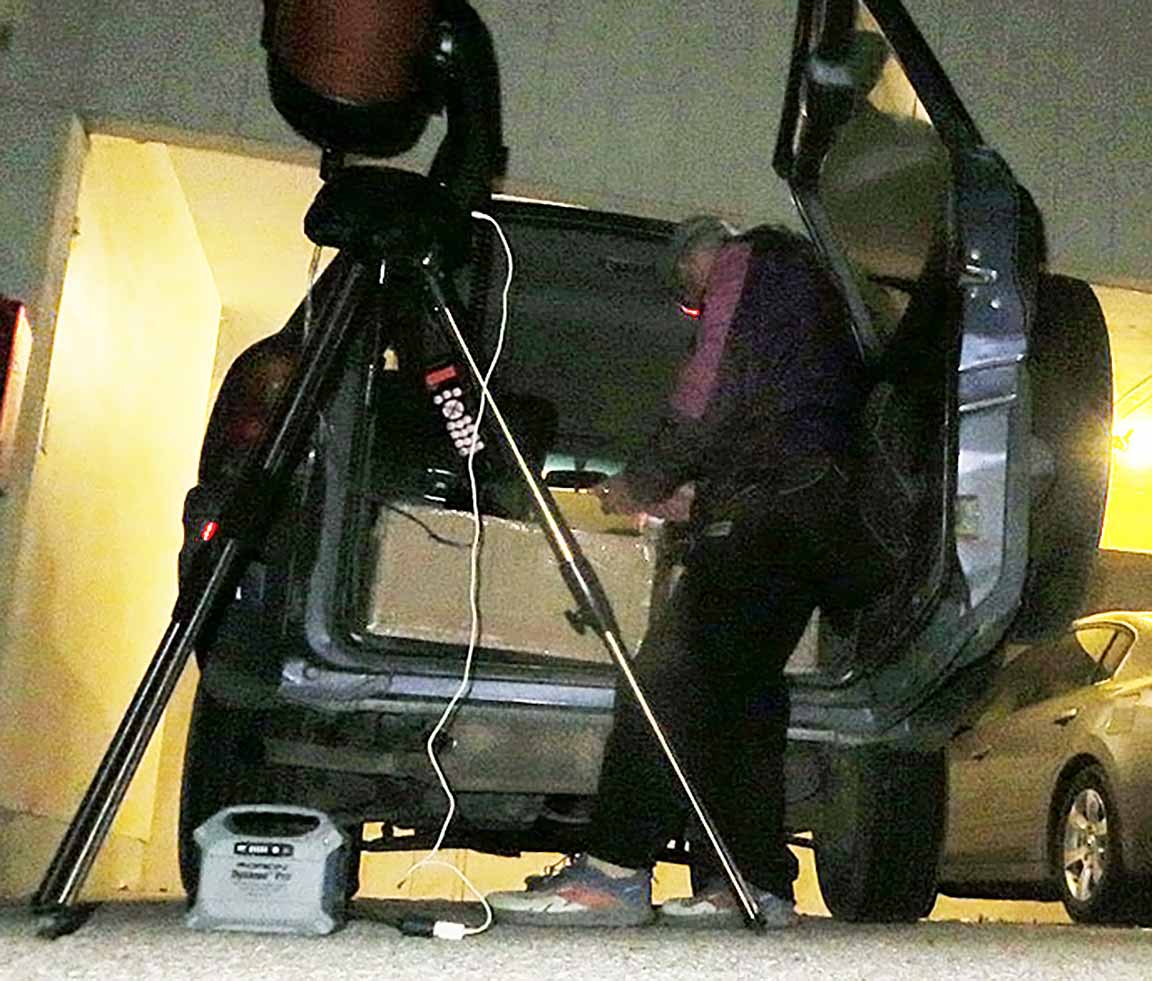
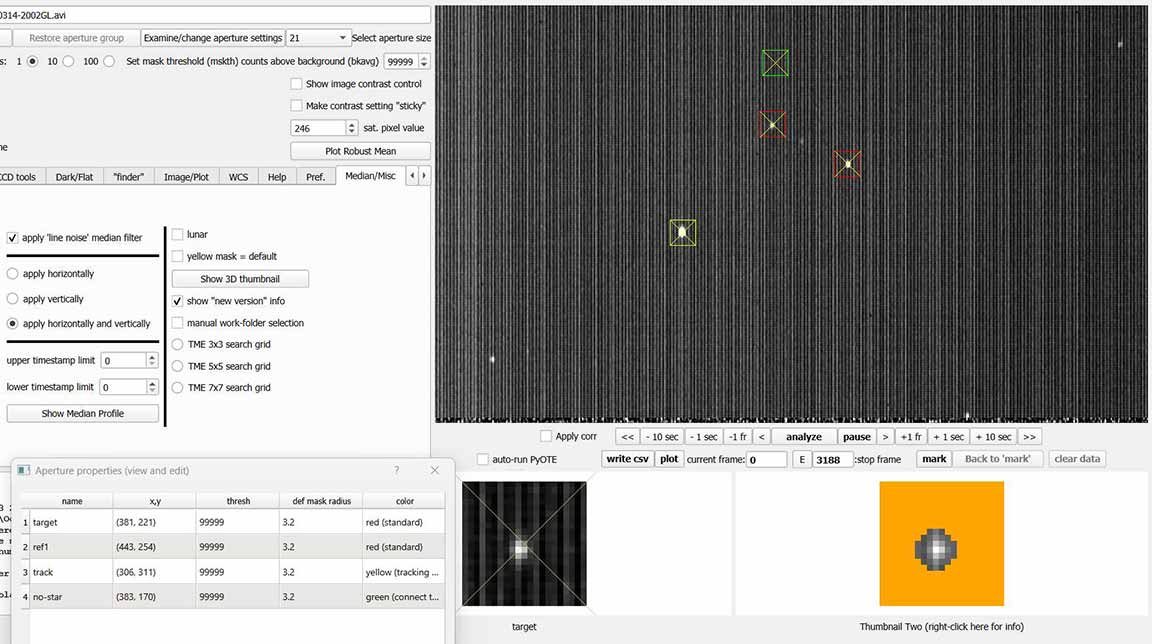
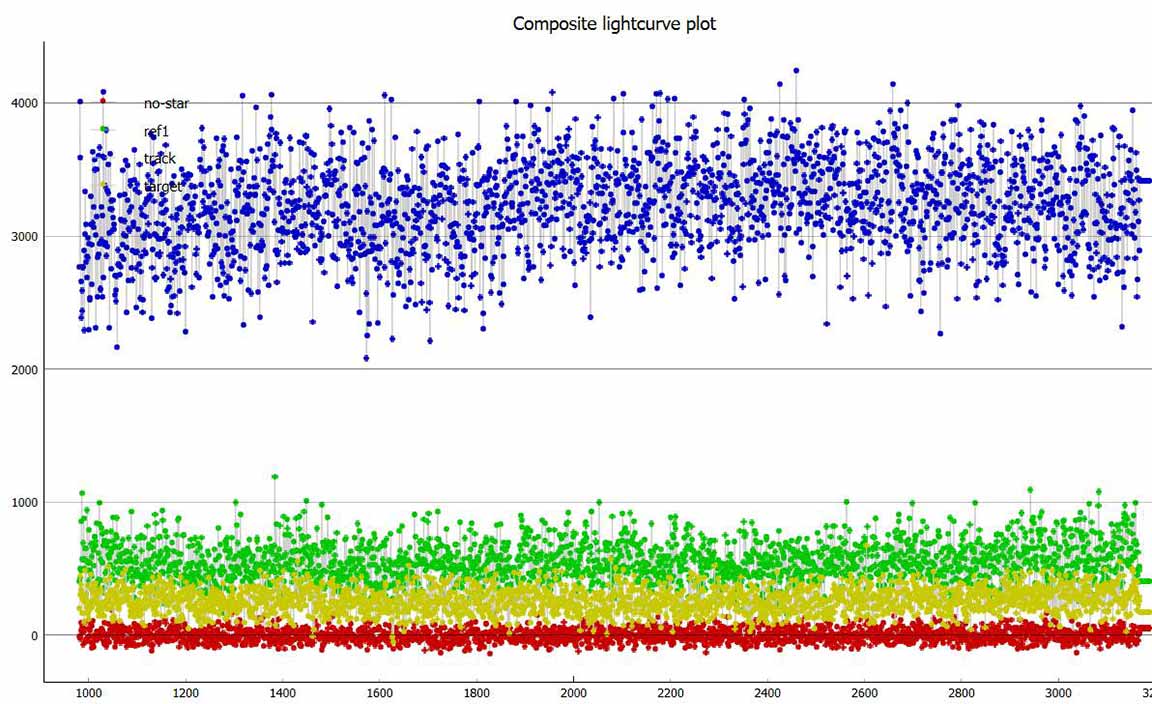
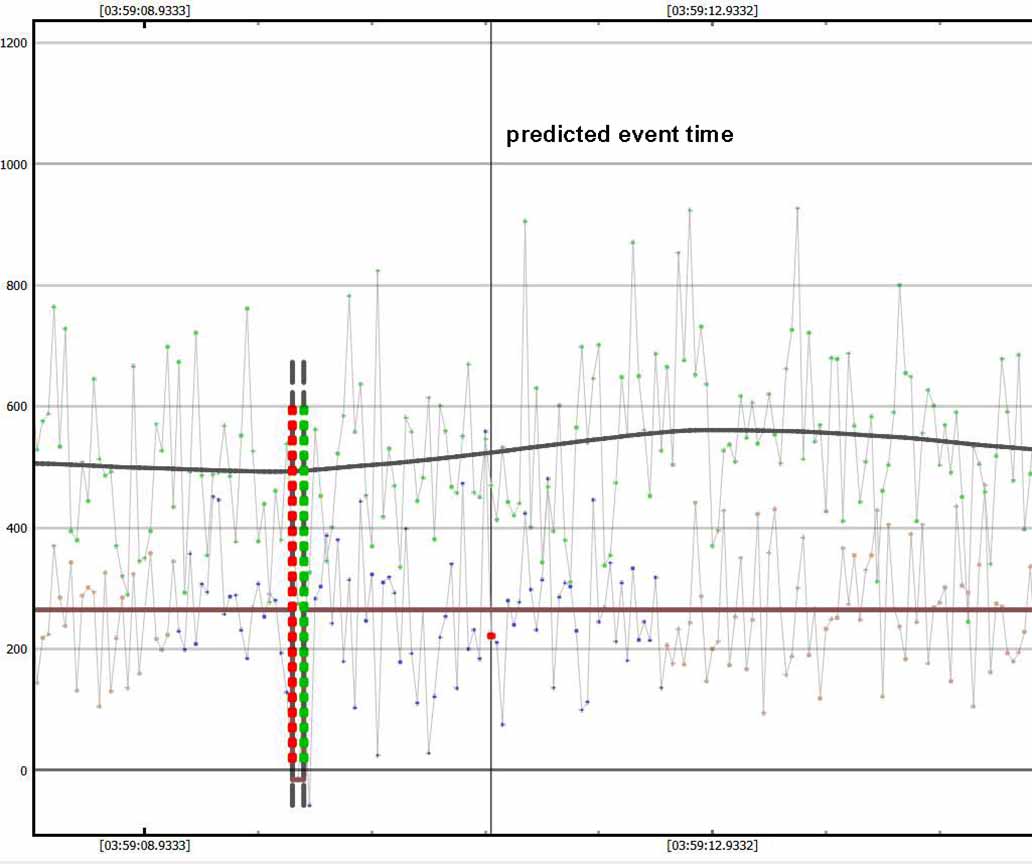
I got a recording at 2x from my carport. By looking at when OWc changed its rounded event time, and that 11.51=12 and 11.49=11 rounded time, I find that PyOTE detected a short event 1.4s early. Duration about half the max 0.2s predicted. I'll await Kirk's data to interpret and submit to IOTA a report.
NIE test: 12.4 sigma
magDrop report: percentDrop: 100.0 (magDrop cannot be calculated because A is negative)
DNR: 3.00
D time: [03:59:09.9732]
D: 0.6800 containment intervals: {+/- 0.0064} seconds
D: 0.9500 containment intervals: {+/- 0.0182} seconds
D: 0.9973 containment intervals: {+/- 0.0336} seconds
R time: [03:59:10.0532]
R: 0.6800 containment intervals: {+/- 0.0064} seconds
R: 0.9500 containment intervals: {+/- 0.0182} seconds
R: 0.9973 containment intervals: {+/- 0.0336} seconds
Duration (R - D): 0.0800 seconds
Duration: 0.6800 containment intervals: {+/- 0.0098} seconds
Duration: 0.9500 containment intervals: {+/- 0.0225} seconds
Duration: 0.9973 containment intervals: {+/- 0.0401} seconds
 |
 |
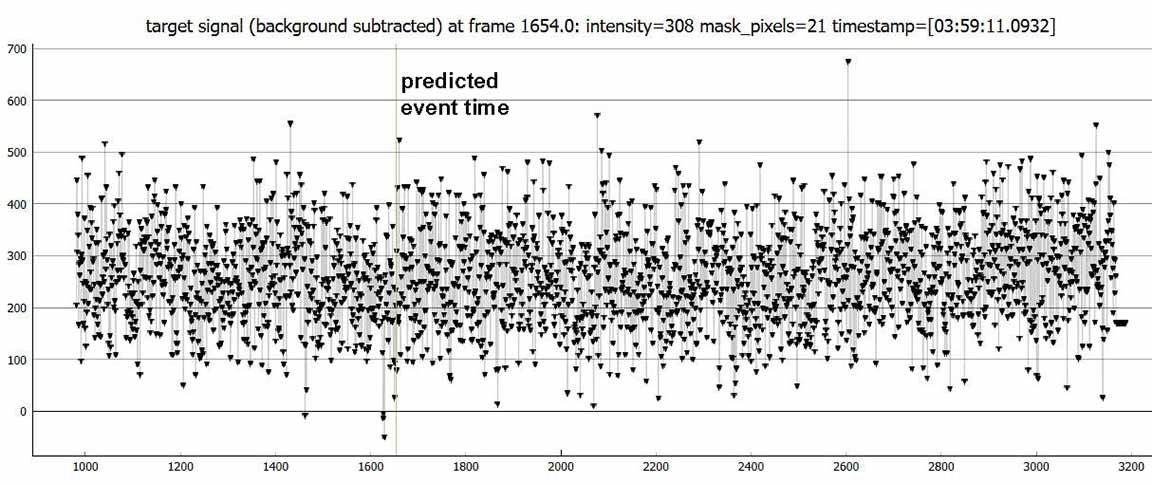 |
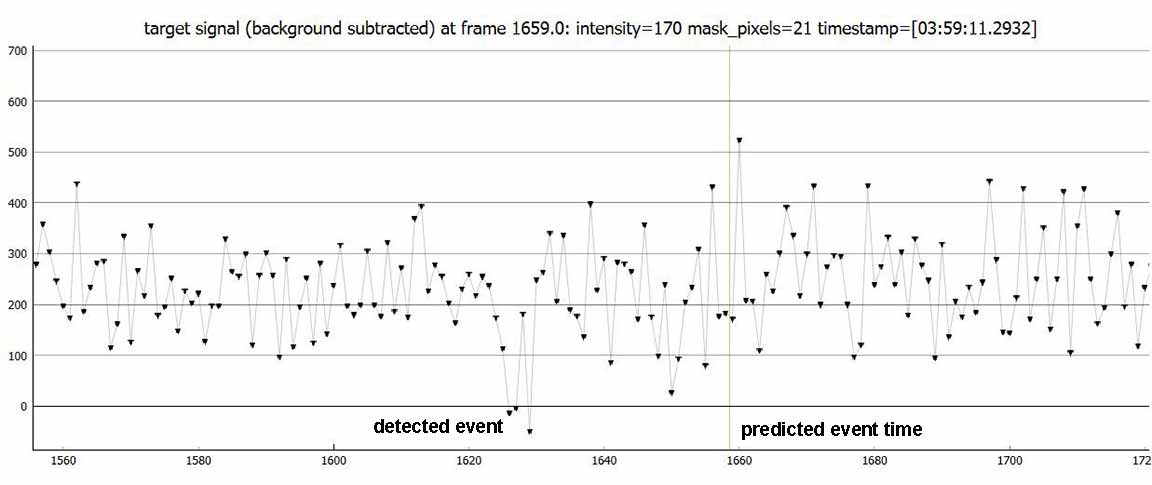 |
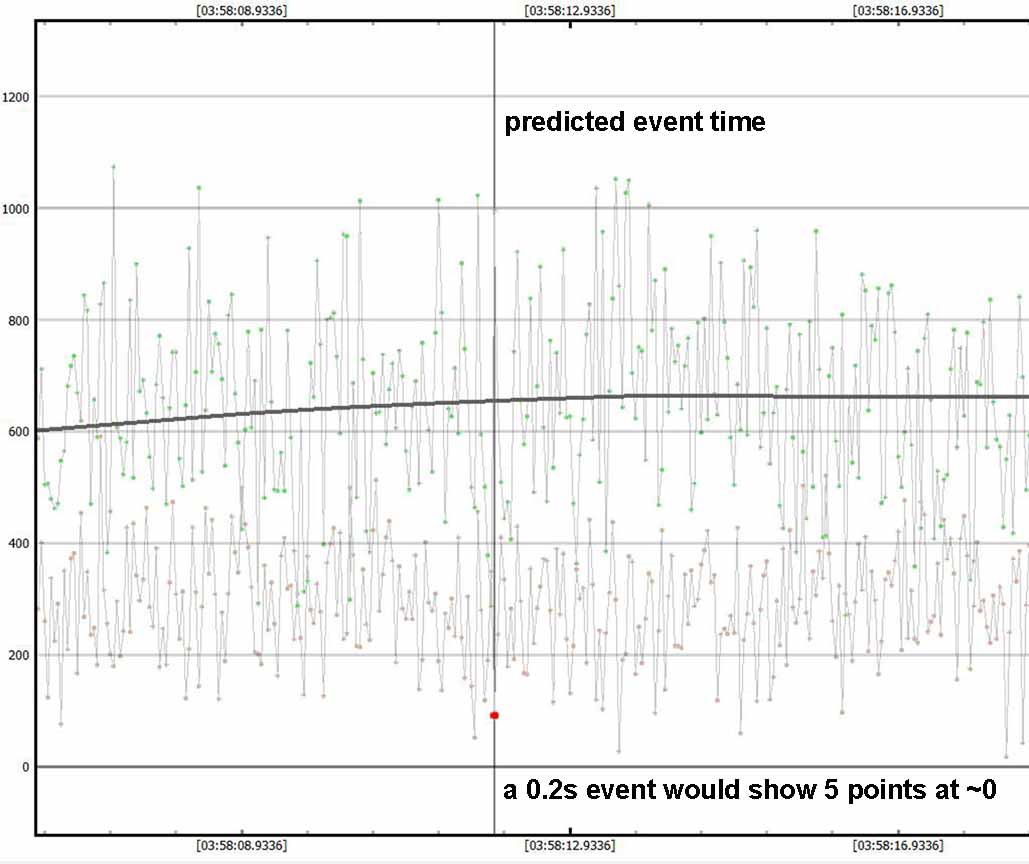 |
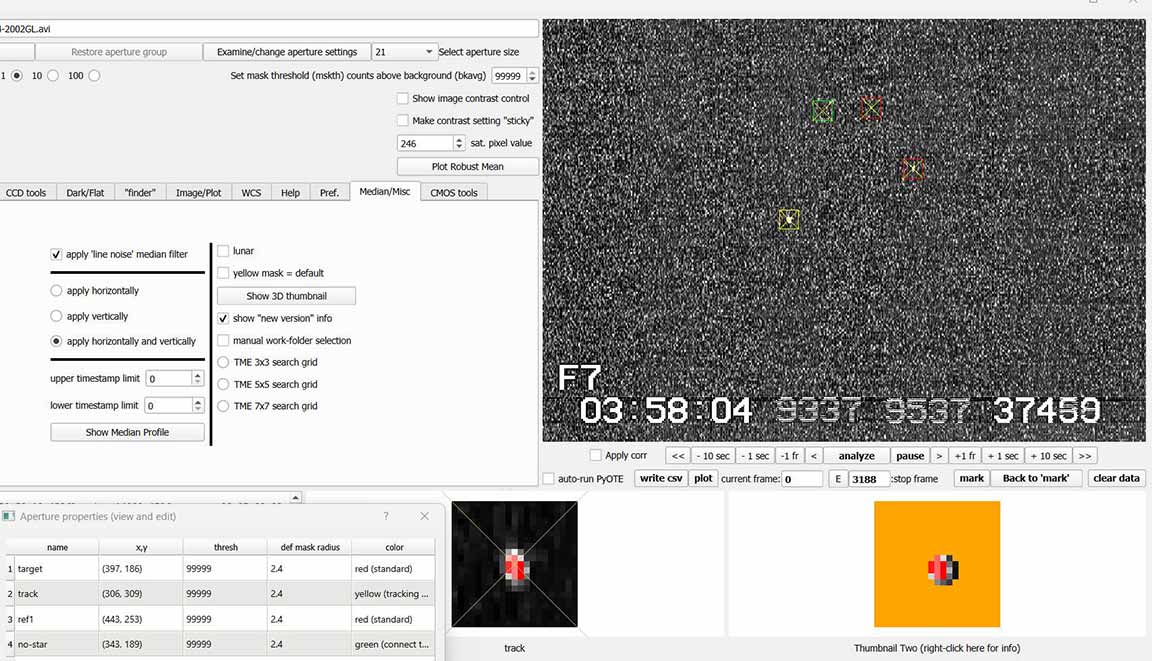
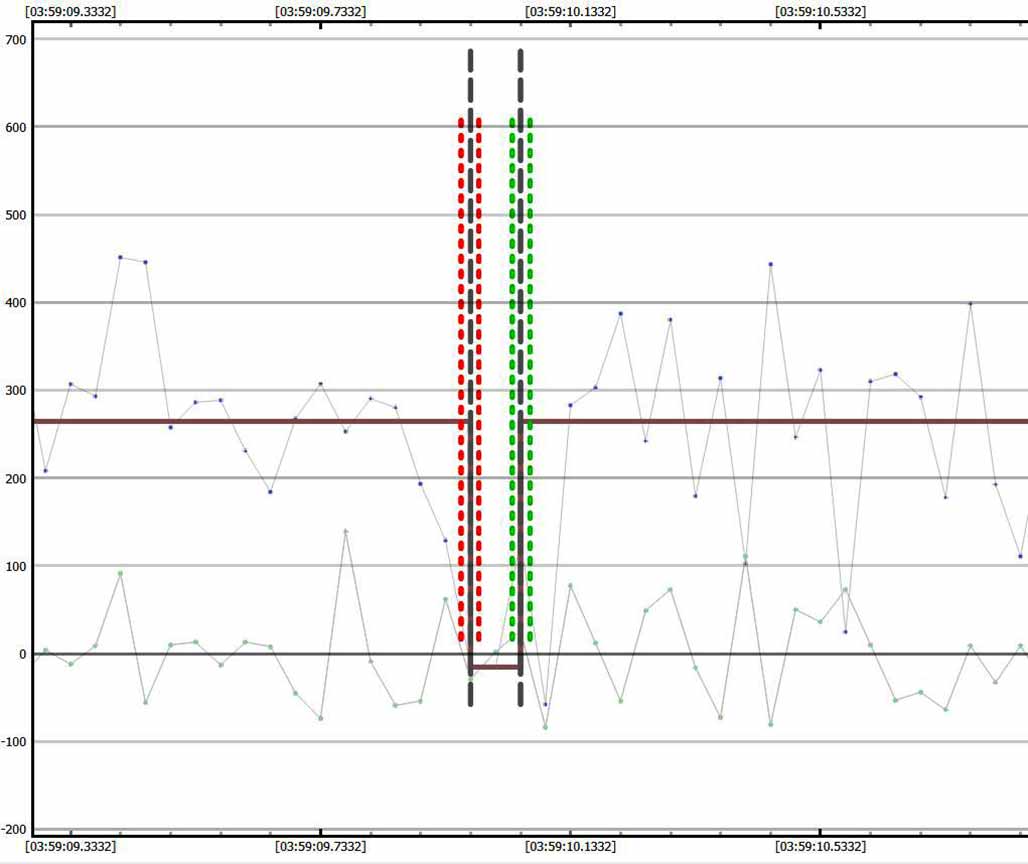
2nd Trial. I felt the 3.2px mask size was likely bringing in too much sky noise, and the event might stand out better with my dafault 2.4px size. But first, I tried using a PyMovie finder and TME aperture. This did bring down the bright mid-point some, but the target now had excess pixels not on the target and this made in general for WAY too much noise in the light curves. Those images not shown here.
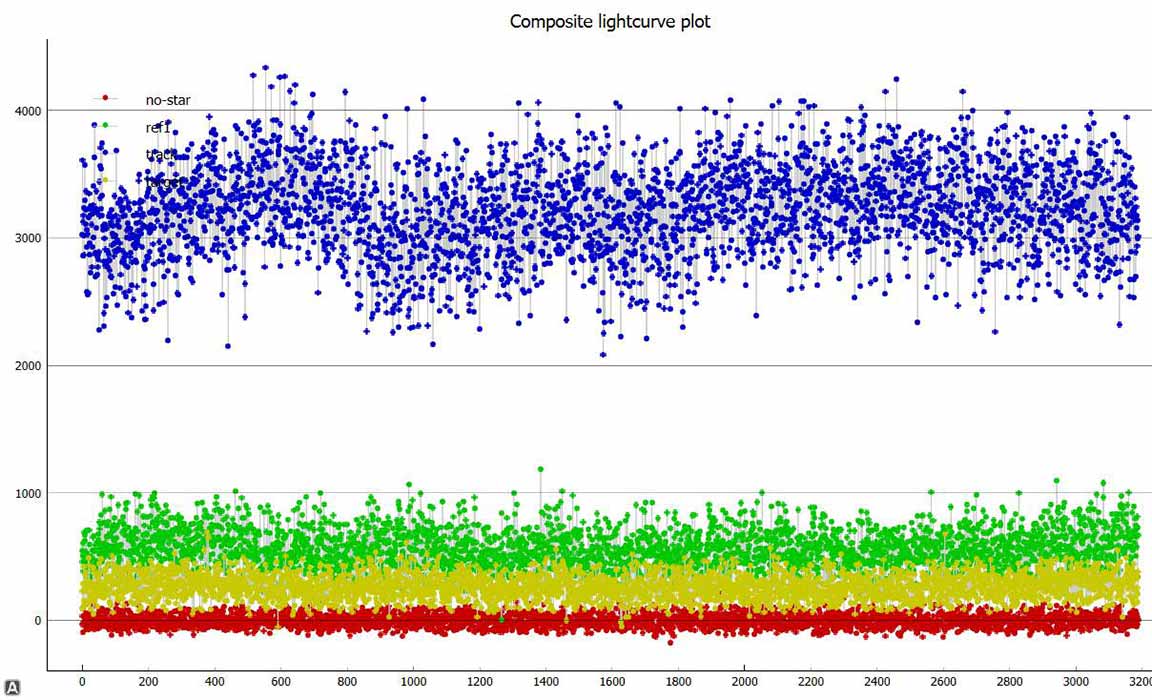
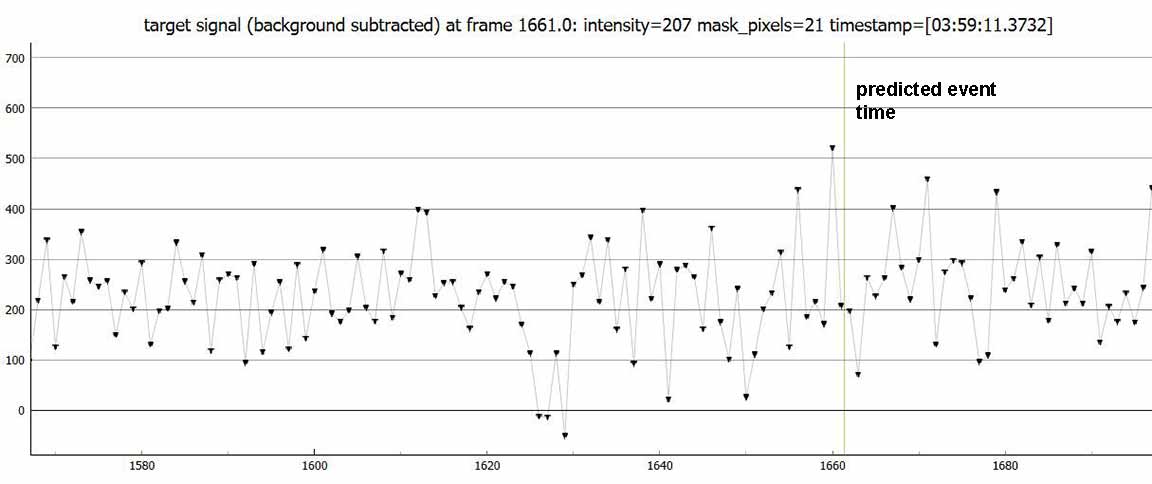
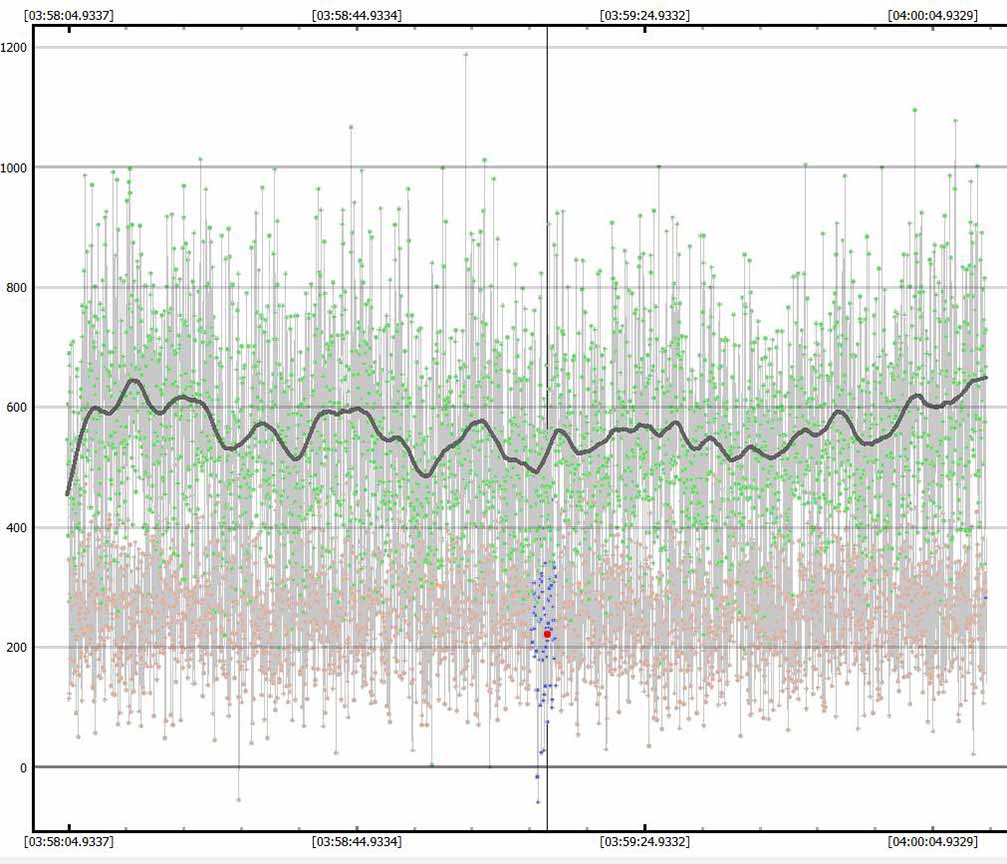
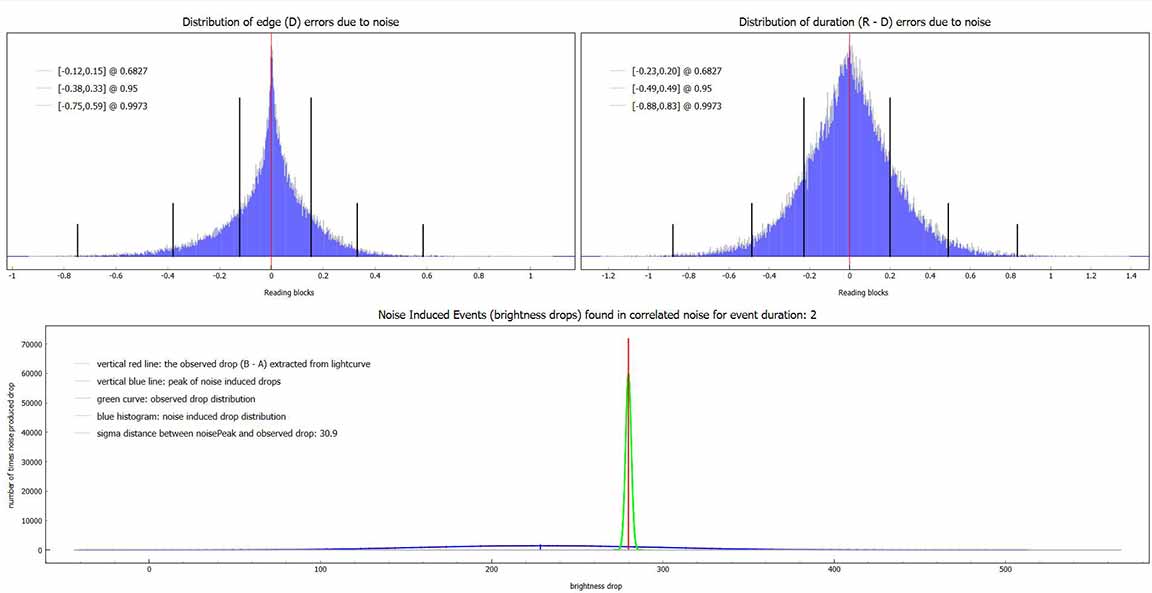
I then re-ran again, with label "2" on the PyMovie and PyOTE images, this time with 2.4 px static circular masks. And I also started at the beginning of the tape to get better statistics, unlike the top images on this webpage which started at 3:58:44UT. This version2 worked well, now the NIE Test went from 12 to 30 sigma. There is still the bright reading surrounded by 3 zero values, which is strange. Single frame looks showed strong dimming with still sky noise at the event, but not complete disappearance of the brightest pixel.
I marked off the D interval and R interval. The D interval is fairly clear. The R inteval I began on mid-"bright" point and continued to the full brightness end of the rising light curve. Even with this guidance, PyOTE selected the best interval as only the 2 zero points before the bright point. The 3rd zero point and expanded R range did seem to have the effect of moving the R up the ramp of the bright point. Still, the D and R timings were as in the first trial, and 0.08s duration. The timing accuracies however are tighter.
NIE Test = 30 sigma
magDrop report: percentDrop: 100.0 (magDrop cannot be calculated because A is negative)
DNR: 3.07
D time: [03:59:09.9732]
D: 0.6800 containment intervals: {+/- 0.0061} seconds
D: 0.9500 containment intervals: {+/- 0.0152} seconds
D: 0.9973 containment intervals: {+/- 0.0299} seconds
R time: [03:59:10.0532]
R: 0.6800 containment intervals: {+/- 0.0061} seconds
R: 0.9500 containment intervals: {+/- 0.0152} seconds
R: 0.9973 containment intervals: {+/- 0.0299} seconds
Duration (R - D): 0.0800 seconds
Duration: 0.6800 containment intervals: {+/- 0.0086} seconds
Duration: 0.9500 containment intervals: {+/- 0.0195} seconds
Duration: 0.9973 containment intervals: {+/- 0.0342} seconds
 |
 |
 |
 |
 |
 |
 |
 |
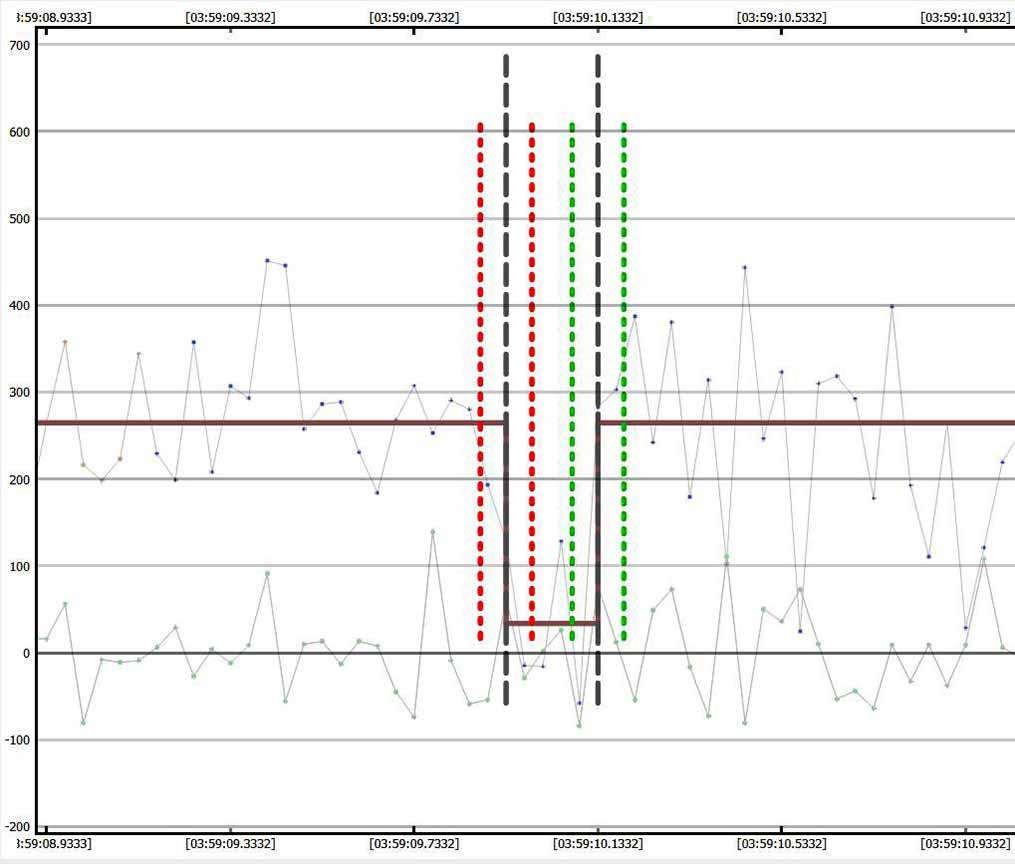
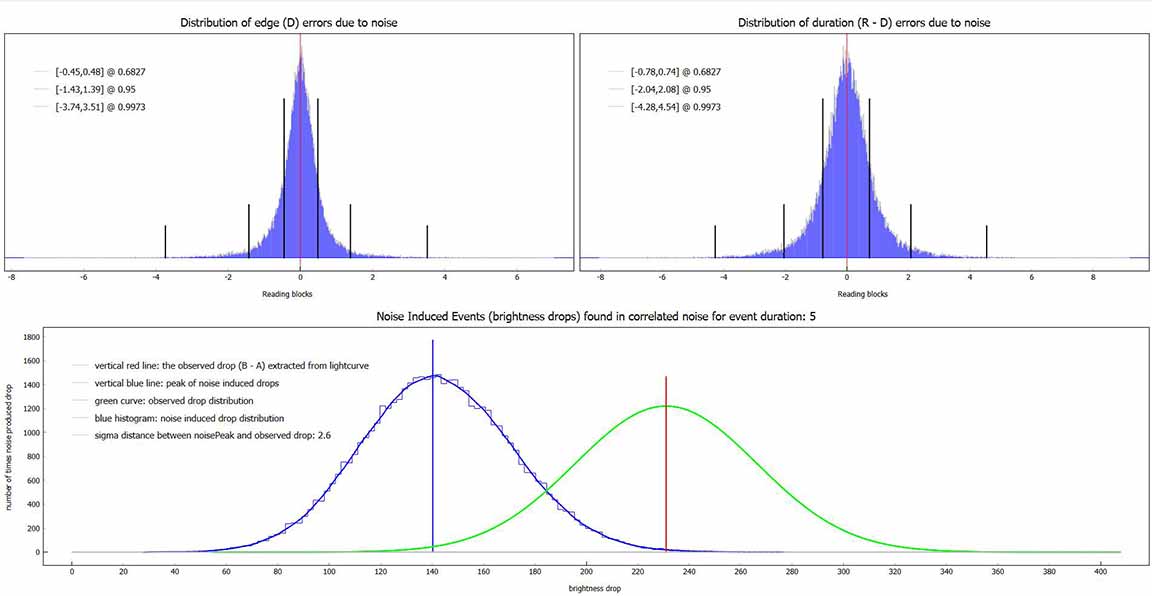
3rd Trial. A third trail for finding the timings on the 2.4px PyMovie csv file. This time instead of marking off the D and R intervals in PyOTE, I gave it a minimum of 3 points in the event and max=22 points, and choose anywhere in the light curve. It still selected the same event, but was now forced to conclude the other "zero" point to the right of the bright midpoint, was also in the occultation, and this time it gave a 0.200 second event. Which is the better event? I'm tempted to say it's more likely the second one, as there is more odds a random positive track will be longer than just 40% of the longest duration. But it is not the highest significance solution. I will await Kirk's data.
NIE test: 2.8 sigma
magDrop report: percentDrop: 87.3 magDrop: 2.239 too much noise; cannot calculate error bars
DNR: 2.54
D time: [03:59:09.9332]
D: 0.6800 containment intervals: {+/- 0.0187} seconds
D: 0.9500 containment intervals: {+/- 0.0562} seconds
D: 0.9973 containment intervals: {+/- 0.1450} seconds
R time: [03:59:10.1332]
R: 0.6800 containment intervals: {+/- 0.0187} seconds
R: 0.9500 containment intervals: {+/- 0.0562} seconds
R: 0.9973 containment intervals: {+/- 0.1450} seconds
Duration (R - D): 0.2000 seconds
Duration: 0.6800 containment intervals: {+/- 0.0303} seconds
Duration: 0.9500 containment intervals: {+/- 0.0824} seconds
Duration: 0.9973 containment intervals: {+/- 0.1763} seconds
 |
 |
Trial 4 - Give
And... to see what would happen if I gave PyOTE a minimum of 2 points and maximum of 22 points, just to be symmetric in using both of the selection methods for finding the timings... PyOTE went back to selecting the two zero points and the bright "mid" point as defining the event, and again selected a 0.08s event. timings accuracies were better. This will be the timings I use in the IOTA report unless other chords indicate this would be inconsistent.
NIE Test: 28.3 sigma
magDrop report: percentDrop: 100.0 (magDrop cannot be calculated because A is negative)
DNR: 3.07
D time: [03:59:09.9732]
D: 0.6800 containment intervals: {+/- 0.0056} seconds
D: 0.9500 containment intervals: {+/- 0.0151} seconds
D: 0.9973 containment intervals: {+/- 0.0309} seconds
R time: [03:59:10.0532]
R: 0.6800 containment intervals: {+/- 0.0056} seconds
R: 0.9500 containment intervals: {+/- 0.0151} seconds
R: 0.9973 containment intervals: {+/- 0.0309} seconds
Duration (R - D): 0.0800 seconds
Duration: 0.6800 containment intervals: {+/- 0.0086} seconds
Duration: 0.9500 containment intervals: {+/- 0.0195} seconds
Duration: 0.9973 containment intervals: {+/- 0.0338} seconds
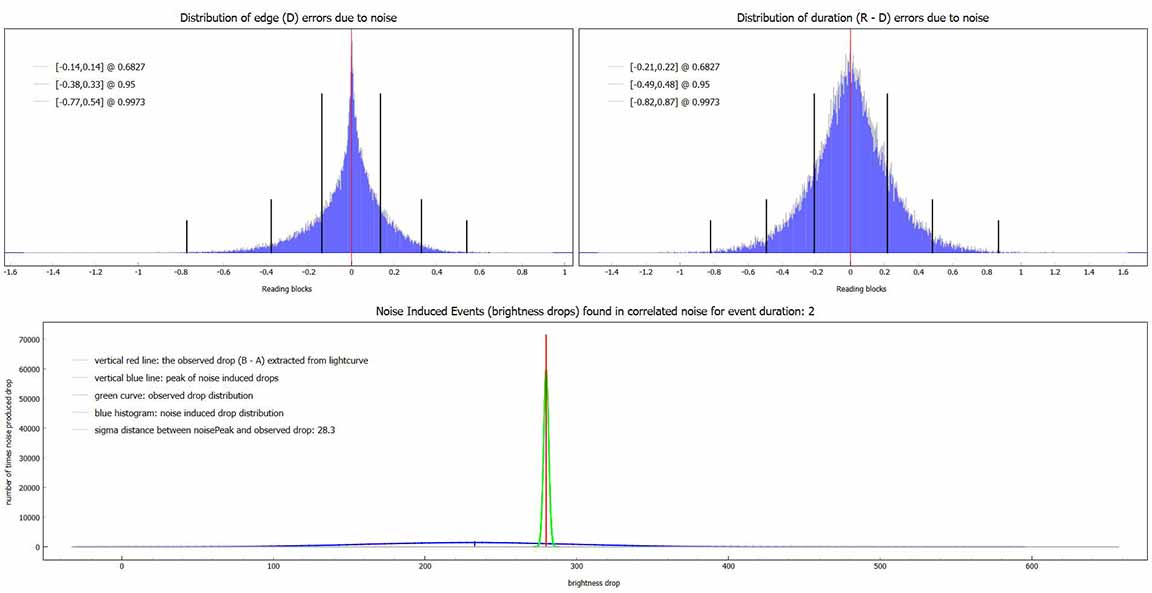 |
Given a duration of at least 2 but at most 22 points in the event, PyOTE chose the narrower. Since this is the most unbiased of starting points, and also has the best timing accuracies, this is the event solution I will submit. |
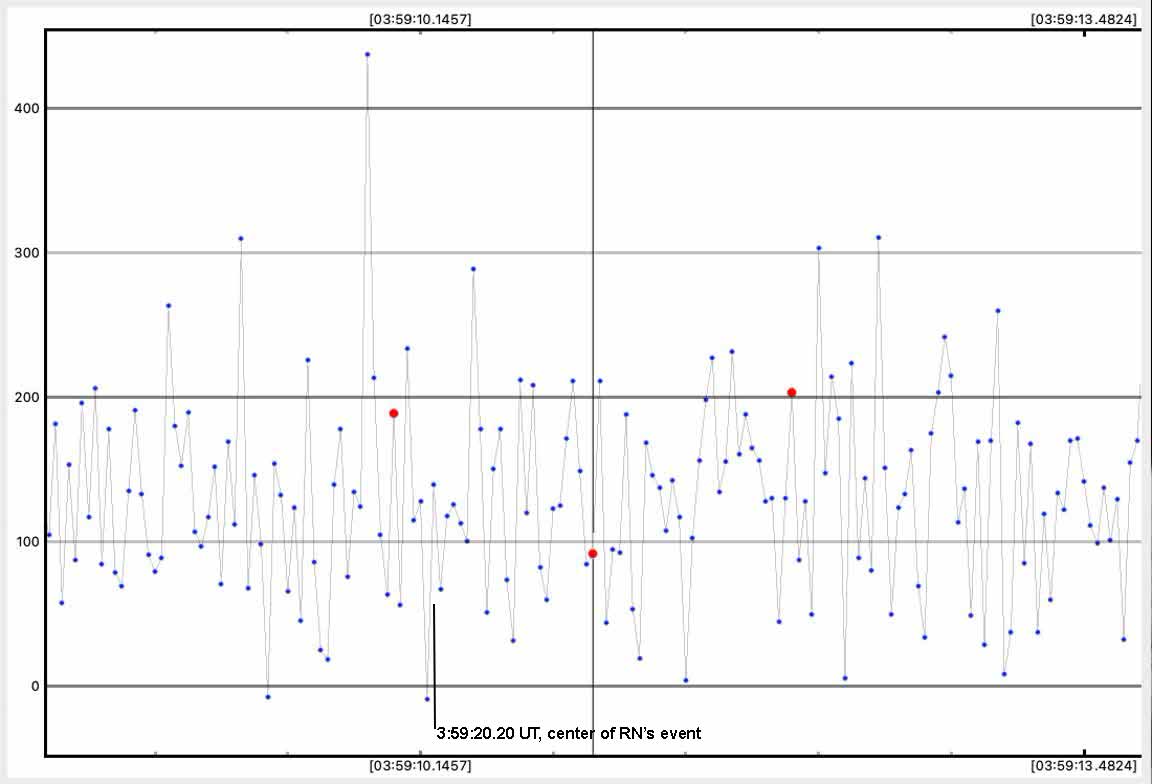
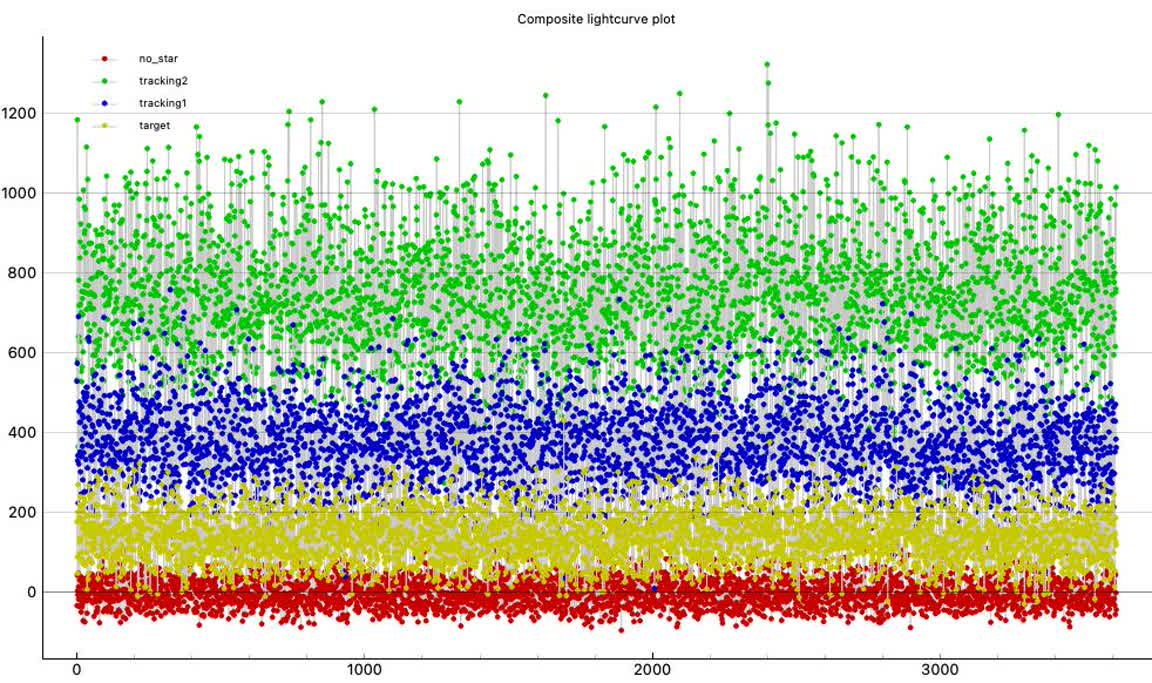
Kirk's data indicate at best a single point occultation, but too many other single points make the most likely case is that it was a miss, as Kirk decided on. That miss doesn't help constrain or lean towards my event being either 0.08s or 0.200 sec. I'll file with the timings and .08s duration as shown immediately above. |
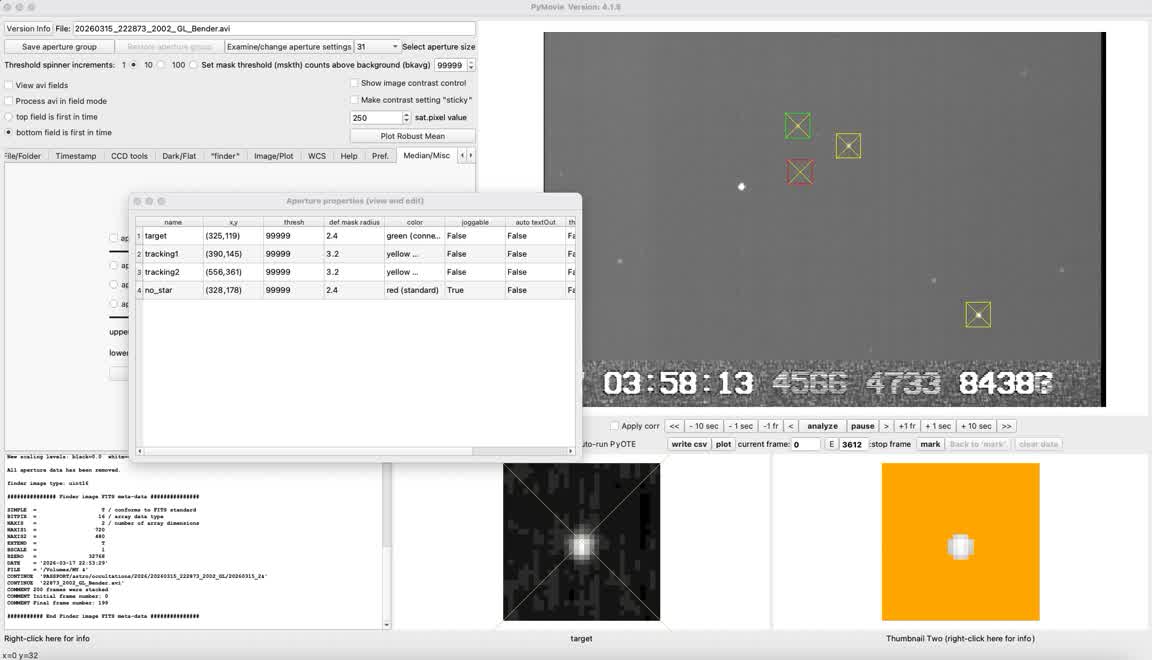
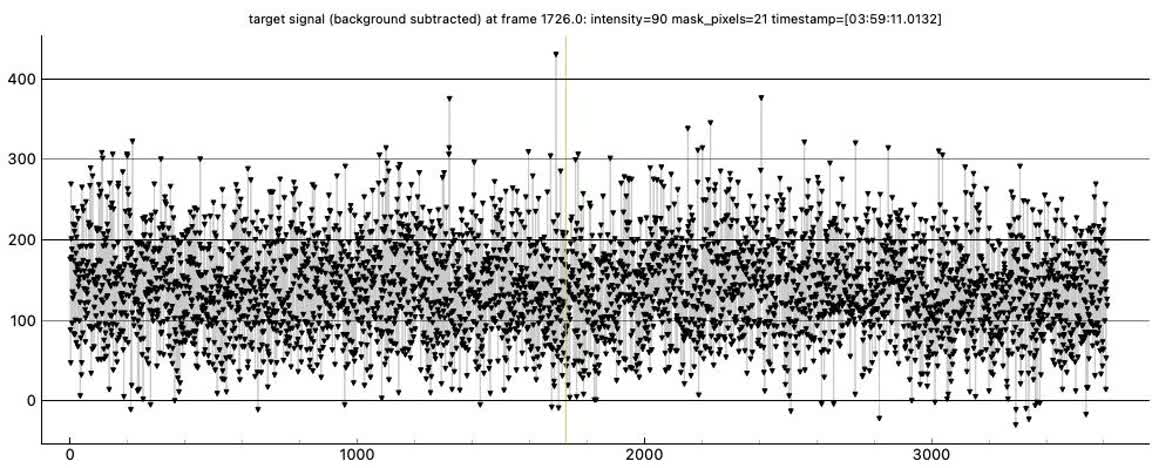
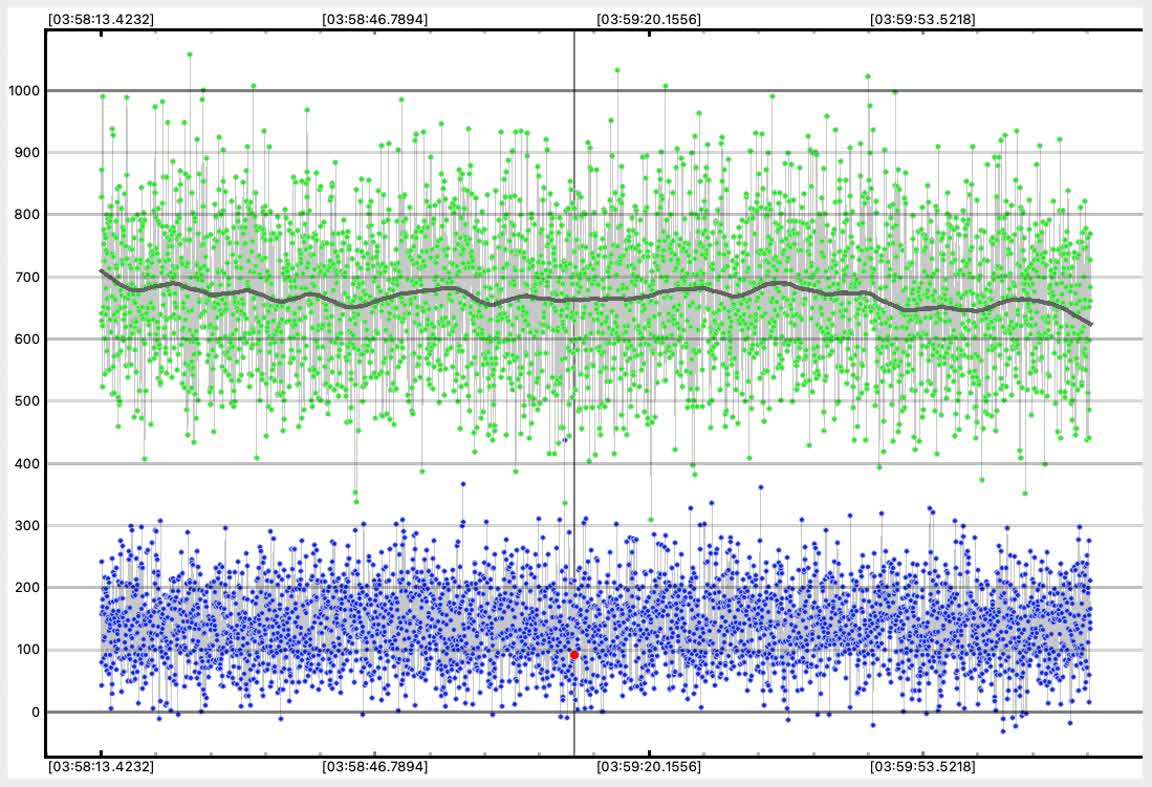
Recorded from outside his place, and looks most consistent with a miss. Kirk's site was 0.2s farther down the path than was I, so my observed event centerpoint of 3:59:10.00 UT would correspond to his 3:59:10.20 UT
 |
 |
 |
 |
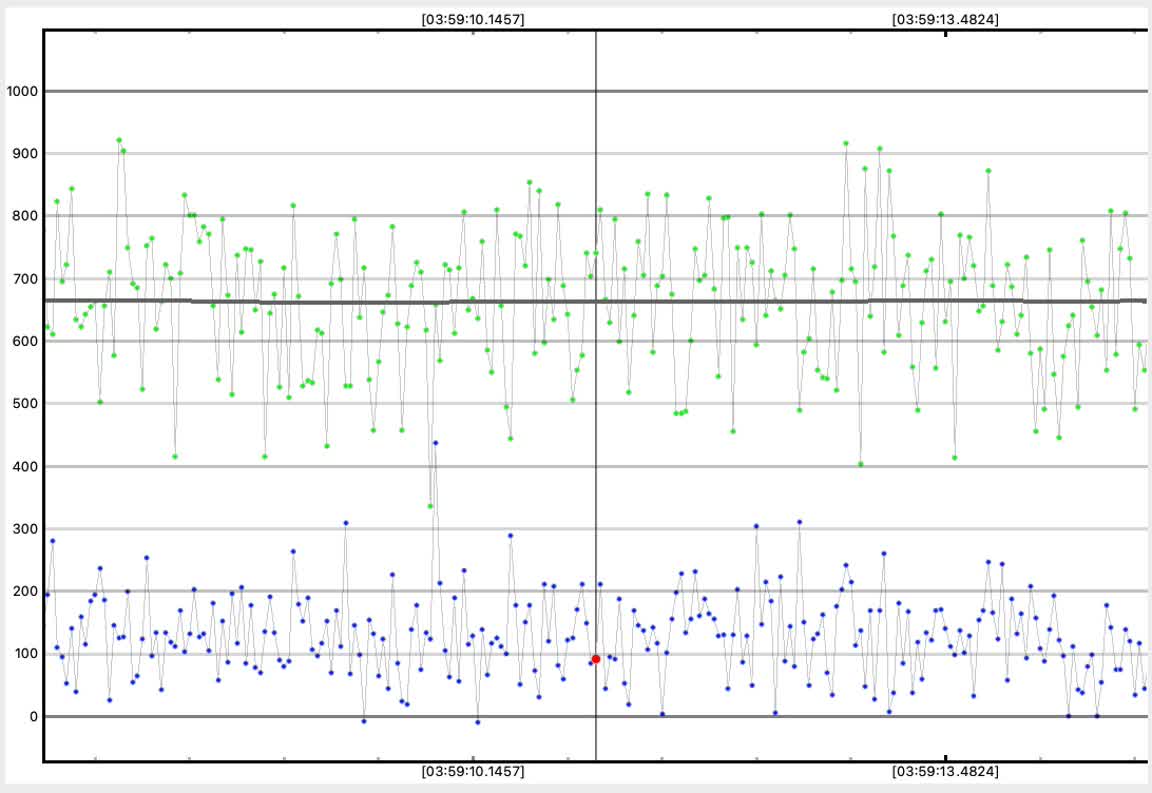 |
One of the zero drops is ~at the corresponding center time for RN's event. Is it real? PyOTE cannot rule it out but neither can it confirm it is real. If real, it would suggest the proper duration of my own event is .20 s, but I'll leave that for the reviewers to decide what to do with these data. |