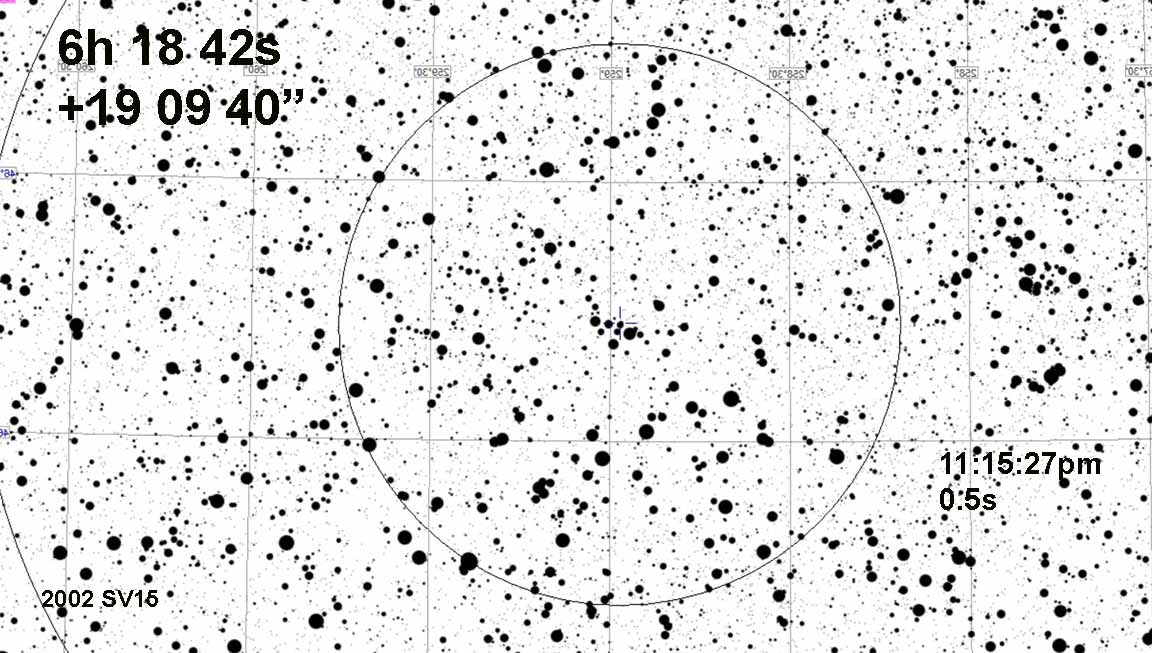
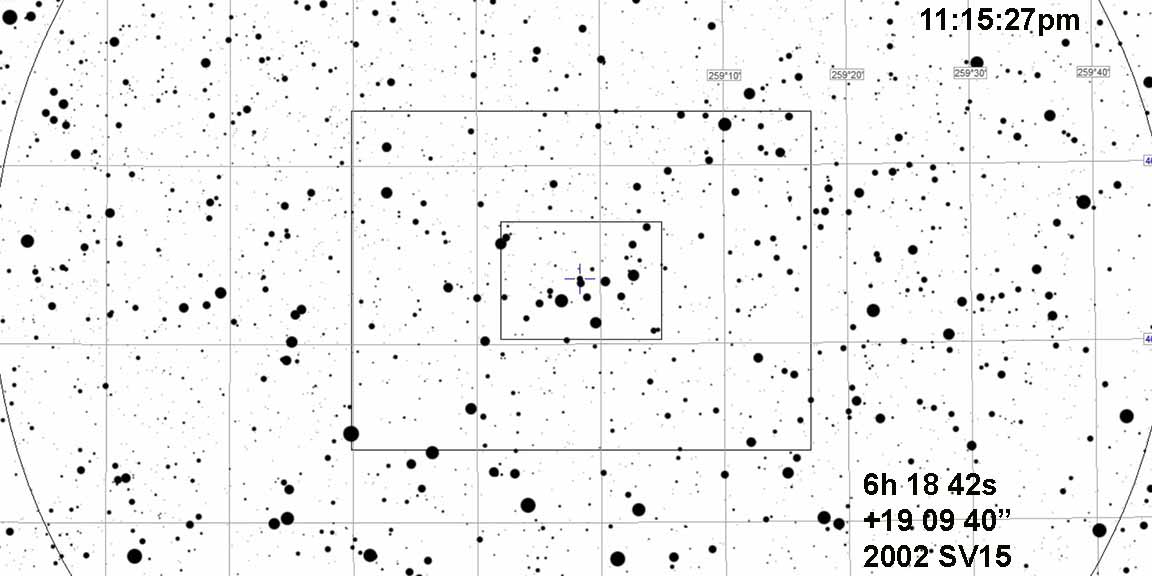
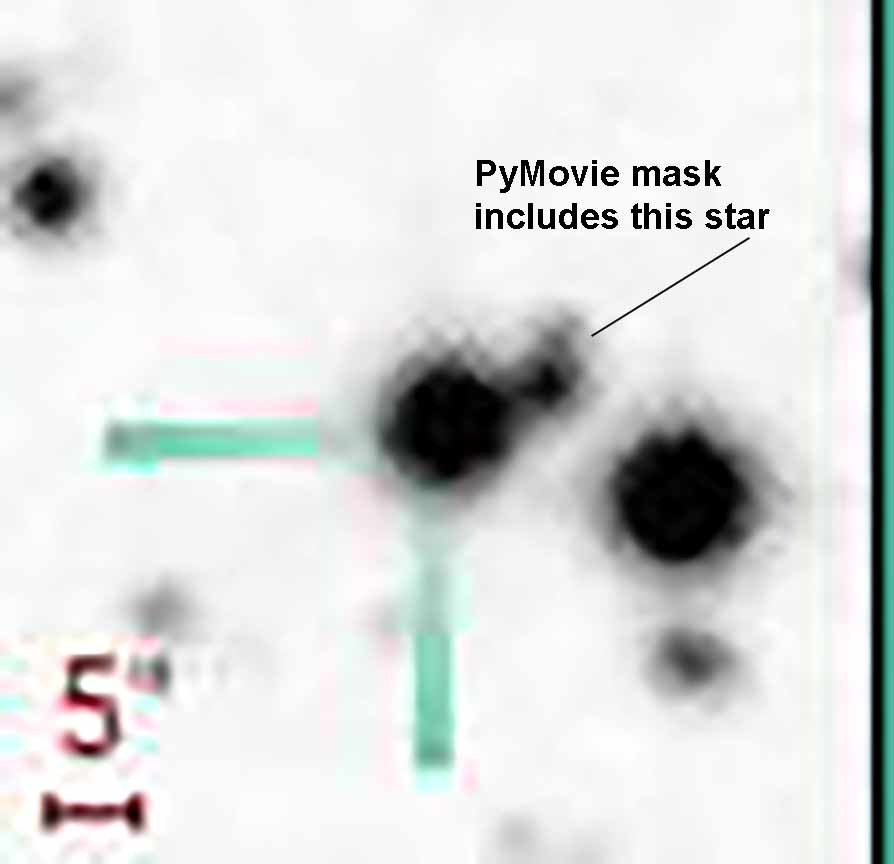
Faint star right of target was included in PyMovie mask, not a full drop. Brighter star to the right was kept out of mask.
This has a good RUWE and rank and should be do-able given good dark skies and conditions. 4x might work, I hope. Otherwise 8x. Star density is a problem.
Alt=42, Az=262 in Orion
|
|
Faint star right of target was included in PyMovie mask, not a full drop. Brighter star to the right was kept out of mask. |
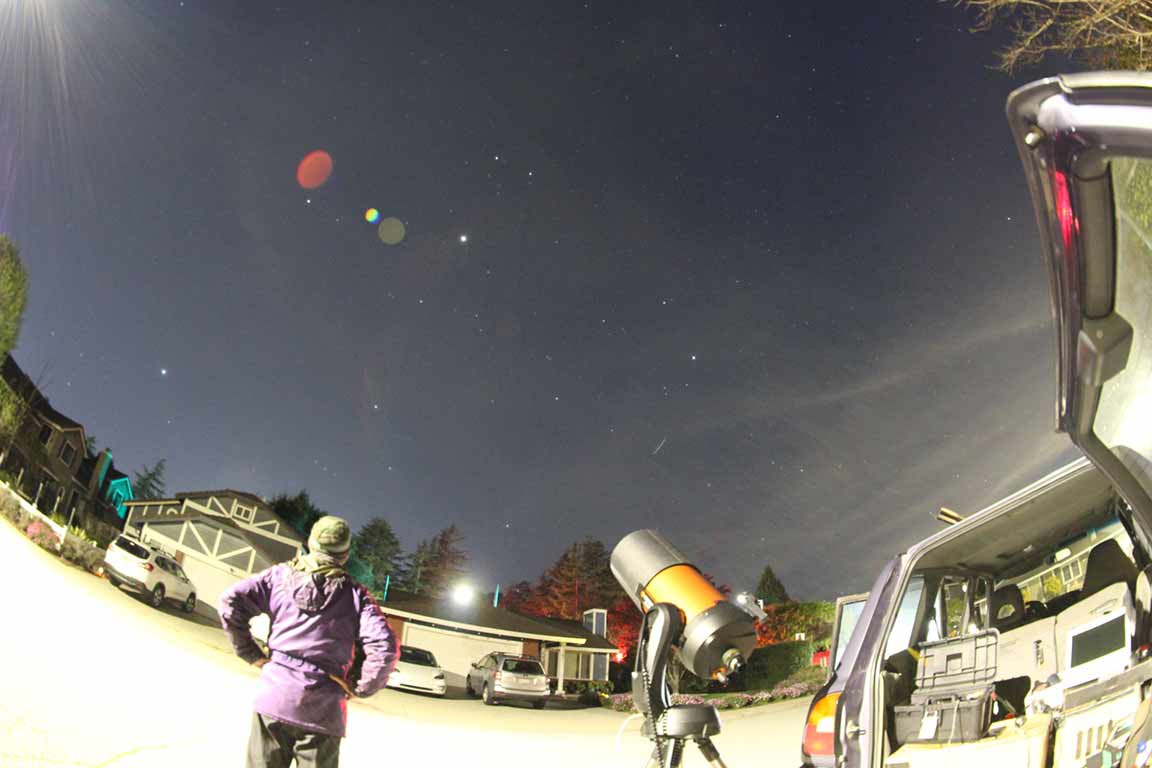
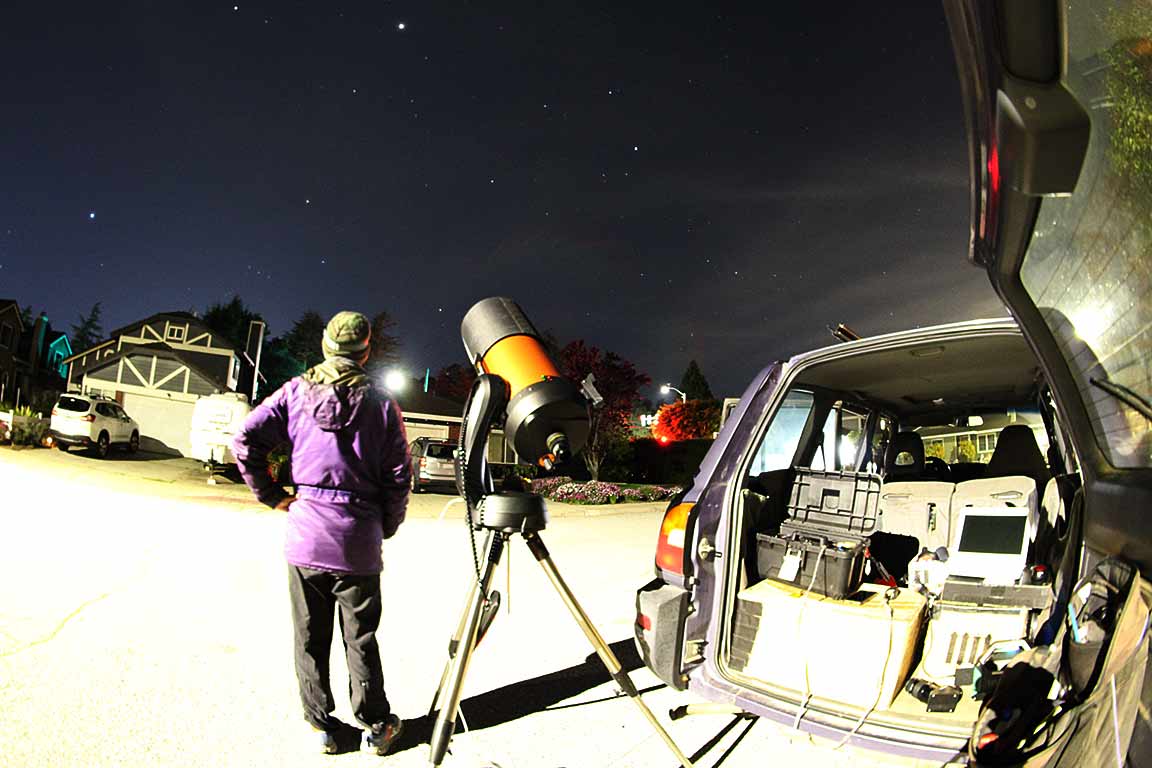
I ended up, after scrambling to Blue Ball Park in Soquel, but got kicked out by the security guard locking gates, ended up at a residential street across from Soquel High, between 1st and 2nd house on the short block, on the east side of the road. Had some trouble with growing clouds. But they avoided the area of the target during the recording, so far as I could tell. Got a recording at 16x. Don't know what I got yet.
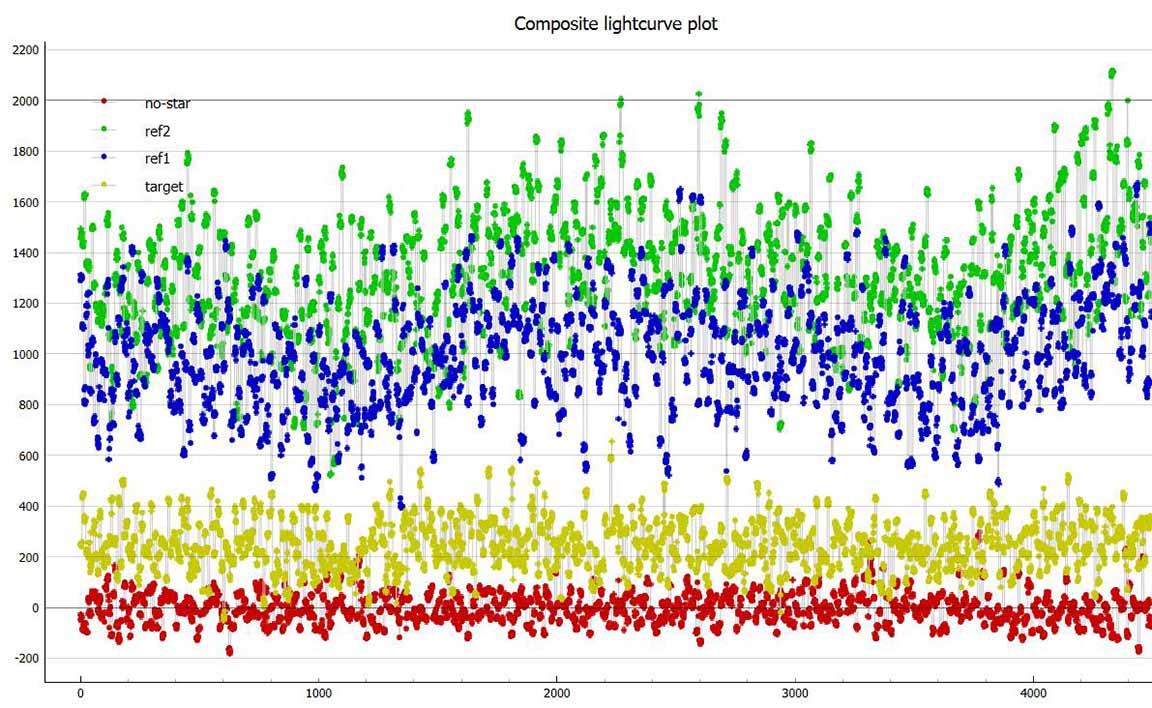
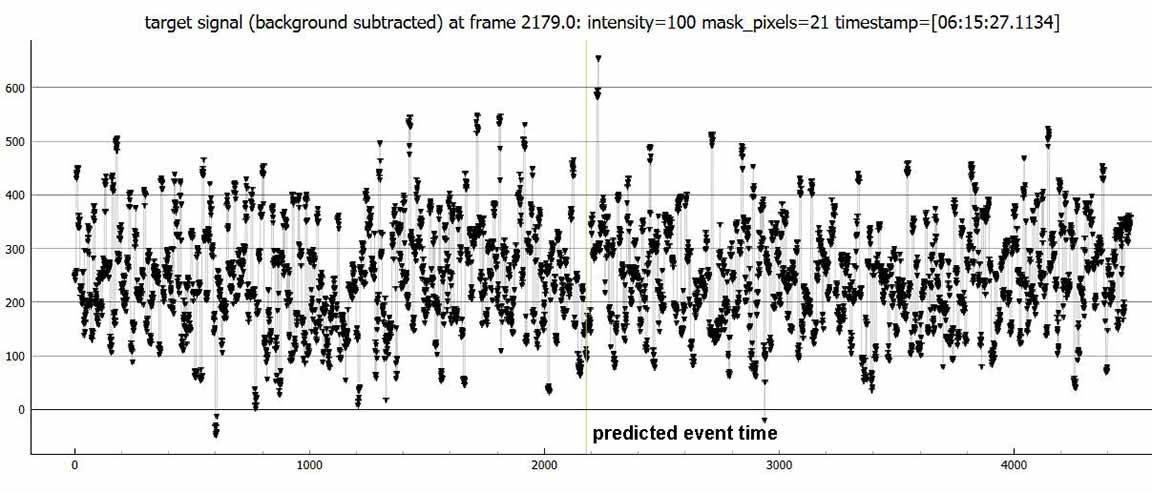
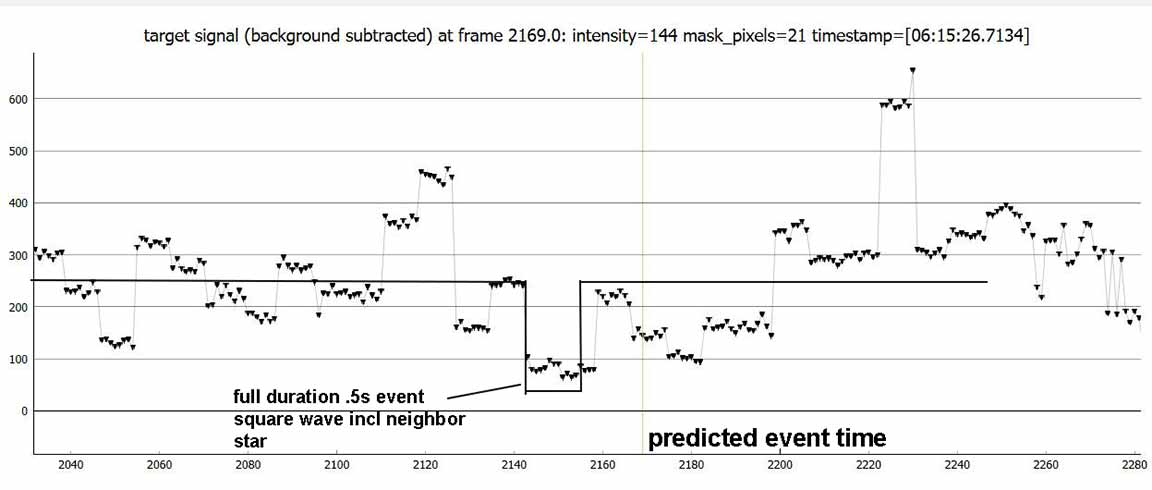
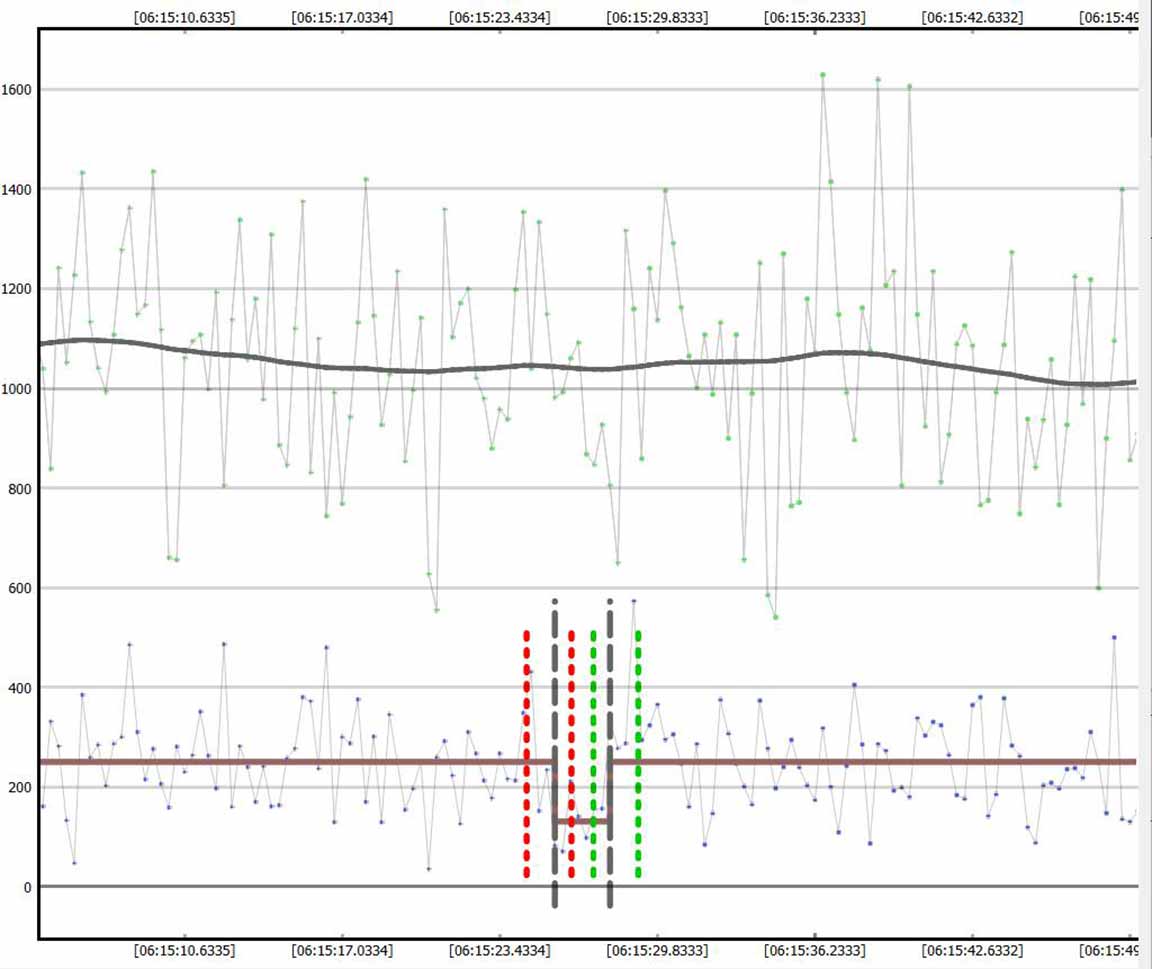
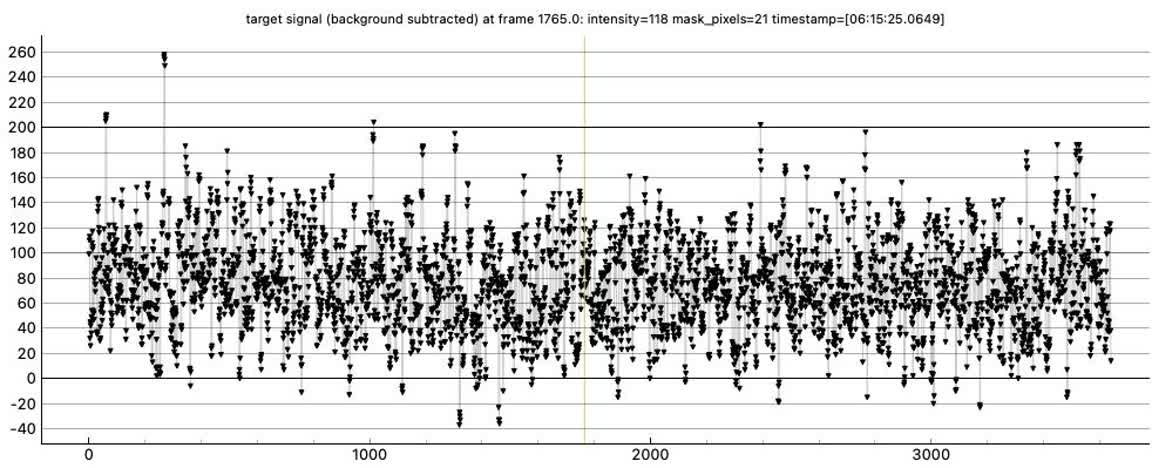
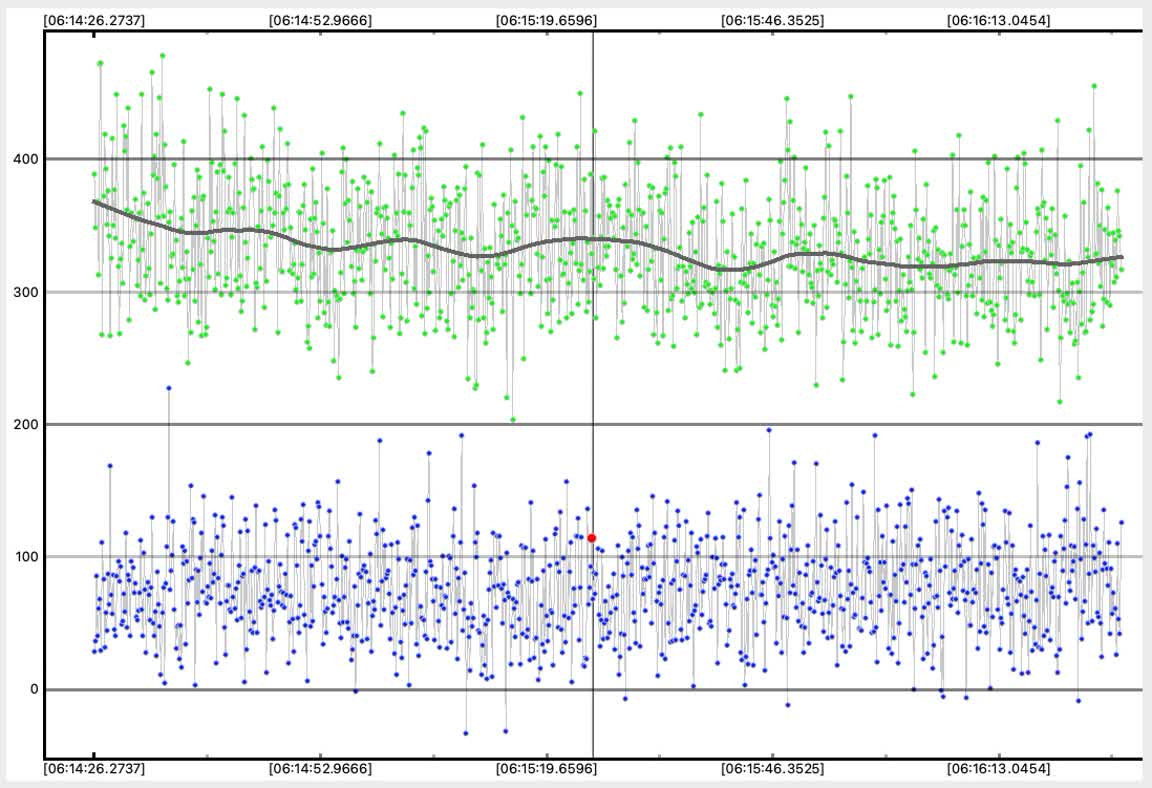
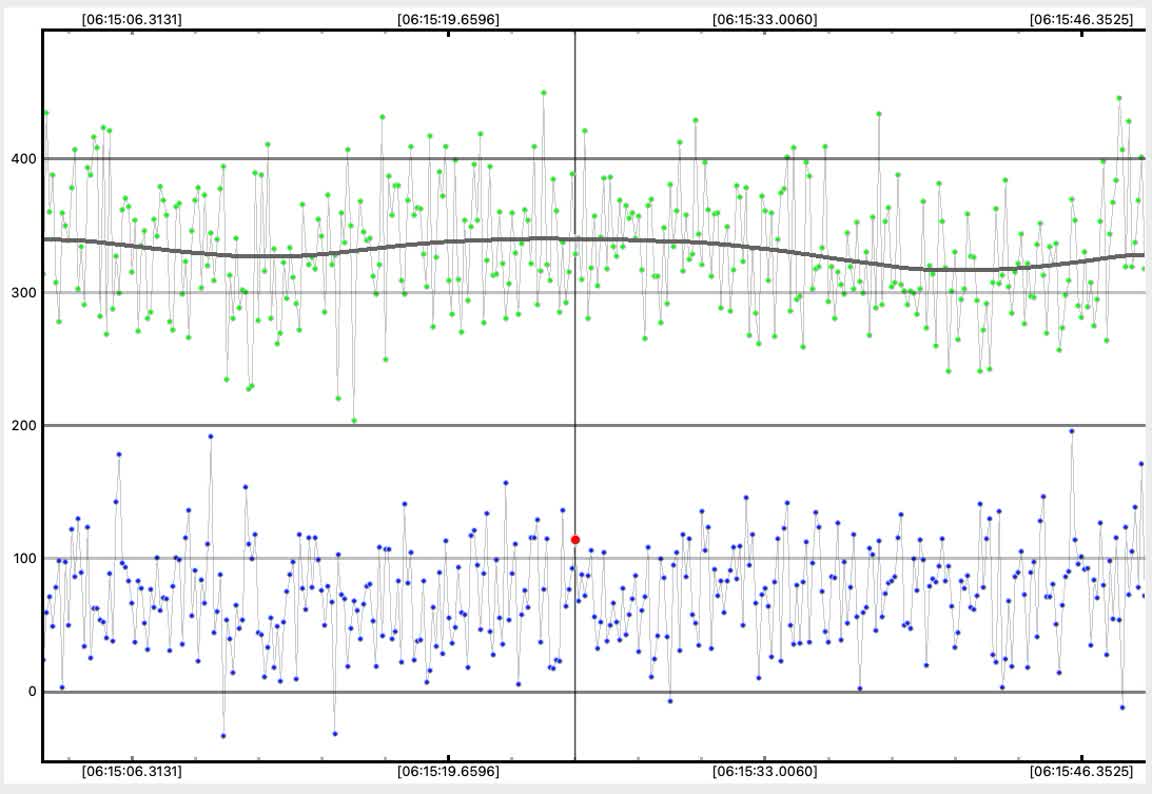
July 16 - reductions done: My light curve suggests a short event, but Pyote finds a longer one which I think must be very noisy short event? Or a miss? . Kirk inside but near the south limit had a miss, which makes my getting a positive more likely, on this good rank event. But the target was near a brighter star, and the mask included a very close neighbor star only 3" away. Seeing was variable, and I needed 16x or 1.5 to 2 points inside the occultation. I did have the pair of lowest points at the event time, but there were too many other low points on the curve to detect it unless I spread the interval for D and R to be too wide to be plausible. It did detect a 2.2 sec event at that time, but the prediction was for only 0.5s duration, so it may be noise or is may be a noisy shorer event within the uncertainty range. I'm filing the timings but classifying the report as "unsure" and miss= "maybe".I can't claim a miss, nor a positive either. Let the reviewers give the Roman gladiator thumb up, or thumb down.
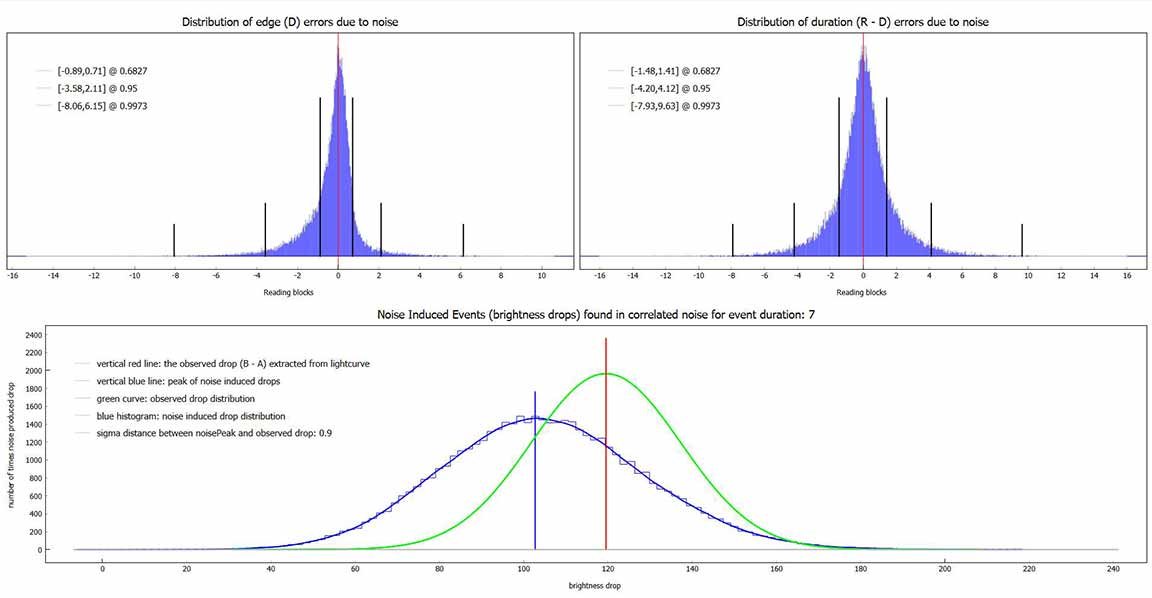
NIE Test = 0.9 sigma
magDrop report: percentDrop: 47.8 magDrop: 0.705 +/- 0.313 (0.95 ci)
DNR: 1.26
D time: [06:15:25.6734]
D: 0.6800 containment intervals: {+/- 0.2834} seconds
D: 0.9500 containment intervals: {+/- 1.1457} seconds
D: 0.9973 containment intervals: {+/- 2.5802} seconds
R time: [06:15:27.9134]
R: 0.6800 containment intervals: {+/- 0.2834} seconds
R: 0.9500 containment intervals: {+/- 1.1457} seconds
R: 0.9973 containment intervals: {+/- 2.5802} seconds
Duration (R - D): 2.2400 seconds
Duration: 0.6800 containment intervals: {+/- 0.4621} seconds
Duration: 0.9500 containment intervals: {+/- 1.3312} seconds
Duration: 0.9973 containment intervals: {+/- 2.8095} seconds
This event is much too long unless the asteroid is turkey drumstick shaped. However, the uncertainty range does include a 0.5s duration event, perhaps the two lowest neighboring points visible on the light curve below?
 |
 |
 |
 |
 |
 |
 |
 |
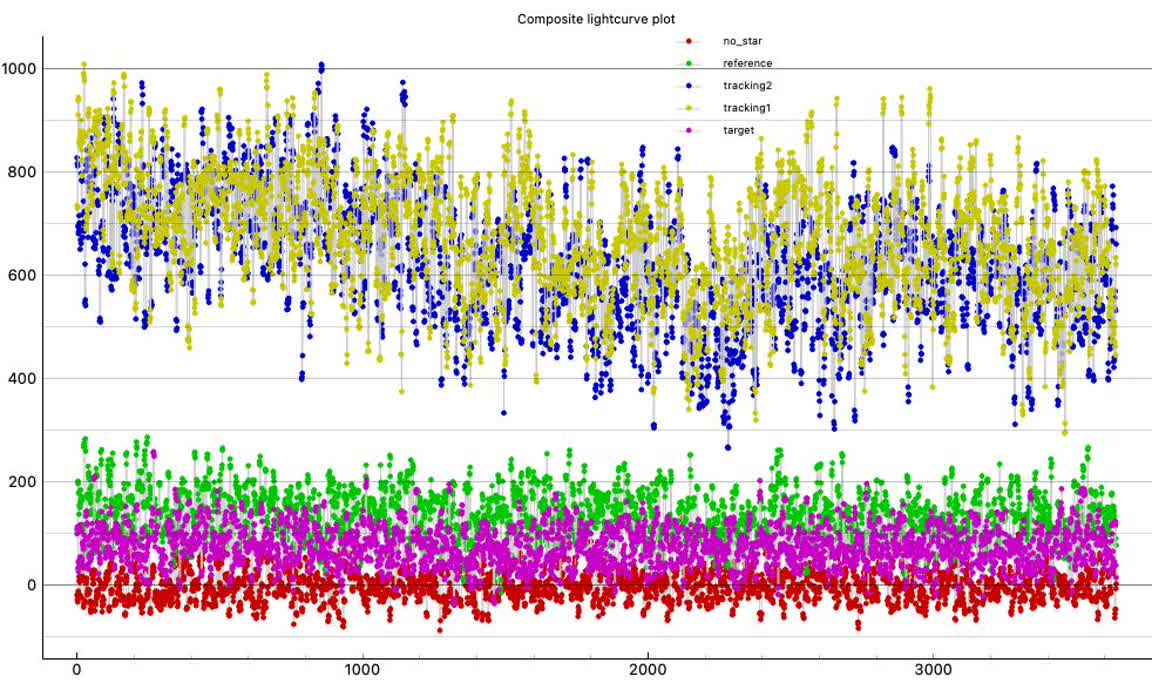
I don't see an event for 2002 SV15, 8x Mar. 15 at the BD eco reserve. There were variable thin high clouds, as shown in the tracking star curves.
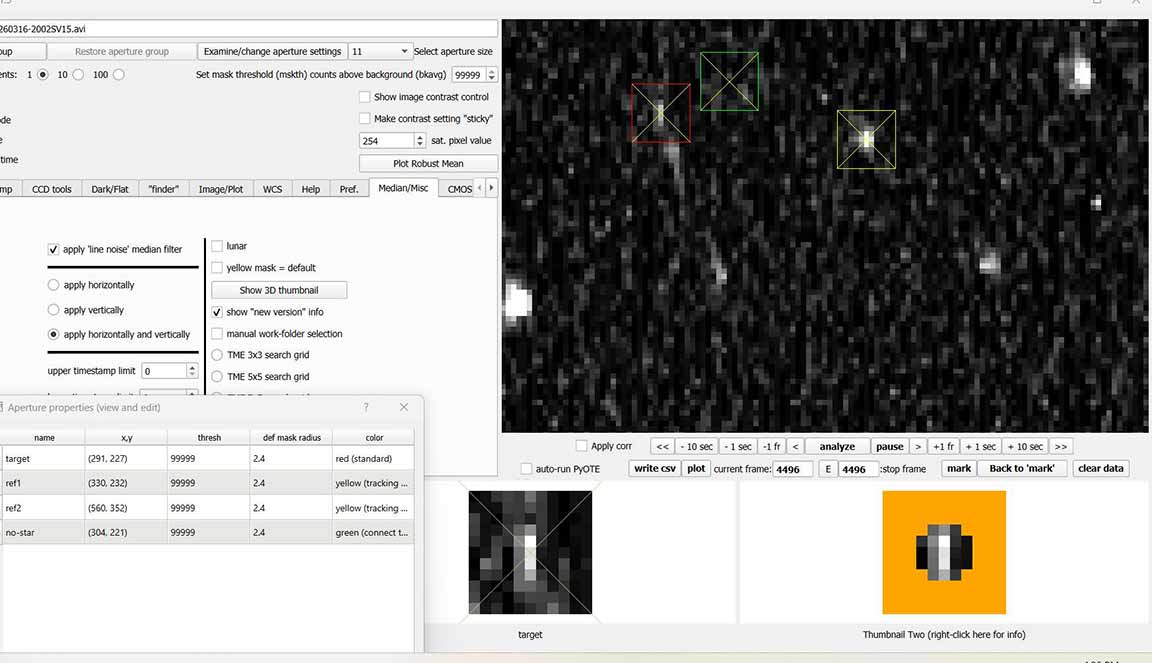
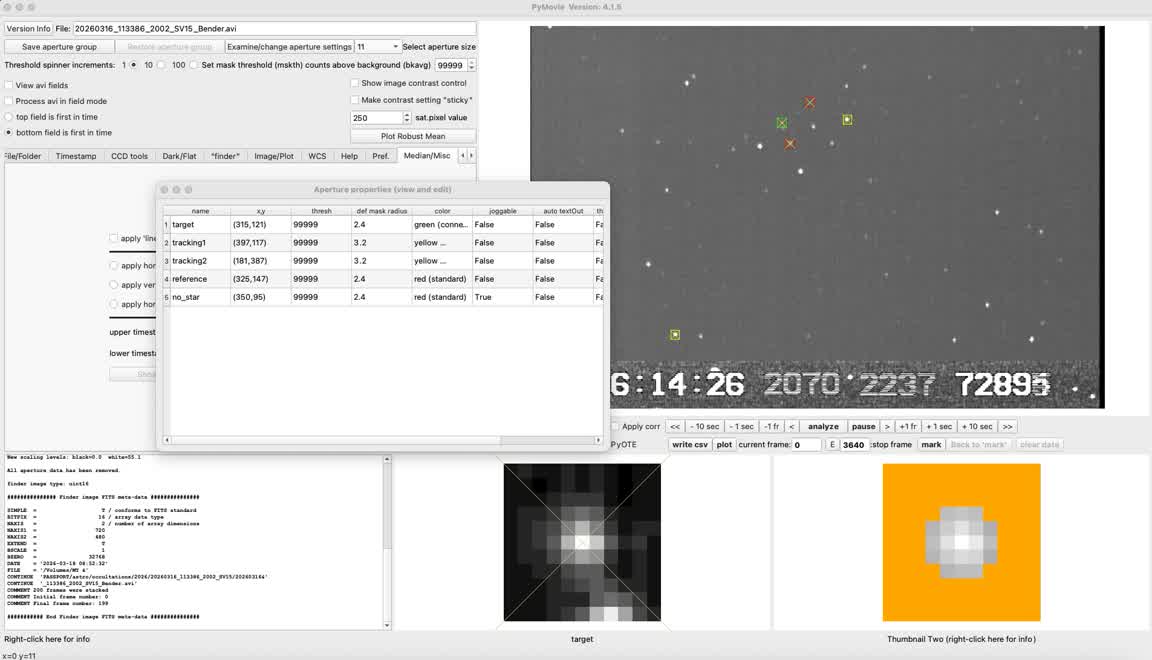
The target was faint and very near another star, I used a small size 11 aperture. I watched PyMovie and the mask didn't jump to the near star. I was nearer to the path boundary than the centerline. The target was barely above background and noisy, maybe an event was undetectable at 8x. PyOTE detectability test reported an event as short as 0.810s would likely be detectable, predicted max was 0.49s.
 |
 |
 |
 |
 |