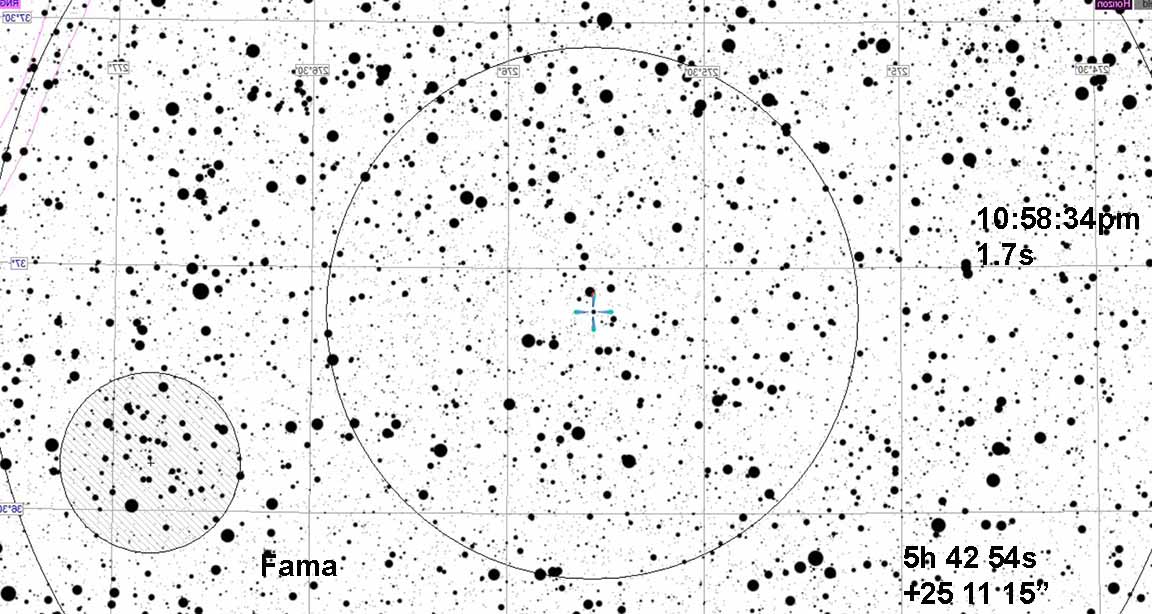
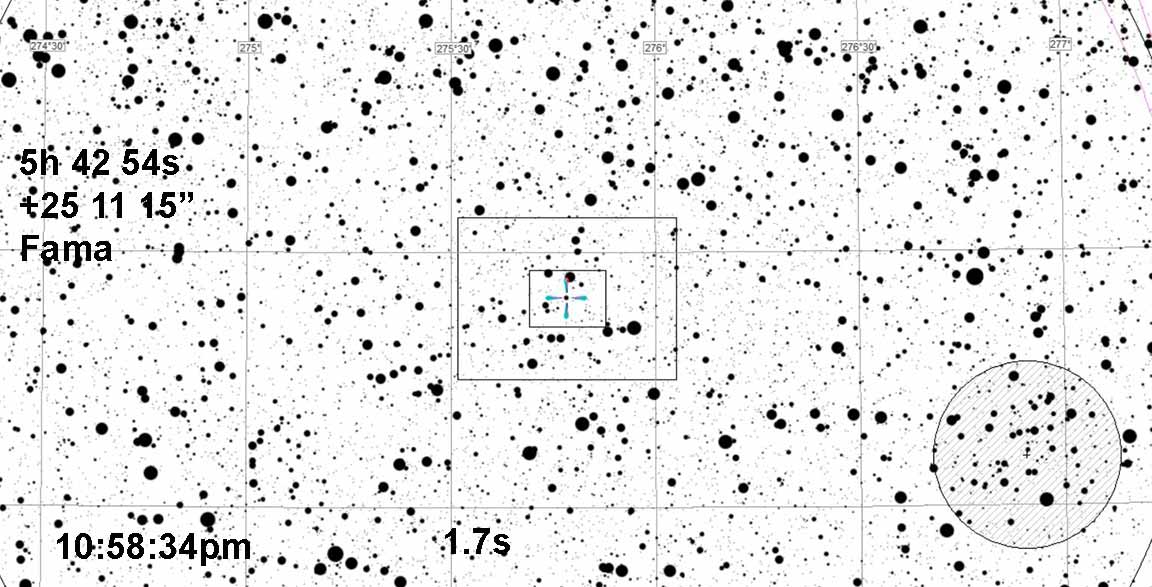
This event has only one challenge. The RUWE is 3.95, which means the star position isn't great. This low-number asteroid otherwise has a very good orbit. Wide path includes all of our SC Mtns and Monterey Bay. We hope. Centerline through Santa Cruz.
Alt=33 Az=278
|
|
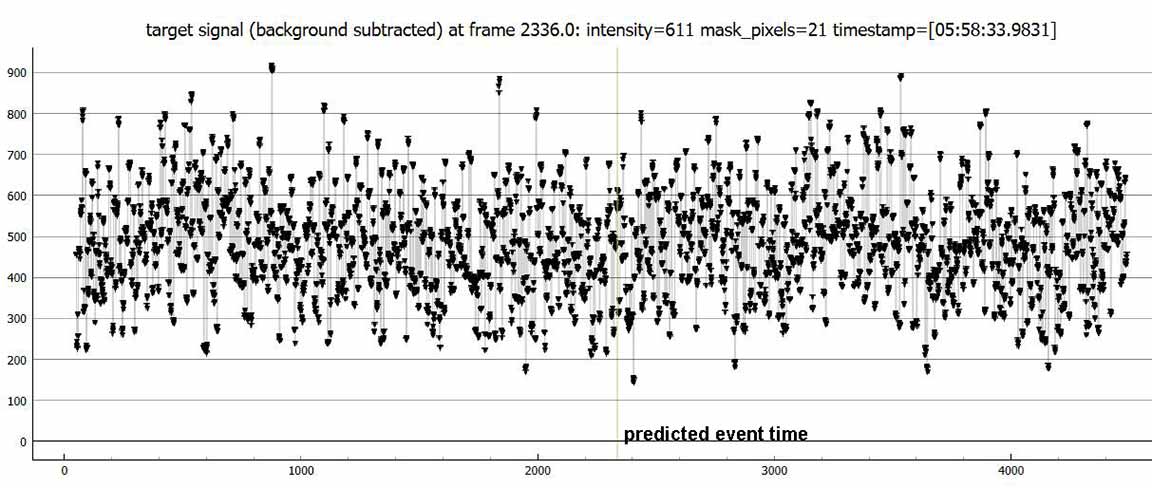
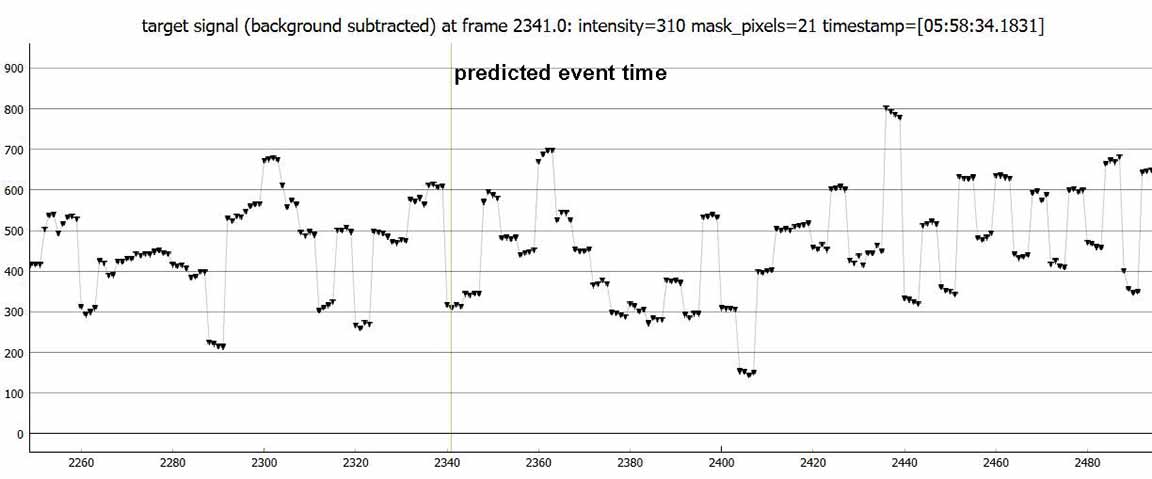
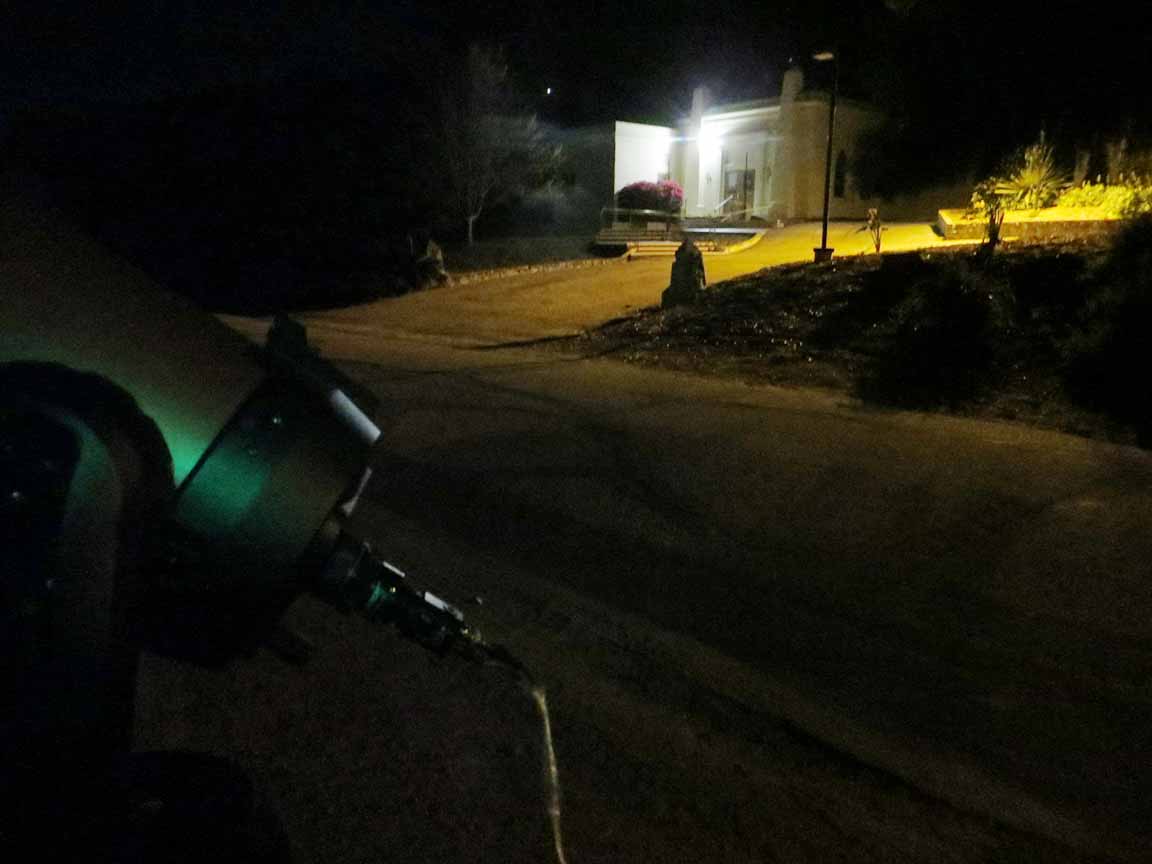
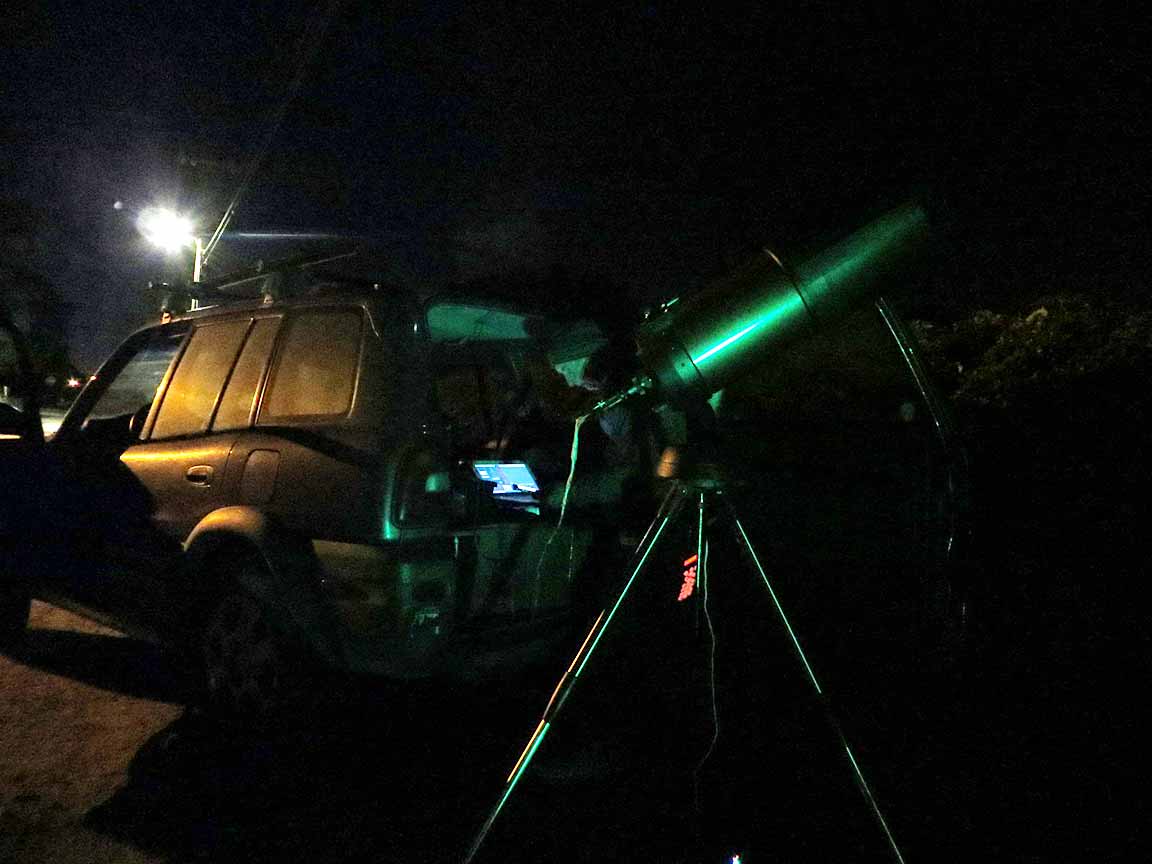
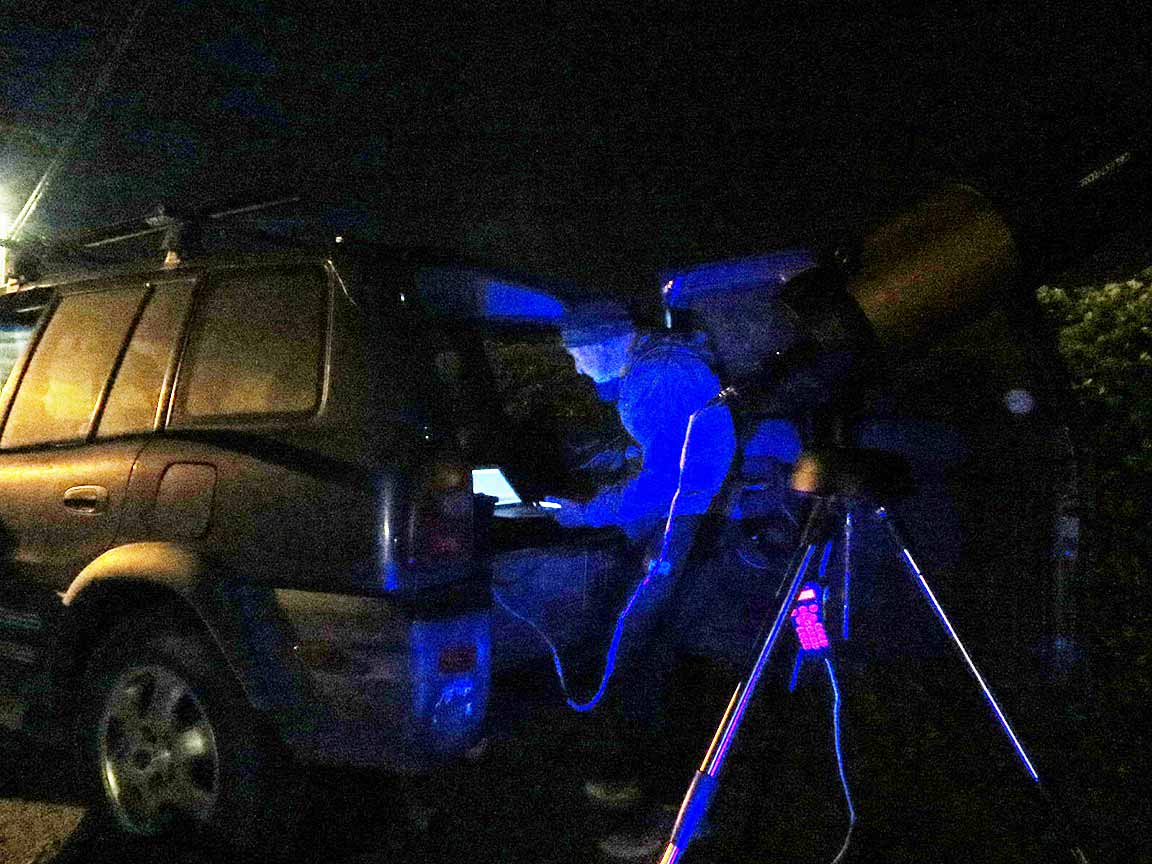
I set up across from the cremetorium (?) near the mausaleum of the Santa Cruz Memorial Park. Widespread cirrus, but the clouds were not bad around the target. I got a good signal at 8x. No event obvious while recording. The bad RUWE looks to be the culprit. The nominal odds of a hit at my location was about 99.99% - but there it is, a miss for me.
 |
 |
 |
 |
 |
 |
 |
 |
 |
 |
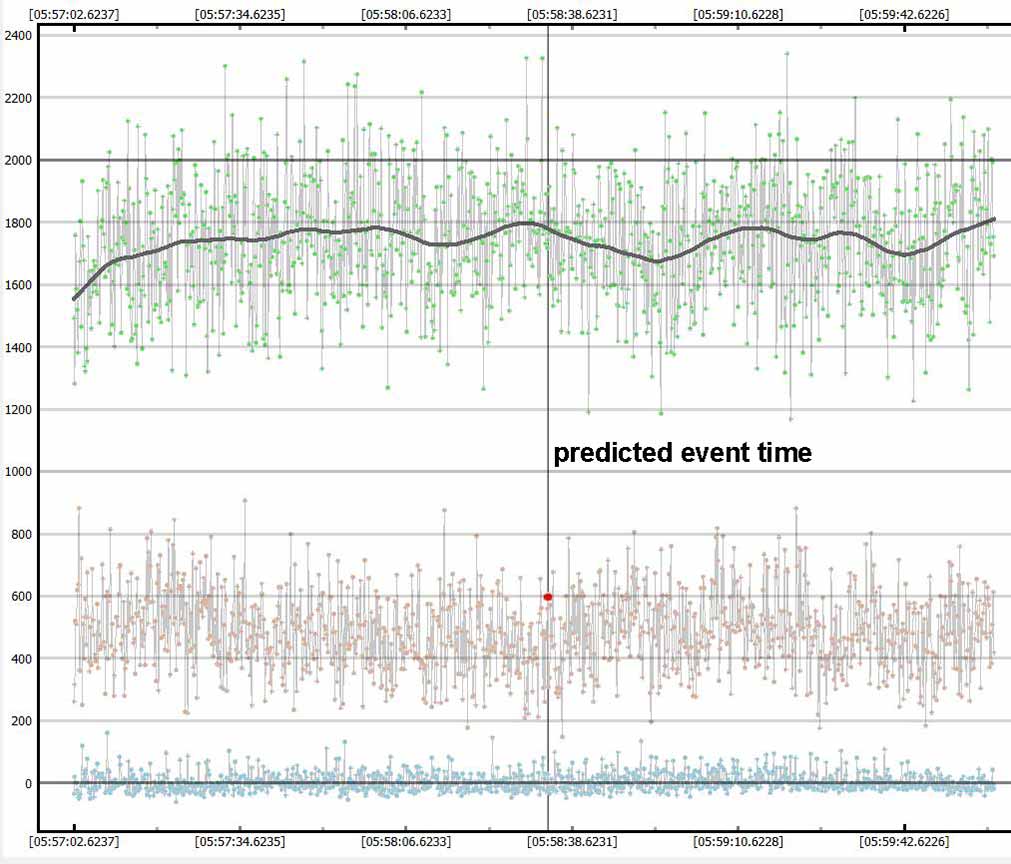
Observed from home, may have drifts off chip during the event time. For Fama, 16x at home, March 26, the curves are noisy at 16x but I didn't find any convincing events.
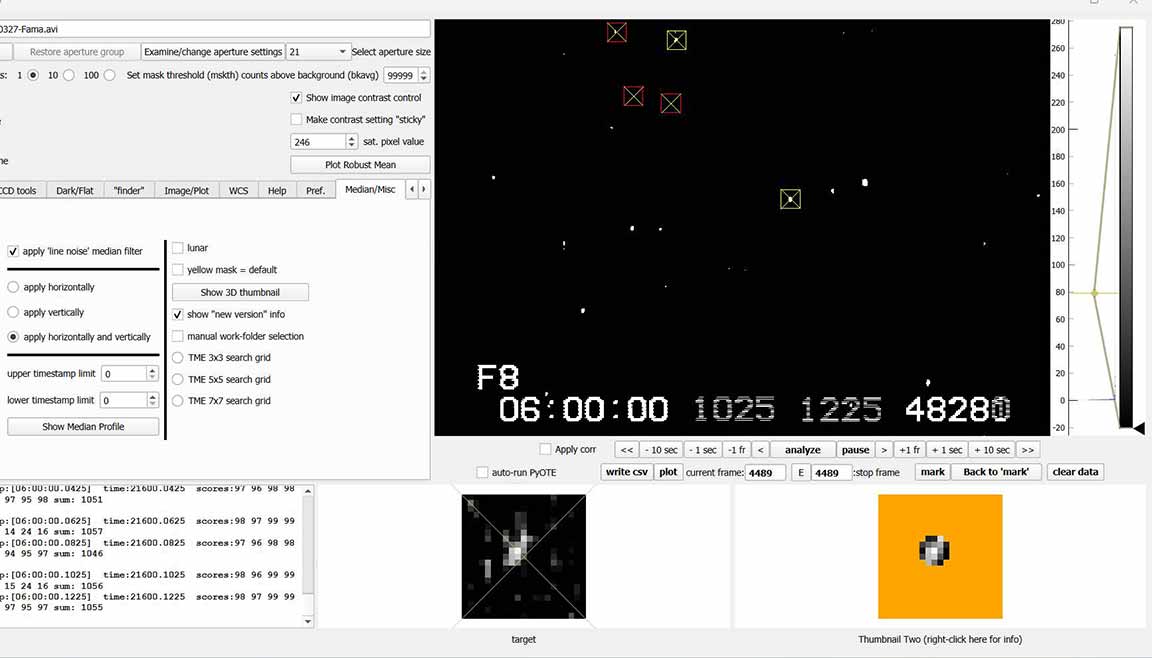
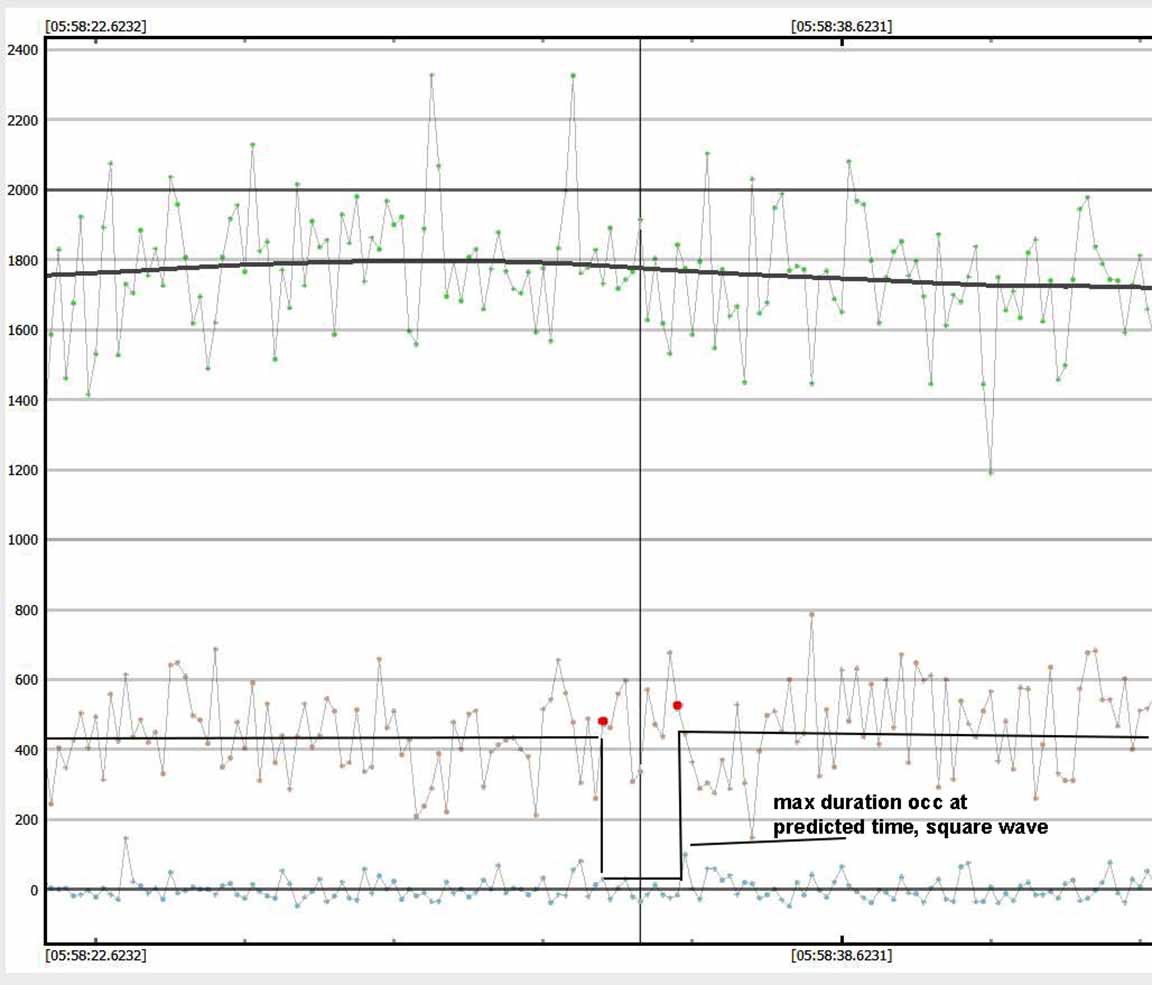
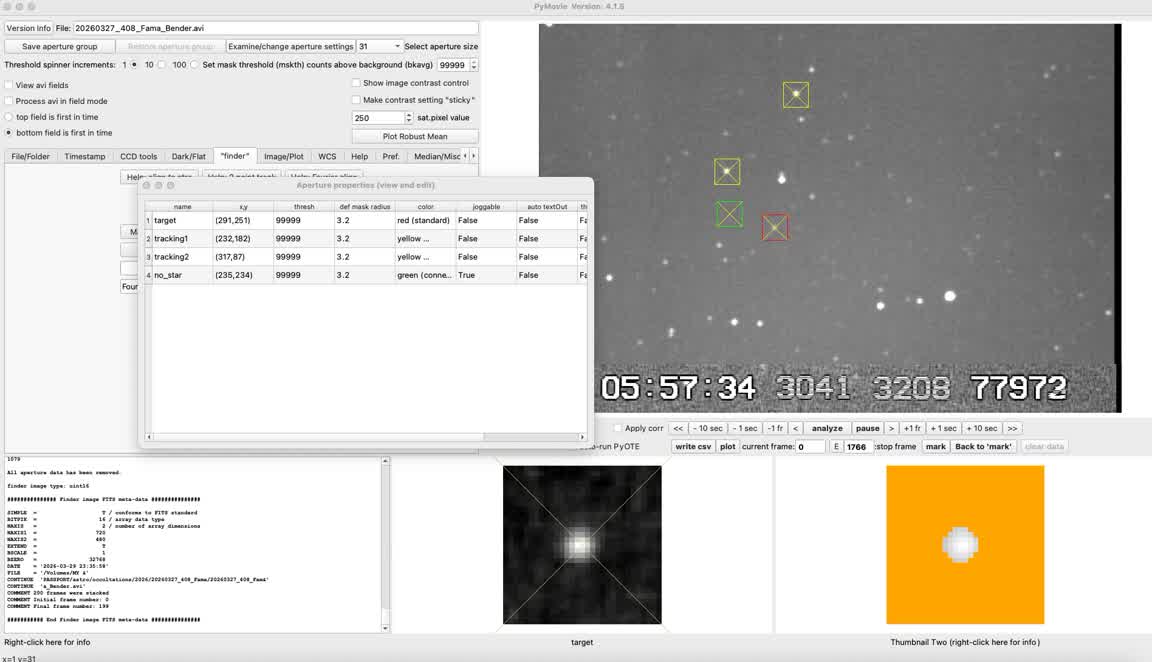
The target was drifting offscreen at the predicted time so I adjusted the scope mid-recording to keep it in view. Unfortunately the jump occurred right at the predicted time, 05:58:33 UT, but if there was an earlier or later or long event I could get it. PyMovie wouldn't be able to track through the jump, so I split the analysis into 2 parts, before and after the move.
The jump only took about one integration at 16x so I didn't miss a frame, but the last point of the first segment and the first point of the second segment shouldn't be relied on.
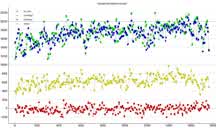
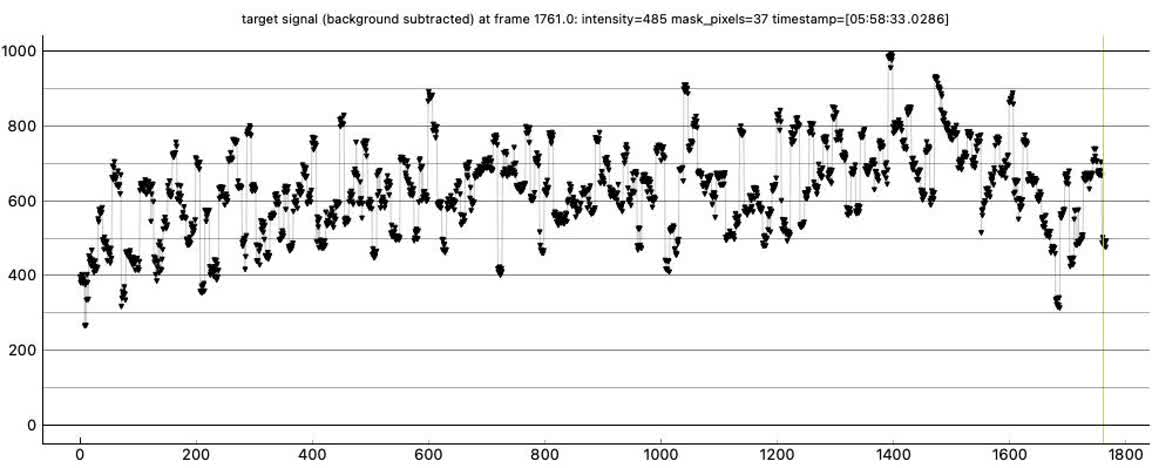
For the first segment, there is a dip at the end, but there is also a dip at that time in the tracking stars, so it's doubtful that it's a real event. The curves are coarse at 16x and smoothing points greater than 2 increase, not minimize, the flatness metric. Increasing the smoothing points more than 2 anyway doesn't make the dip go away. If I have PyOTE find an event, it finds the dip at the end with a 1.0677s event with a NIE sigma of 1.4 three seconds before the predicted time. The target dip doesn't quite line up with the tracking dip, but if I change the x-offset for the smoothing so that they do line up, it still doesn't smooth out the dip or minimize the smoothing metric and it finds the dip with 2.4 sec duration with NIE sigma of 1.3. If I use the PyOTE detectability tool it reports an event as short as 0.27 sec would be detectable for the first and second segments, predicted max was 1.65s. The second segment doesn't show any apparent events. So it looks doubtful I found any real events, but I'll wait to see what you both found. Even though there was a high rank and we were not far from the centerline, the target star did have a large 4.5 RUWE so it might be a miss. I'm attaching graphs for both segments, 1 and 2.
Timing for the dip in the first segment (which coincides with a dip in the tracking star):
NIE sigma distance 1.4
magDrop report: percentDrop: 30.5 magDrop: 0.394 +/- 0.224 (0.95 ci)
DNR: 1.94
D time: [05:58:29.4918]
D: 0.6800 containment intervals: {+/- 0.1743} seconds
D: 0.9500 containment intervals: {+/- 0.7005} seconds
D: 0.9973 containment intervals: {+/- 1.8266} seconds
R time: [05:58:30.5595]
R: 0.6800 containment intervals: {+/- 0.1743} seconds
R: 0.9500 containment intervals: {+/- 0.7005} seconds
R: 0.9973 containment intervals: {+/- 1.8266} seconds
Duration (R - D): 1.0677 seconds
Duration: 0.6800 containment intervals: {+/- 0.3153} seconds
Duration: 0.9500 containment intervals: {+/- 0.9978} seconds
Duration: 0.9973 containment intervals: {+/- 2.1858} seconds
 |
 |
 |
may have a 1/2s event from home.
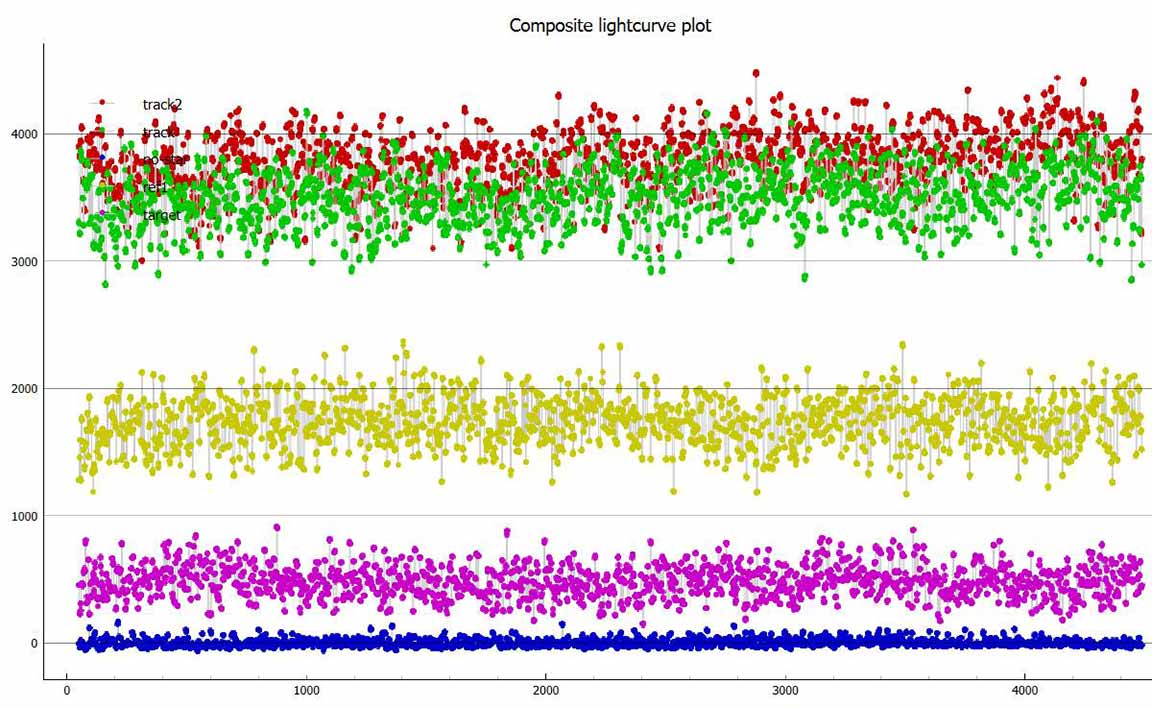
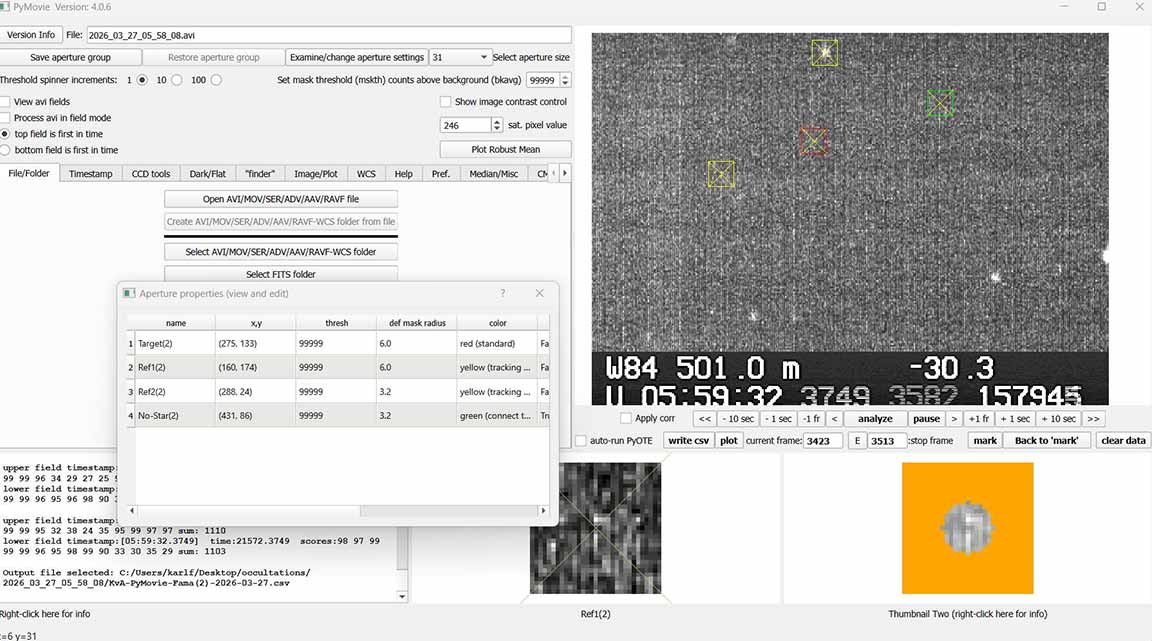
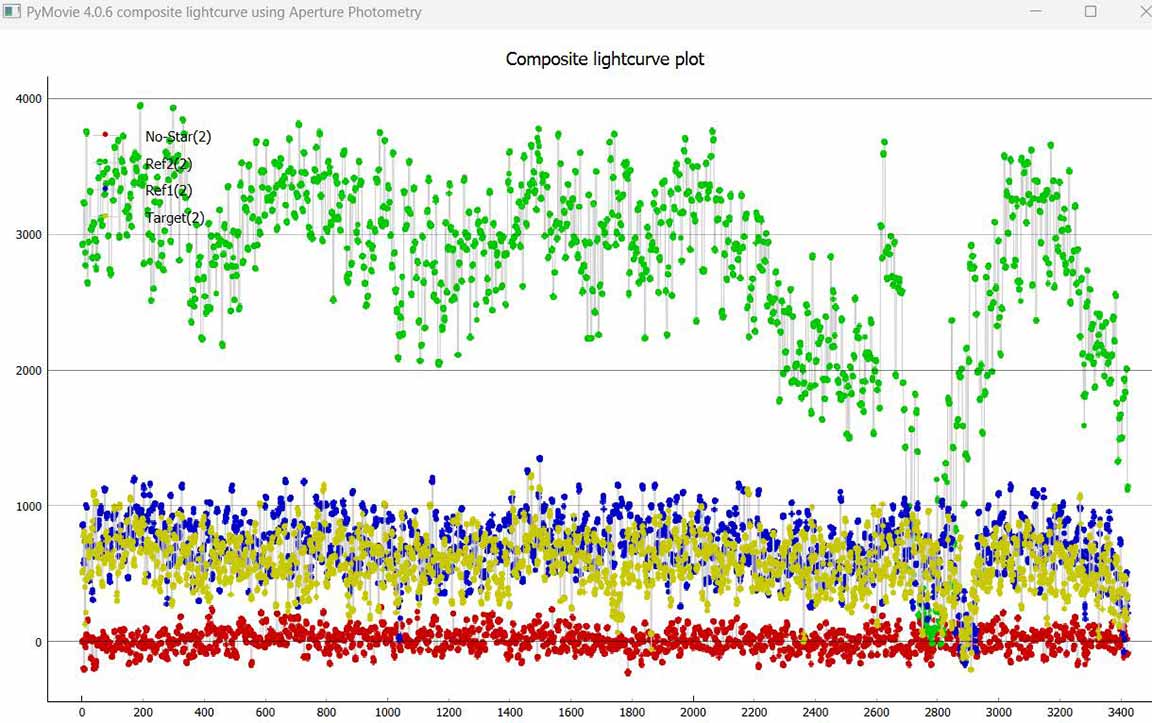
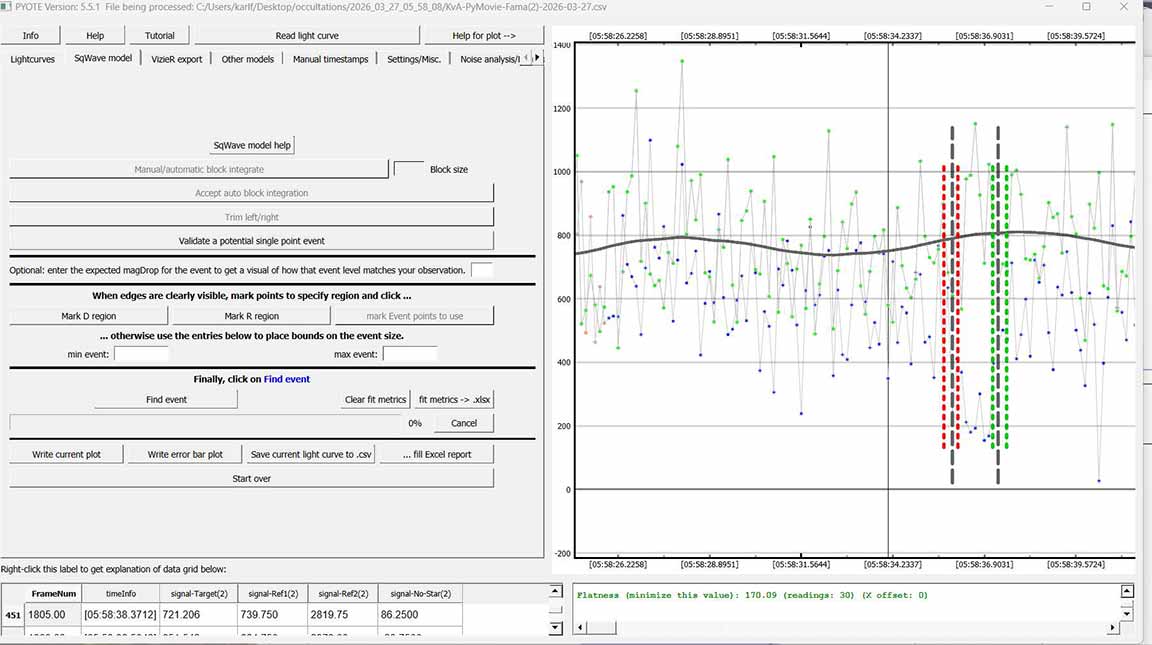
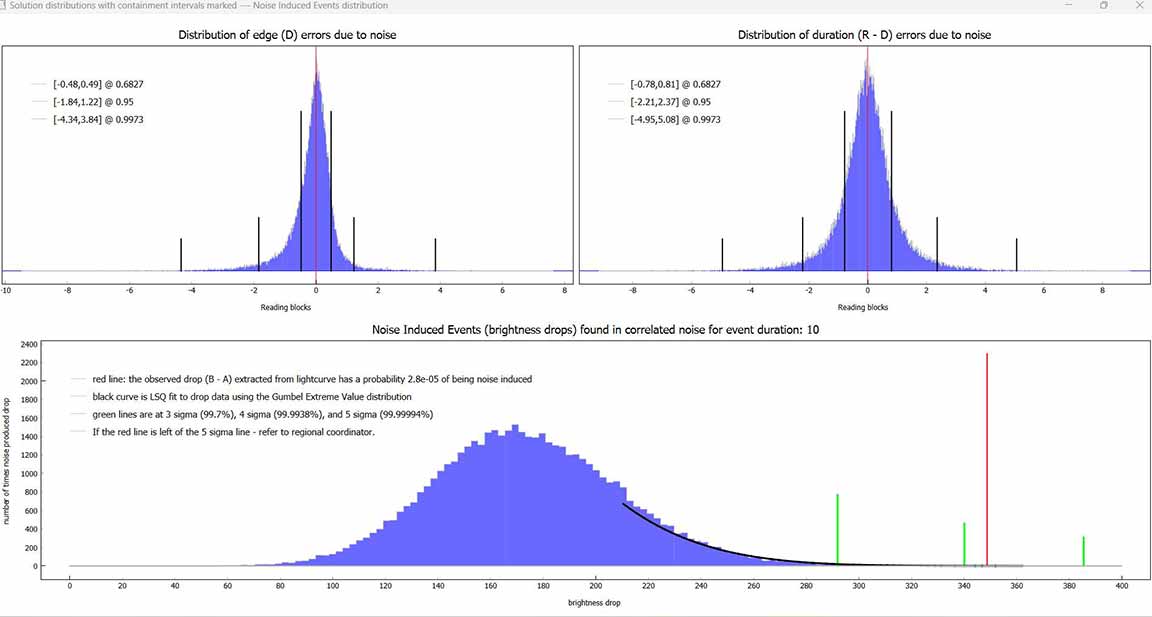
* Mar 26 9:58:34 Fama from East of rock at 8X. High wispy clouds in the area, ~10 deg from 60%? moon, bit of a breeze. Hard to see star due to faintness and low contrast. Entered “Report to follow” to OW Cloud Processing: Very noisy. Seemed out of focus. Tried with two sizes of aperture for target and Ref1, larger (6) seemed to work a bit better than default (3.2). In PyOTE, trimmed off very noisy end part of recording, Tracking star hit edge of field. Asked PyOTE find event between 2 and 30 data points; also marked D and R zones. Histograms for each choice were almost identical.
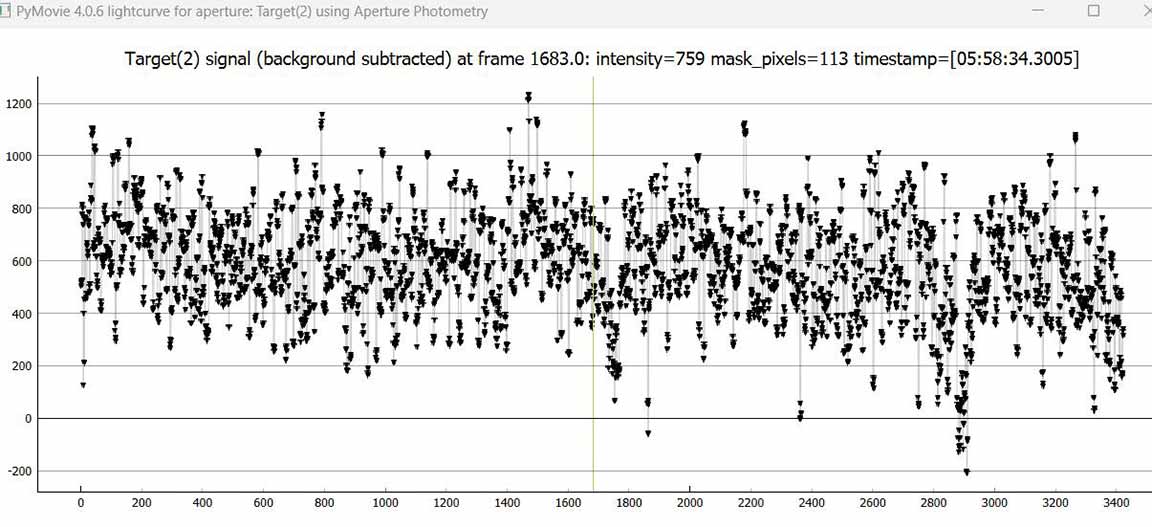
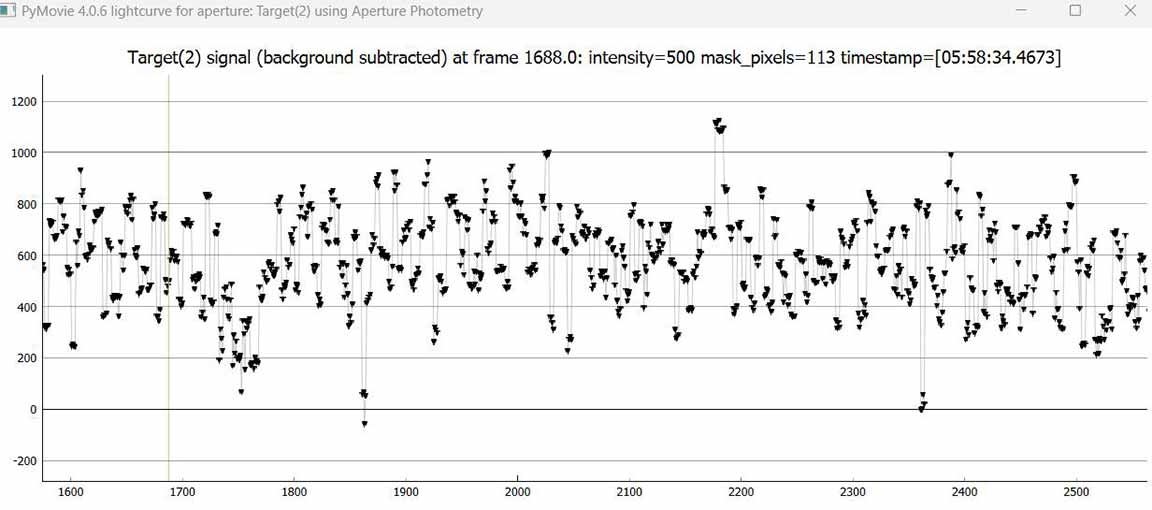
Composite light curve shows sporadic noise and major drop around frame 2800, most likely due to clouds and the tracking star intermittently, leaving the aperture mask and field edge.
 |
 |
 |
 |
 |
 |