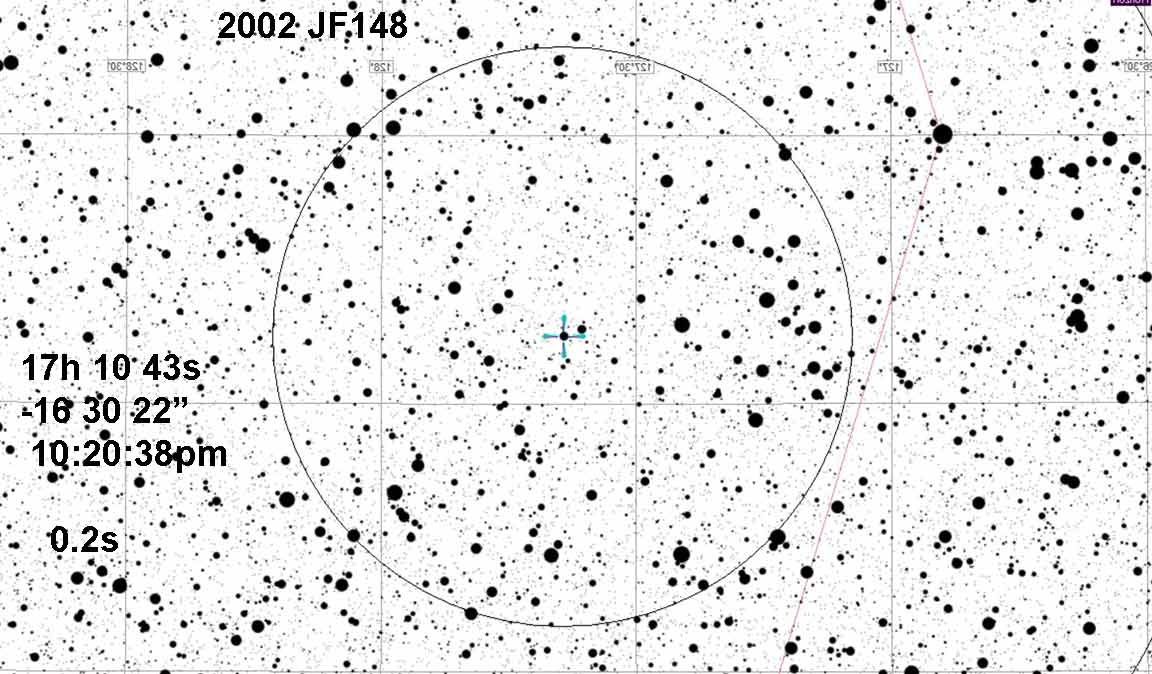
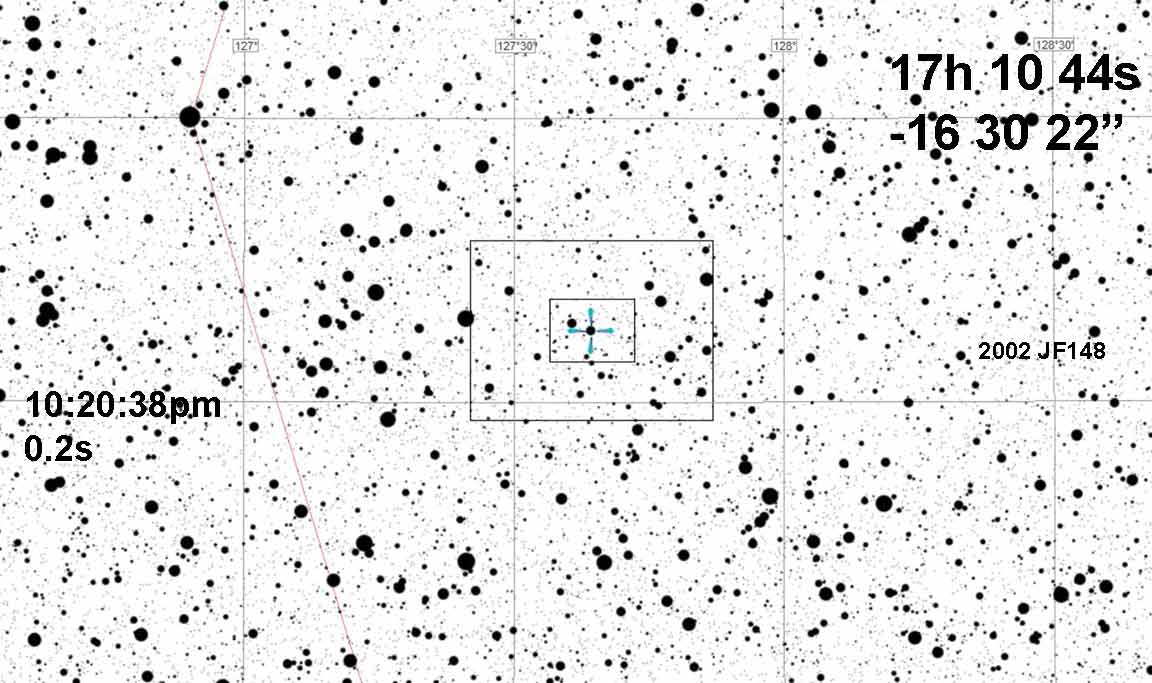
This is a bright occultation, but lasts only 0.2s. Skies are predicted to be clear. The rank is not super great, so a miss is possible. But, the time is convenient and worth a go. It would help refine the orbit of thie asteroid.
Alt=21, Az=131 in the southeast, in Ophiuchus, 1 degree to the right of Eta Oph = Salib, and 11 degrees left of Antares.
|
|
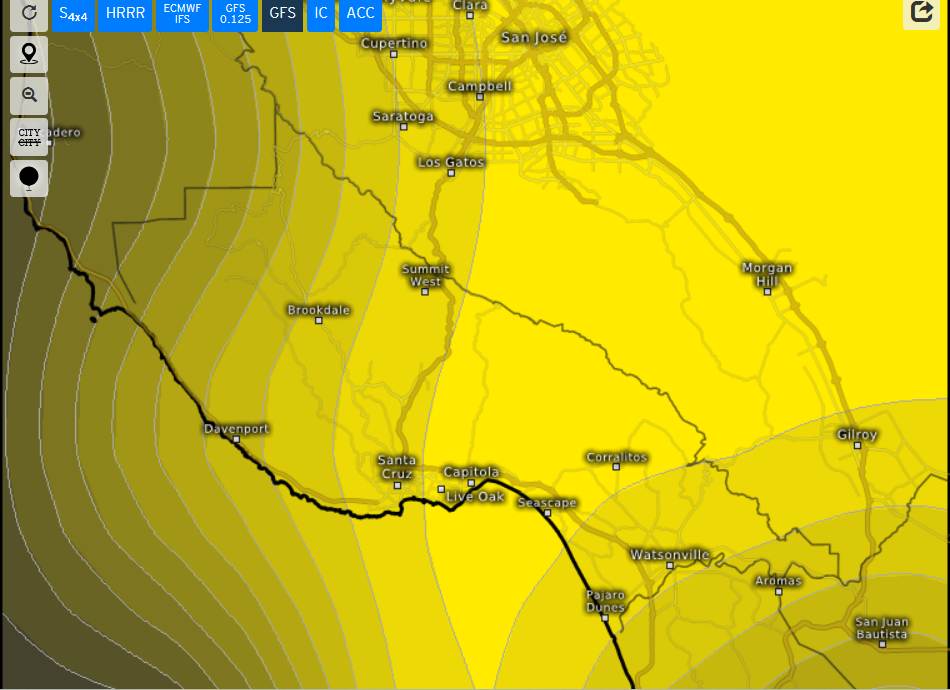
Cloud forcast: GFS prediction
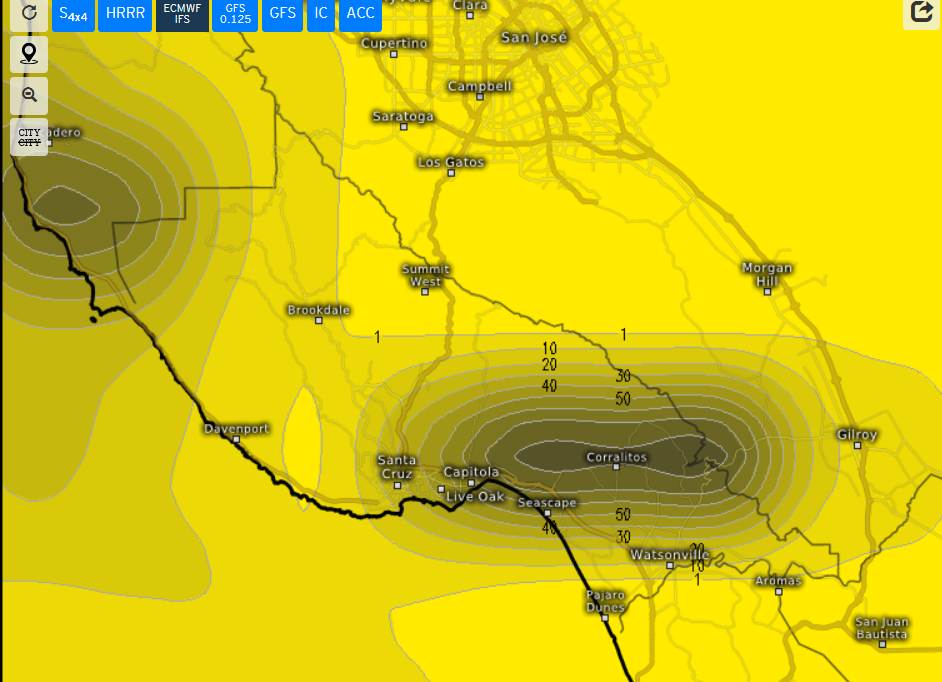
Cloud forecast: ECMWF prediction
The experience is that the ECMWF prediction is the more accurate; it has finer resolution, and also includes the effects of clouds due to mountains, so better does orographic lifting etc. You can see the two predictions differ quite a bit. The larger scale prediction looks like we're conflicting between incoming fog, and a high pressure dome which is keeping it away. If fog stays away, Jordan has a good chance at home. I'll probably go north, depending on the Zoom Earth images before having to head out. Bernard may be able to get from home too.
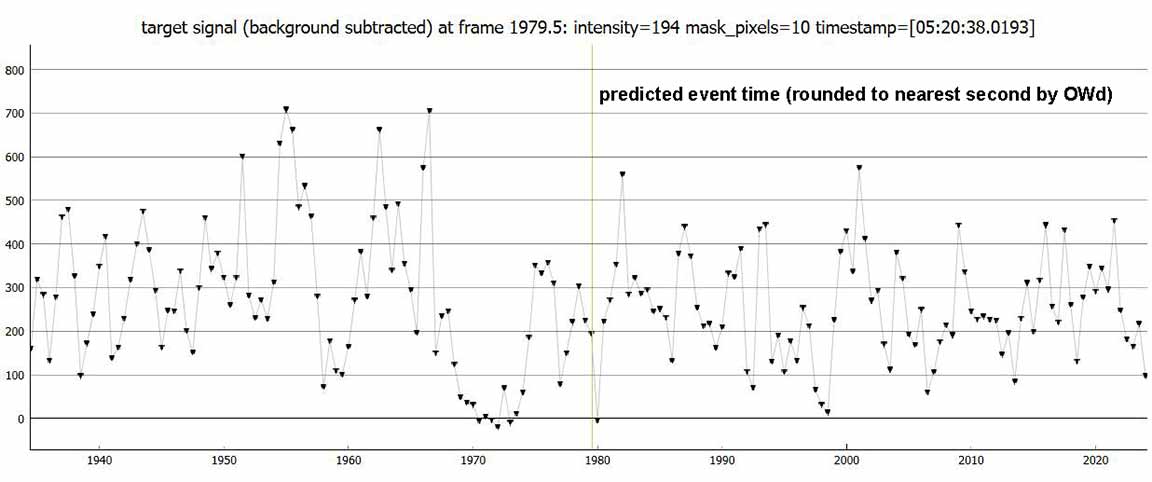
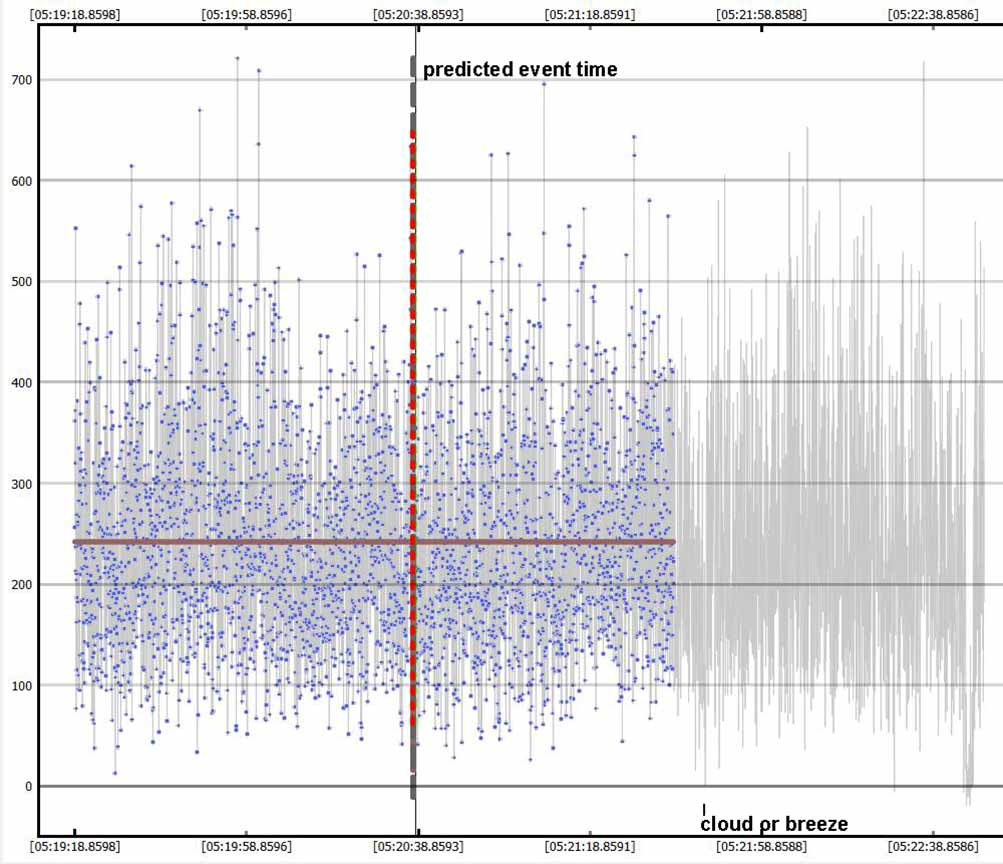
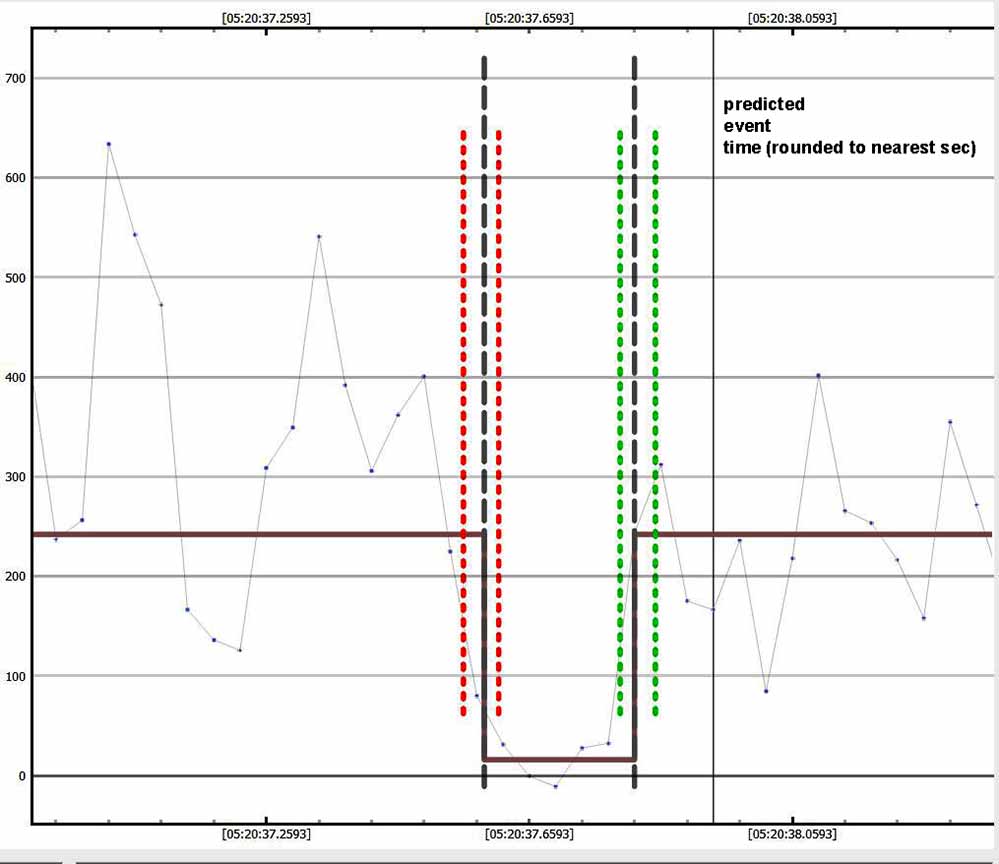
I had clear, moonless, calm weather. No clouds. Got a good recording at 1x, from Treetop Lane off Graham Hill. Saw a ~0.2s event on the Lenovo screen. This was just south of the predicted southern limit. Looks like a south shift, as Kirk inside the path had a miss.
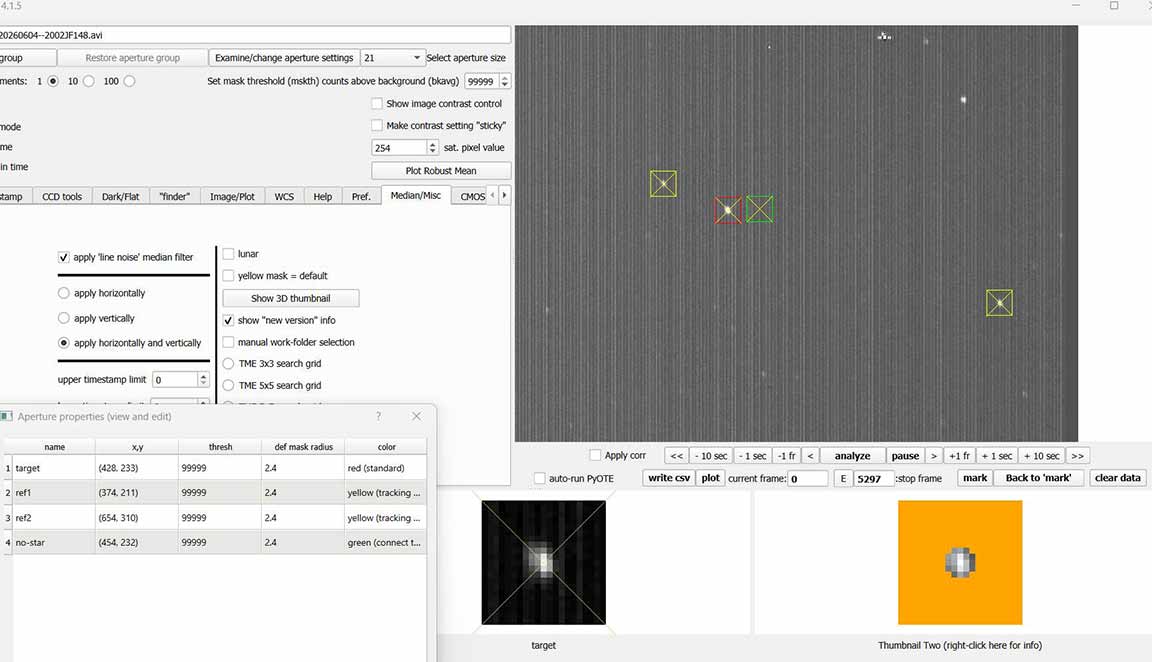
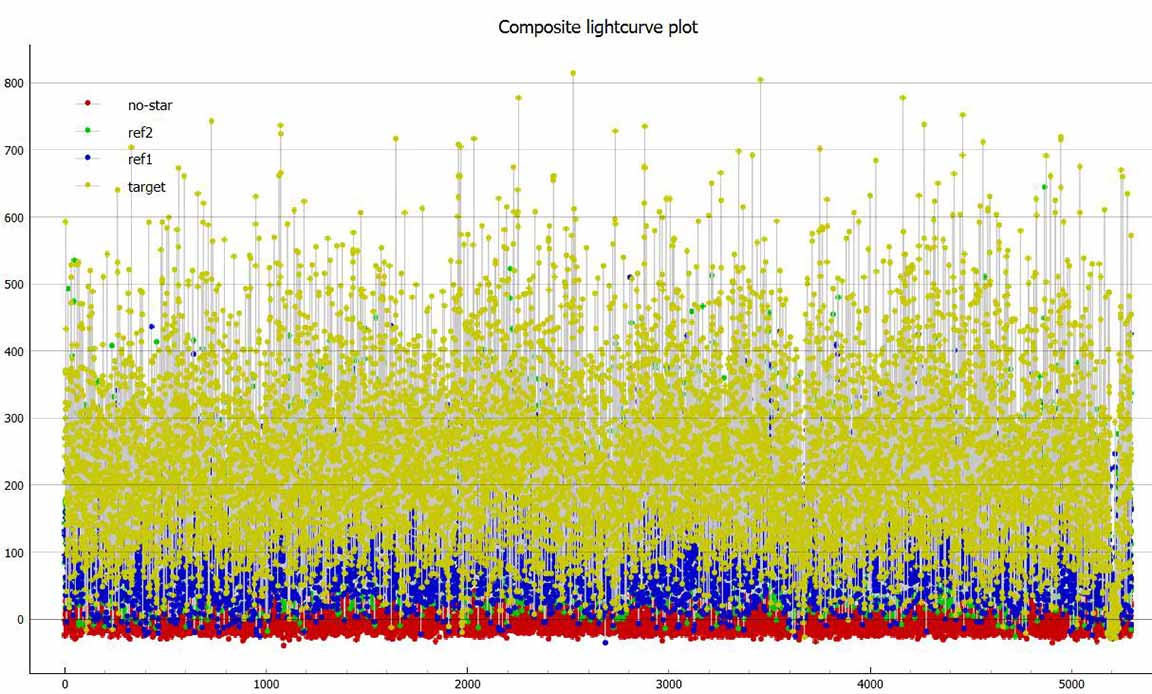
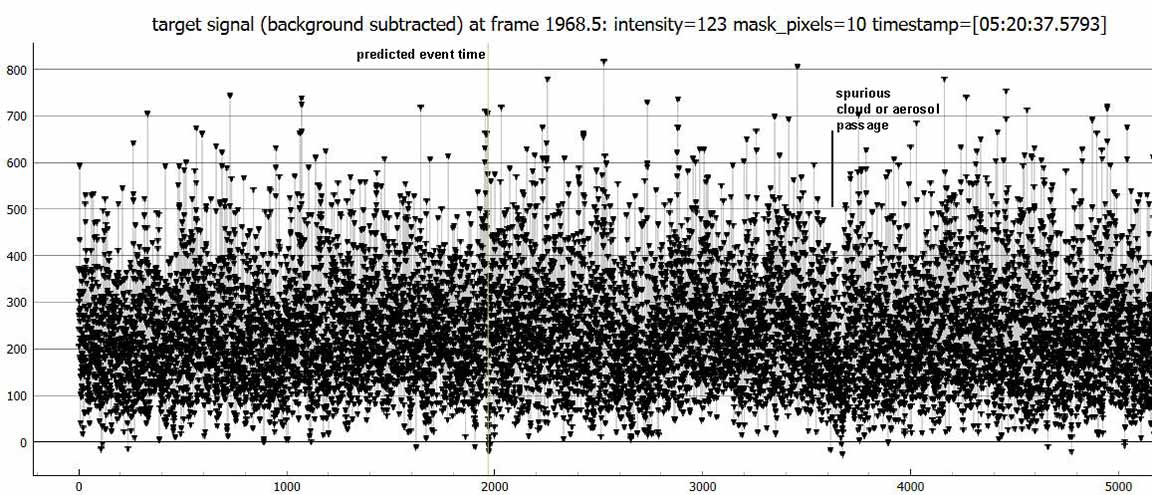
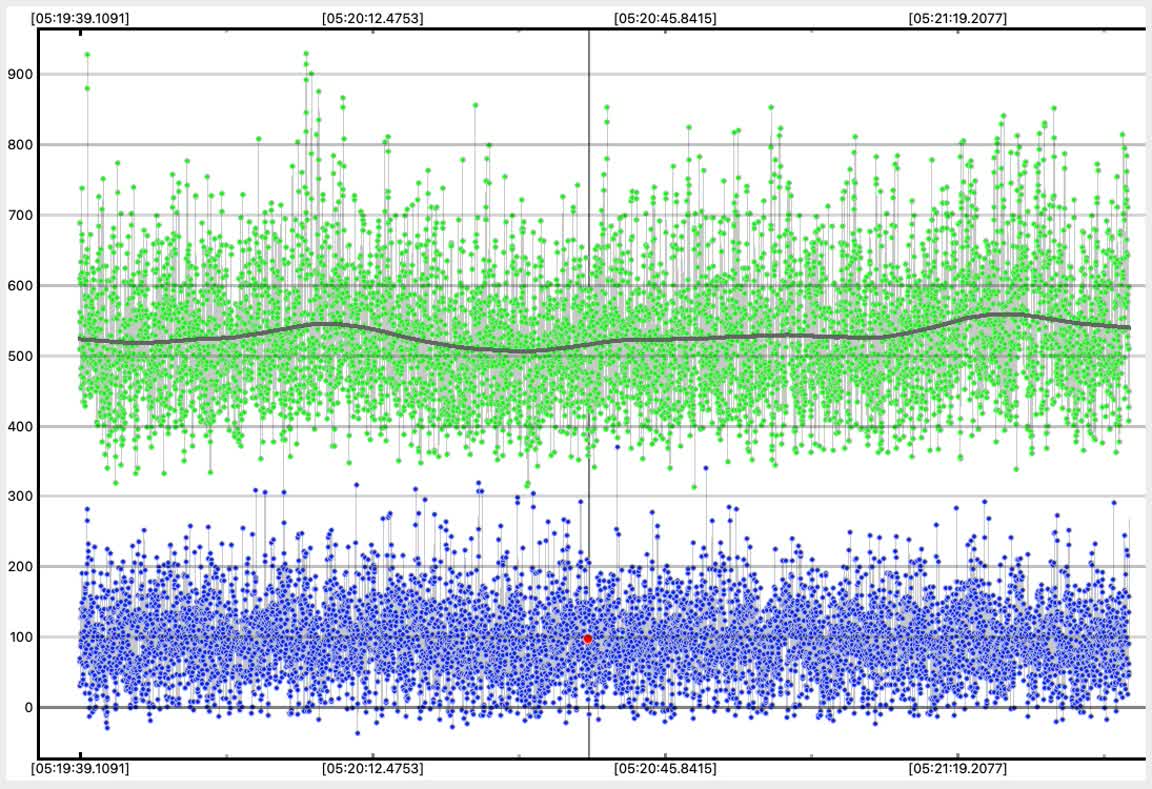
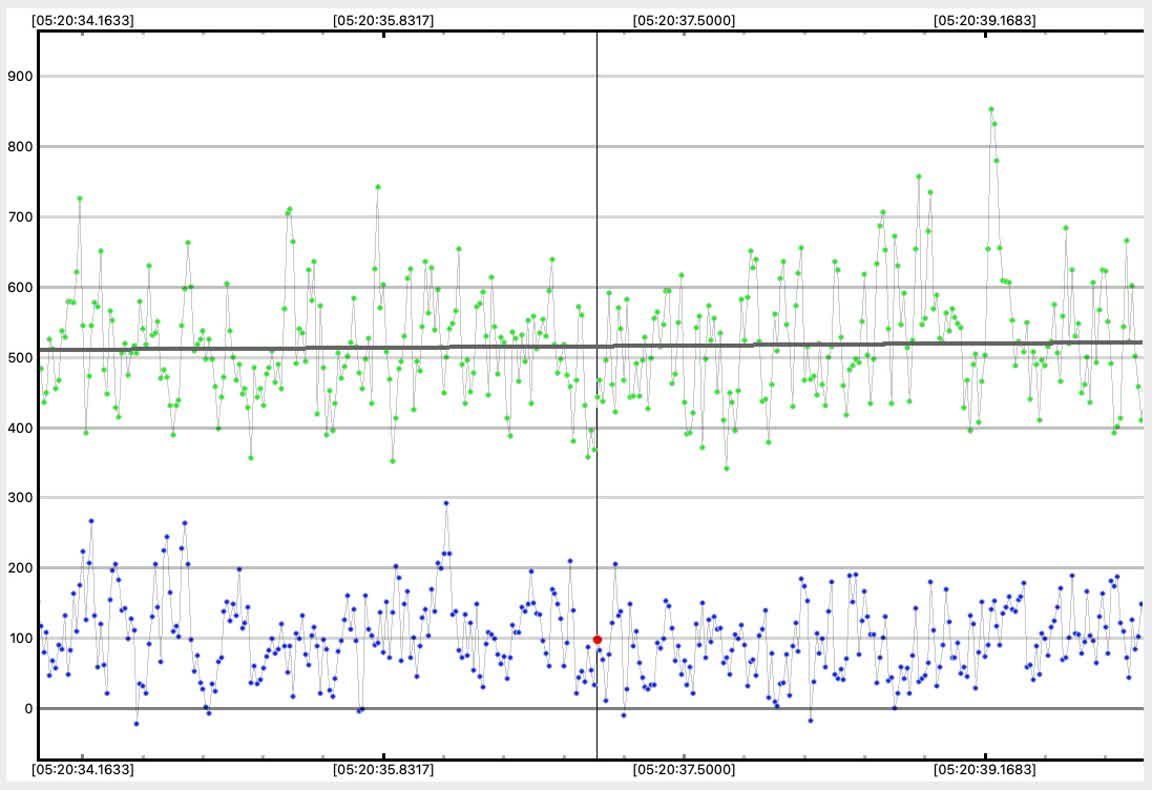
There was a "occultation" by aerosol or small cloud about 2/3 of the way through the recording, dimmed the target and ref star enough that I could not calibrate out the resulting false event, so I trimmed at and beyond that point before asking for all events from 4 points to 44 points in duration, since inspection at the event time showed this should identify the event, as the target zoom image should show. I told PyMovie to run in field mode, thinking I probably did this at 1x. But there was a reasonable correlation between neighbor points, and so I let PyMovie ID blocksize=2 would be proper, and accepted it. The target was the brightest unsaturated star, and best smoothing was quite long.
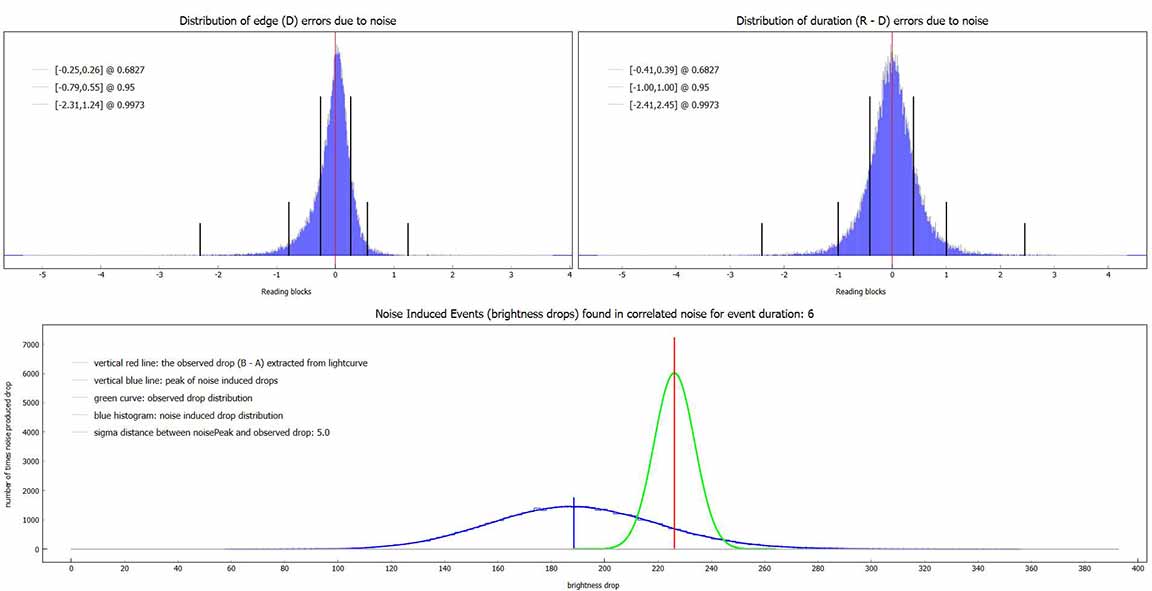
NIE test: 5.0 sigma
magDrop report: percentDrop: 93.5 magDrop: 2.965 +/- 1.148 (0.95 ci)
DNR: 2.20
D time: [05:20:37.5907]
D: 0.6800 containment intervals: {+/- 0.0105} seconds
D: 0.9500 containment intervals: {+/- 0.0317} seconds
D: 0.9973 containment intervals: {+/- 0.0923} seconds
R time: [05:20:37.8193]
R: 0.6800 containment intervals: {+/- 0.0105} seconds
R: 0.9500 containment intervals: {+/- 0.0317} seconds
R: 0.9973 containment intervals: {+/- 0.0923} seconds
Duration (R - D): 0.2286 seconds
Duration: 0.6800 containment intervals: {+/- 0.0161} seconds
Duration: 0.9500 containment intervals: {+/- 0.0400} seconds
Duration: 0.9973 containment intervals: {+/- 0.0973} seconds
 |
 |
 |
 |
 |
 |
 |
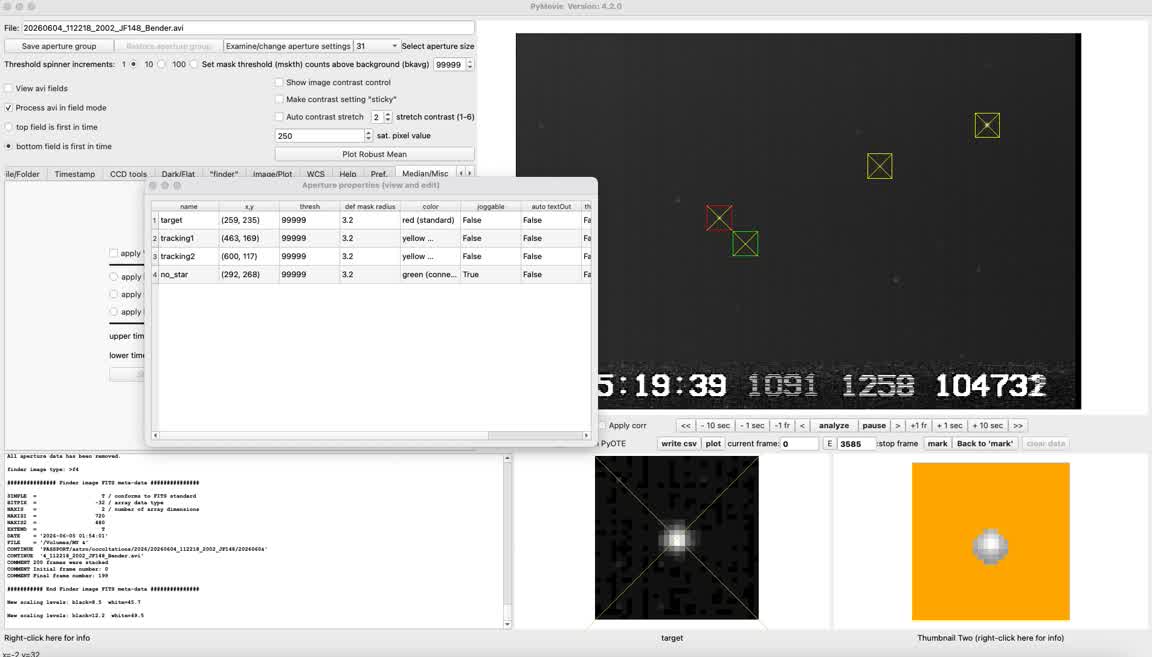
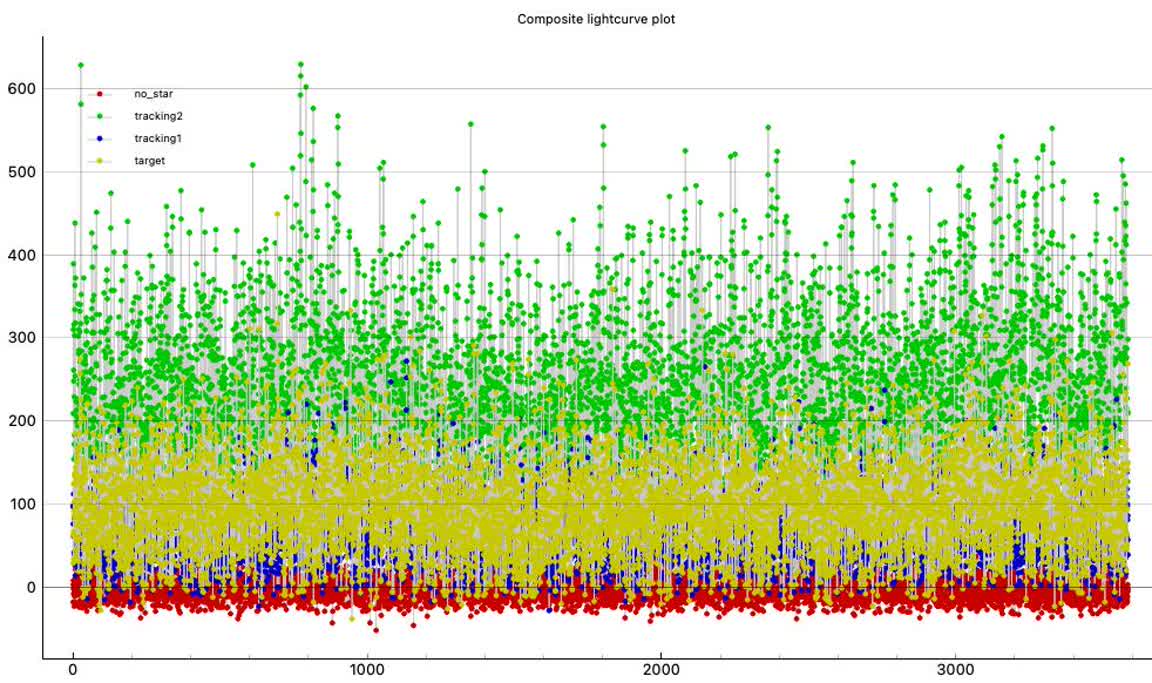
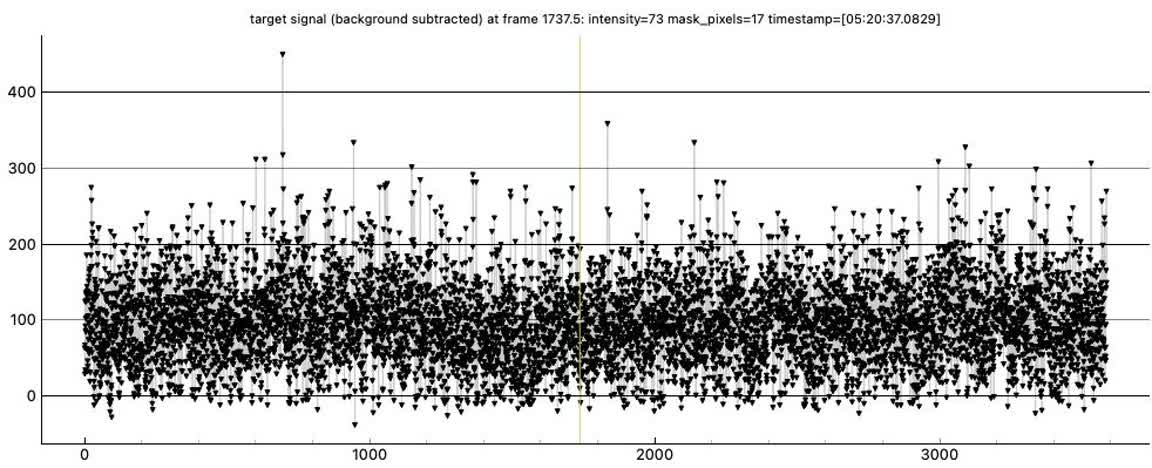
Observed from Sky Park in Scotts Valley. I don't see an event for 2002 JF148, 1x at Sky Park NW lawn on June 3rd. Curve is noisy, there was strong flickering. I tried several mask sizes in PyMovie, but none showed an event. PyOTE detectability tool reports an event as short as 0.17s would likely be detectable, max predicted was 0.21. Either a miss or too short to detect. Rank was not great, I was not far from center, but at Treetop Dr. you were south of the path, closer to the 1-sigma line. We were separated by about a path width, so if you got a positive, it's possible I could get a negative.
 |
 |
 |
 |
 |
reported playback looked like a miss, but not reduced yet.
Now, July 18, Karl says his notes just say "fogged out", so did I misunderstand an earlier communication? However, unusual if he got fogged out at 1600 ft elevation while I and Kirk at lower elevation closer to the coast, had clear skies. However too - Kirk was north of me and had a miss, and I was south of the path and had a positive, so Karl would almost certainly have had a miss of the main body anyway.