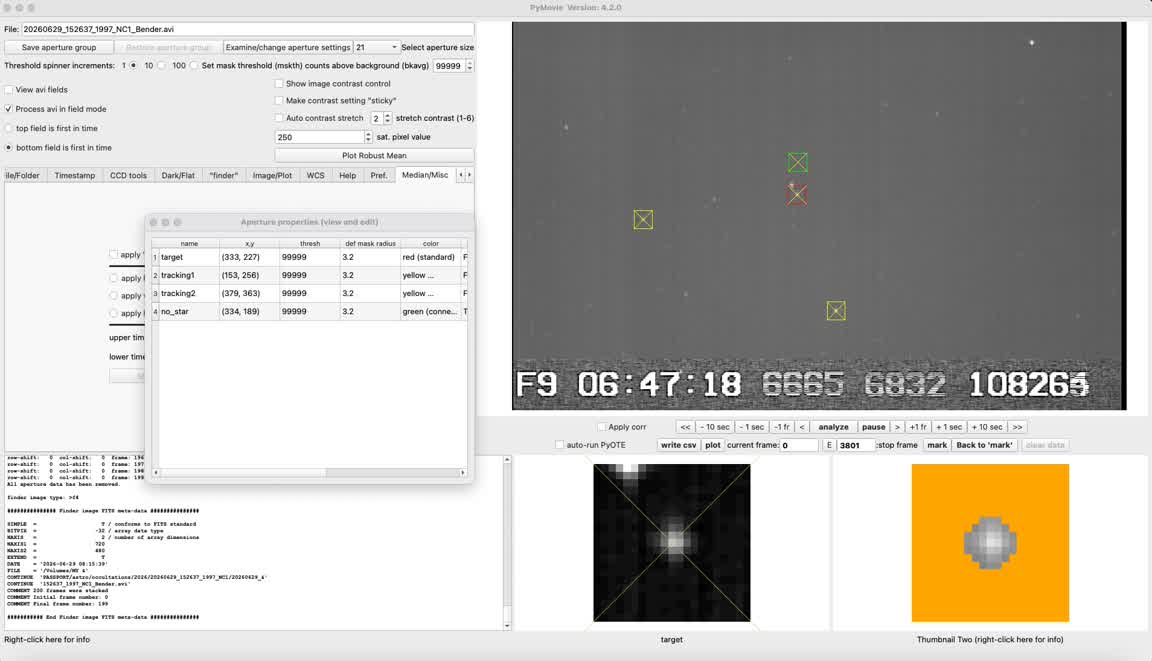
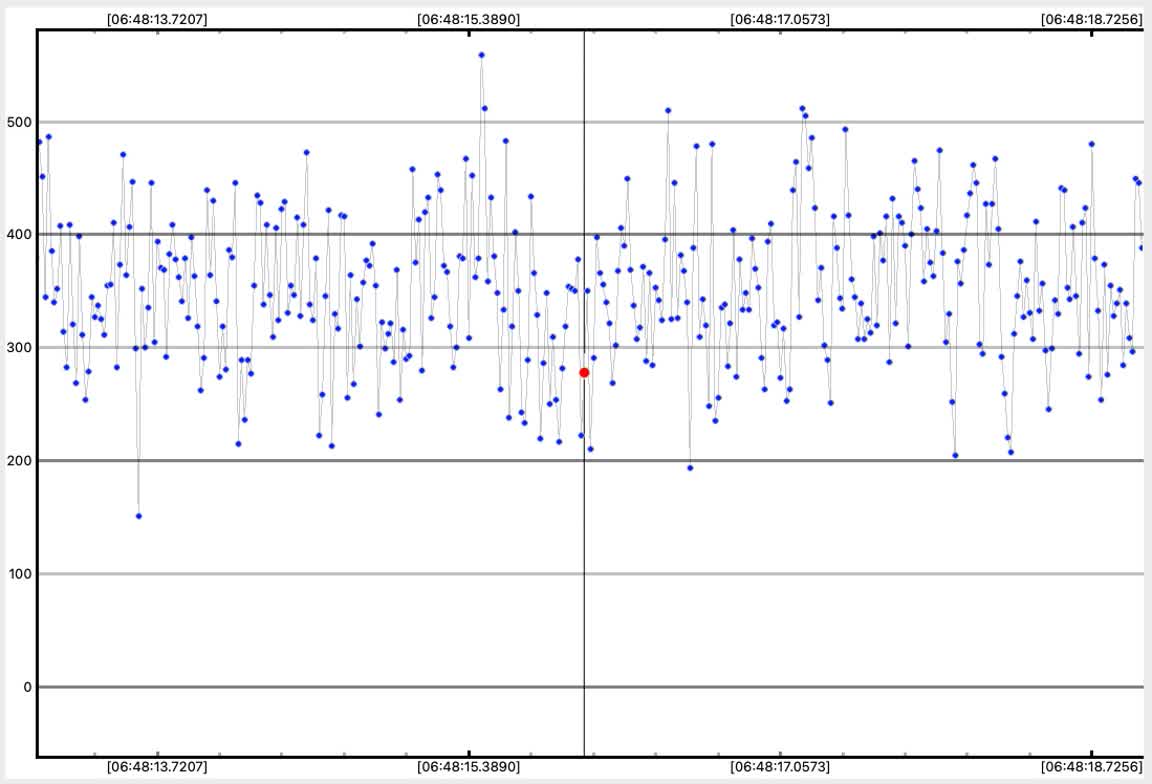
Kirk Bender was the only one to try this one. It has a very poor RUWE of 4.1 making it useless for the purposes of orbit refinement, and I was exhausted from the prior all-nighter for this same NEO occulting a brighter star in Aptos. The star was faint enough that the dip was small enough as to be likely undetectable for a duration of only 0.1s. But Kirk was game, as a tag-along low-cost low return attempt, and drove up the coast to try it and Gerlinde near Davenport, and successfully recorded.
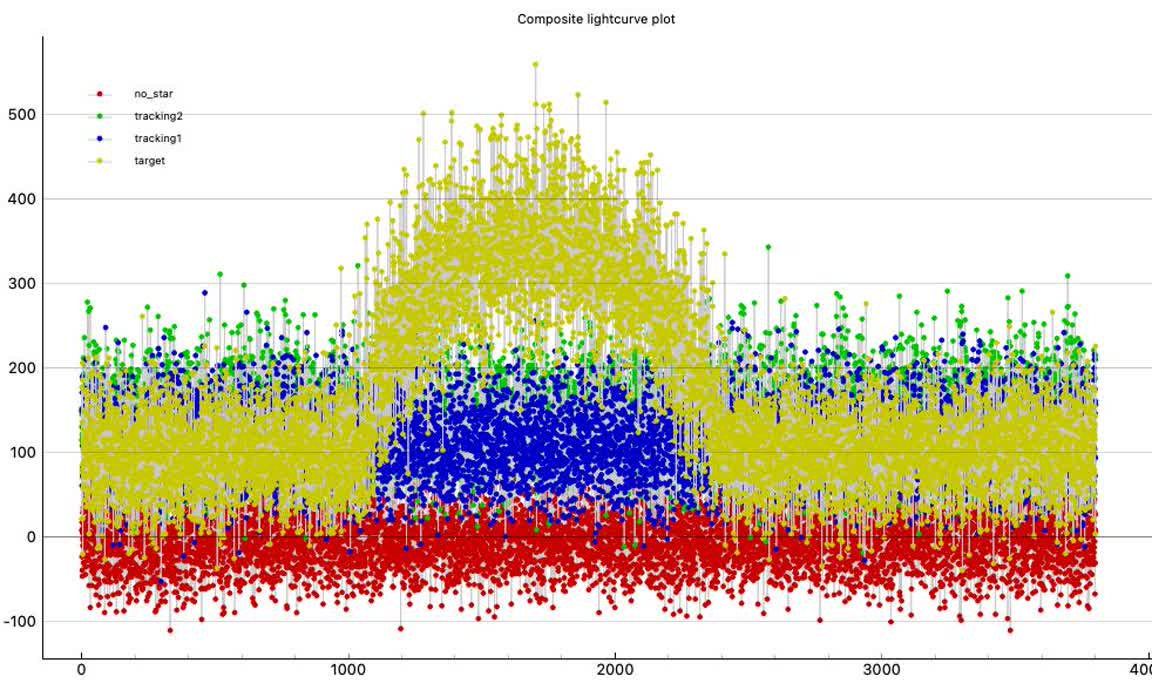
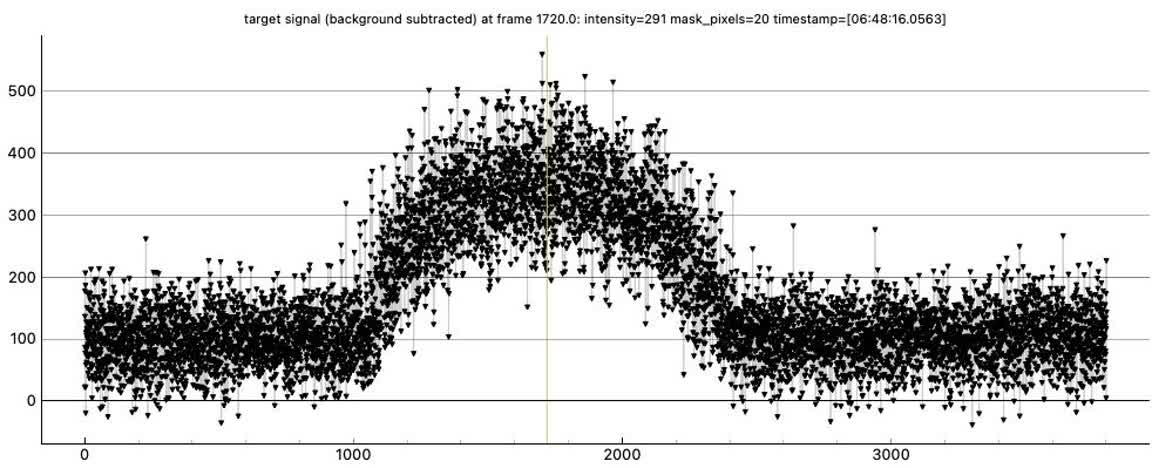
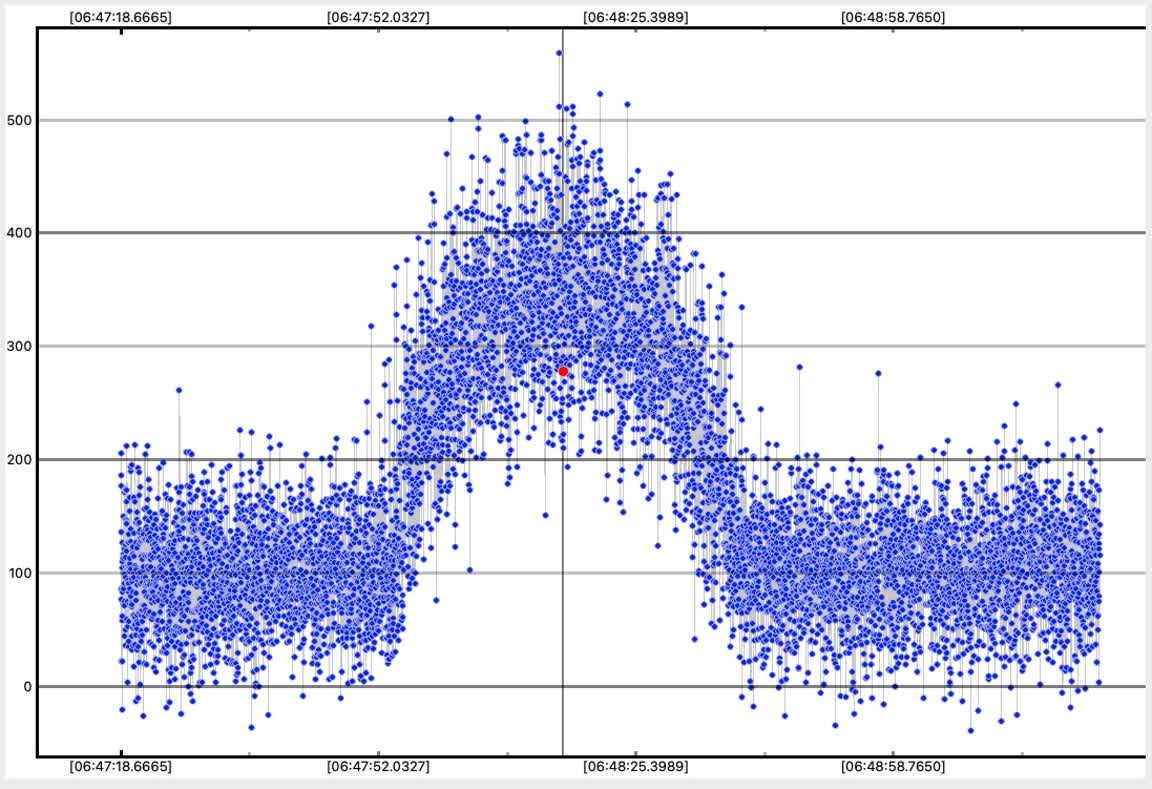
A miss or undetectable for 1997 NC1, 1x at Rodini farm, June 29. I probably wouldn't have tried this because of the high RUWE of 4.15 but it was only 15 minutes before the Gerlinde event. There's the expected big rise in the target curve because the asteroid was bright and moving fast through the star. The target was not saturated at 1x even at max gain, but I didn't realize the asteroid itself would be so bright. However, neither the target nor asteroid were saturated. No apparent event. PyOTE detectability tool reports an event as short as 1.36s would be detectable, however the predicted drop was only 0.3m and predicted max duration was 0.1s according to OW cloud. I'm including the PyOTE example plot of a hypothetical 1.36s event with my noise baseline. So if the detectability tool is right, this event would be undetectable with my data. But most likely a miss because of the high RUWE and not good rank.
The hump in the target on these light curves was due to the merging of the asteroid and the target into the mask. The asteroid was much brighter, so the loss of the star was to be only a 0.3 magnitude drop. Over a long enough period of time - many seconds - 0.3 magnitude should be a detectable drop, but for 0.1s duration it was a drop lost in the noise. Still, it's intriguing that at the predicted time there is a dip; but there are many other such dips and so it does not stand out as a significant detection.
|
|
|
|
|
 |